Conservatory costs vary more than most homeowners expect. A quote for the same footprint can double or triple depending on the roof system, the frame material and the level of internal finish. The cheapest option is rarely the best value, and the most expensive option is not always the right one. The goal is to understand what you are paying for and why, so you can allocate budget to the parts of the project that actually matter.
This guide breaks down the main cost drivers, gives realistic ballpark ranges for common styles and sizes, and explains the extras that often catch people out.
What drives conservatory cost
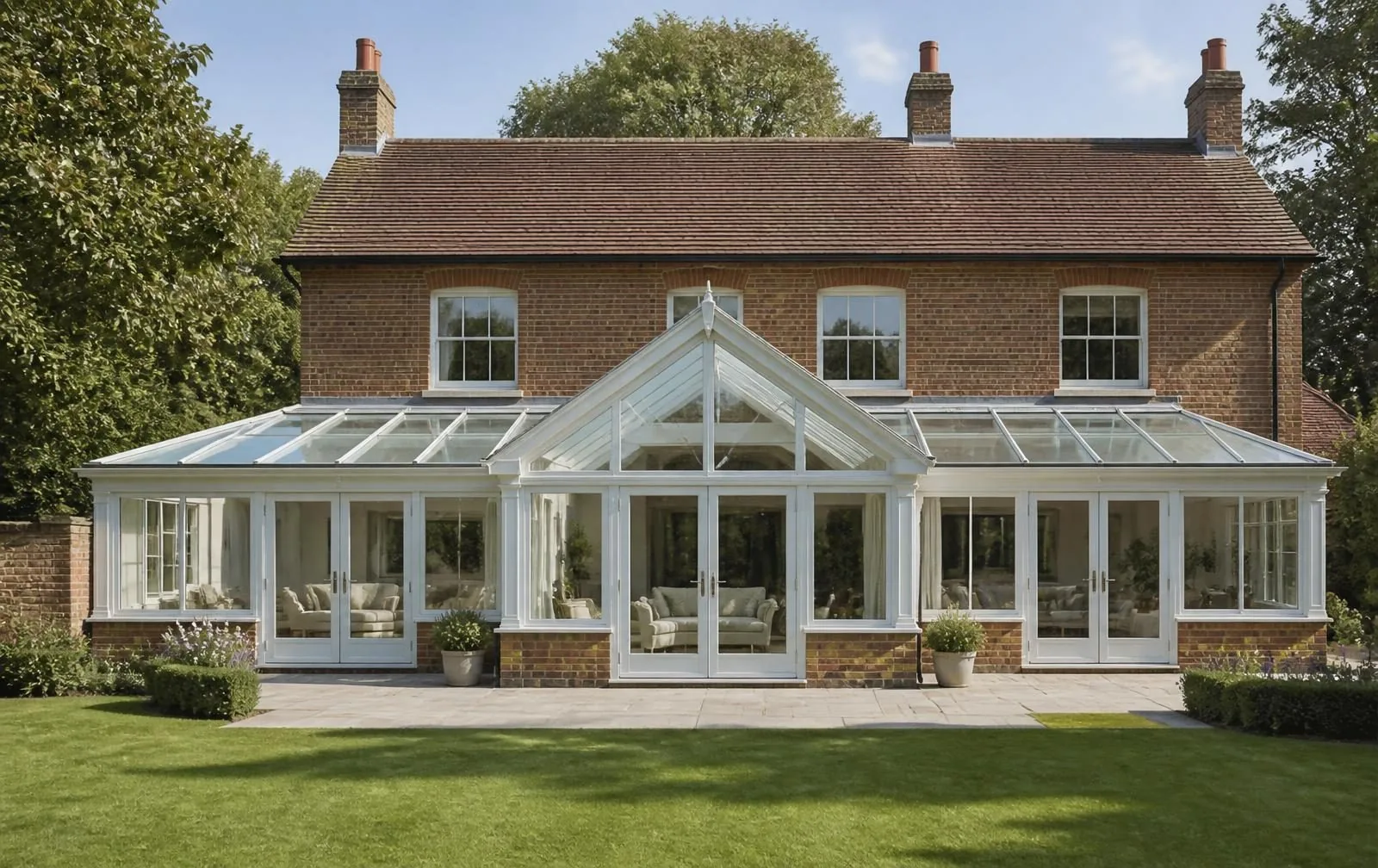
Conservatory pricing is not simple. A single number rarely tells the whole story, because the cost depends on a chain of decisions: footprint, shape, frame material, roof type, glazing, base work, internal finish, heating and the condition of the site. Understanding what each decision adds is the key to comparing quotes fairly and avoiding a specification that looks cheap on paper but disappoints in use.
The biggest cost drivers are, in rough order: the base and groundworks, the roof system, the frame material, the glazing specification, and the size. A large conservatory with a complex shape and a warm roof will almost always cost more than a small lean-to with a polycarbonate roof, but the relationship is not linear. Some costs, such as the structural steel over a wide opening, step up sharply once you cross certain thresholds.
Cost by style and size
A lean-to conservatory is the most cost-effective shape because its single-pitch roof and rectangular footprint are straightforward to manufacture and install. A Victorian or Edwardian conservatory costs more because of the hipped roof and the decorative detailing. Gable, P-shaped and T-shaped conservatories involve the most complex roof carpentry and therefore sit at the higher end of the range.
As a very rough guide, a small 3m x 3m lean-to in uPVC with a polycarbonate roof might start at around £8,000. The same footprint in glass or with a warm roof could be £12,000 to £18,000. A 4m x 4m Edwardian or Victorian in glass usually falls between £18,000 and £28,000. Large P-shaped or T-shaped designs with warm roofs and high-spec glazing can easily exceed £40,000.
Cost by frame material
uPVC is the most economical frame material and is well suited to standard-sized conservatories. Aluminium costs more but offers slimmer sightlines and larger structural spans, which can justify the premium on contemporary or larger designs. Timber is the most expensive and the most maintenance-intensive, but it is sometimes the only acceptable choice for listed or conservation properties where authenticity matters.
The material choice should not be driven by budget alone. A budget that only stretches to uPVC is fine for most conservatories. A budget that stretches to aluminium should be used where the slimmer frame or larger glass area genuinely improves the design. Timber should be chosen where it is required by policy or where the homeowner accepts the ongoing maintenance commitment.
Cost by roof system
Polycarbonate roofs are the cheapest to install but offer the worst performance and the shortest lifespan. Glass roofs cost more but add light and longevity. Warm roofs are the most expensive because they involve insulation, tiling, structural support and internal finishing. Hybrid roofs sit between glass and warm roofs in price.
When comparing roof costs, it is important to think about total cost of ownership, not just the initial invoice. A cheap polycarbonate roof may need replacement within 10 to 15 years and can make the room expensive to heat. A warm roof costs more upfront but removes the need for ongoing heating battles and usually lasts 30 years or more.
Extras that are often overlooked
Many conservatory quotes look attractively low because they omit items that are essential to a finished room. Groundworks, including drainage and foundations, can add several thousand pounds. Internal plastering, electrics, lighting and heating turn the structure into a usable space. Flooring, blinds, and connection to the house are often additional too.
Planning and Building Regulations fees may apply, and party wall surveyor costs can arise if the works are close to a neighbouring property. A realistic budget should include a contingency of 10 to 15 percent for unexpected conditions, such as tree roots, poor soil, or the need to reroute drains.
How to compare quotes fairly
The only way to compare conservatory quotes fairly is to make sure each quote is based on the same scope. Ask for an itemised breakdown that covers base, frames, roof, glazing, doors, internal finish, electrics, heating, flooring, removal and disposal, and any fees or consents. If one quote excludes the base and another includes it, the headline figures are meaningless.
Be wary of quotes that are dramatically lower than the others. They may use thinner profiles, lower-grade glass, minimal foundations, or a subcontracted installation team. The most expensive quote is not always the best, but a quote that is well below market rate usually carries a cost somewhere else — in performance, longevity or after-sales support.
Our view
Our view
A conservatory is a significant investment, and the places where it pays to spend money are the roof, the glazing and the base. Saving money on the shape or the size is sensible. Saving money on the roof system or the foundations is not. We always quote itemised so homeowners can see exactly what is included, and we recommend a contingency for the site conditions that only a survey can reveal.
Frequently asked questions
How much does a conservatory cost in the UK?+
A small lean-to conservatory in uPVC with a polycarbonate roof typically starts around £8,000 to £12,000. A mid-sized Edwardian or Victorian conservatory with a glass roof usually ranges from £15,000 to £30,000. A large P-shaped, T-shaped or warm-roofed conservatory with high-spec glazing can cost £30,000 to £50,000 or more.
What is the cheapest conservatory style?+
Lean-to conservatories are usually the cheapest because they have a simple rectangular footprint, a single-pitch roof and minimal structural complexity. Victorian and Edwardian styles with more complex roofs cost more, while P-shaped and T-shaped designs cost the most because they combine multiple roof forms.
Why do conservatory quotes vary so much?+
Quotes vary because of frame material, roof type, glazing specification, base construction, size, internal finish, and the amount of preparation required. Two quotes for the same footprint can differ by thousands of pounds if one uses a basic polycarbonate roof and the other uses a high-performance glass or warm roof.
Does a warm roof cost more than a glass roof?+
Yes, typically by 30 to 50 percent for the roof element. A warm roof involves more materials, structural support and internal finishing. However, the extra cost is often recovered through improved usability and the reduced need for heating and cooling.
Are there hidden costs in a conservatory project?+
Common extras include groundworks and foundations, removal of the existing patio or garden wall, electrical work, plastering, flooring, heating, and connection into the house. Building Regulations fees and planning application fees may also apply. A good quote itemises these rather than hiding them.
Is a conservatory cheaper than an extension?+
Generally yes. A conservatory is lighter, faster to build and less heavily regulated than a full extension, so the cost per square metre is usually lower. However, a conservatory also delivers less thermal performance and flexibility than a full extension, so the comparison is not like-for-like.
Do conservatory prices include fitting?+
Most quotes from reputable installers include supply and installation, but it is important to confirm exactly what is included. Ask whether the price covers base construction, internal plastering, electrical connections, heating, flooring and any necessary consents.
How can I keep conservatory costs down without cutting corners?+
Choose a simple lean-to or Edwardian shape, use uPVC frames, keep the size within permitted development limits, and avoid unnecessary extras. The best place to save money is on shape and size, not on the roof or glazing, because those are what determine whether the room is usable.