Materials
Aluminium Windows and Doors for Modern, Design-Led Homes
Slim frames, generous glass and a finish that holds its colour. Aluminium is the material of choice where the architecture is doing the talking.
Introduction
A material chosen for what it lets you leave out.
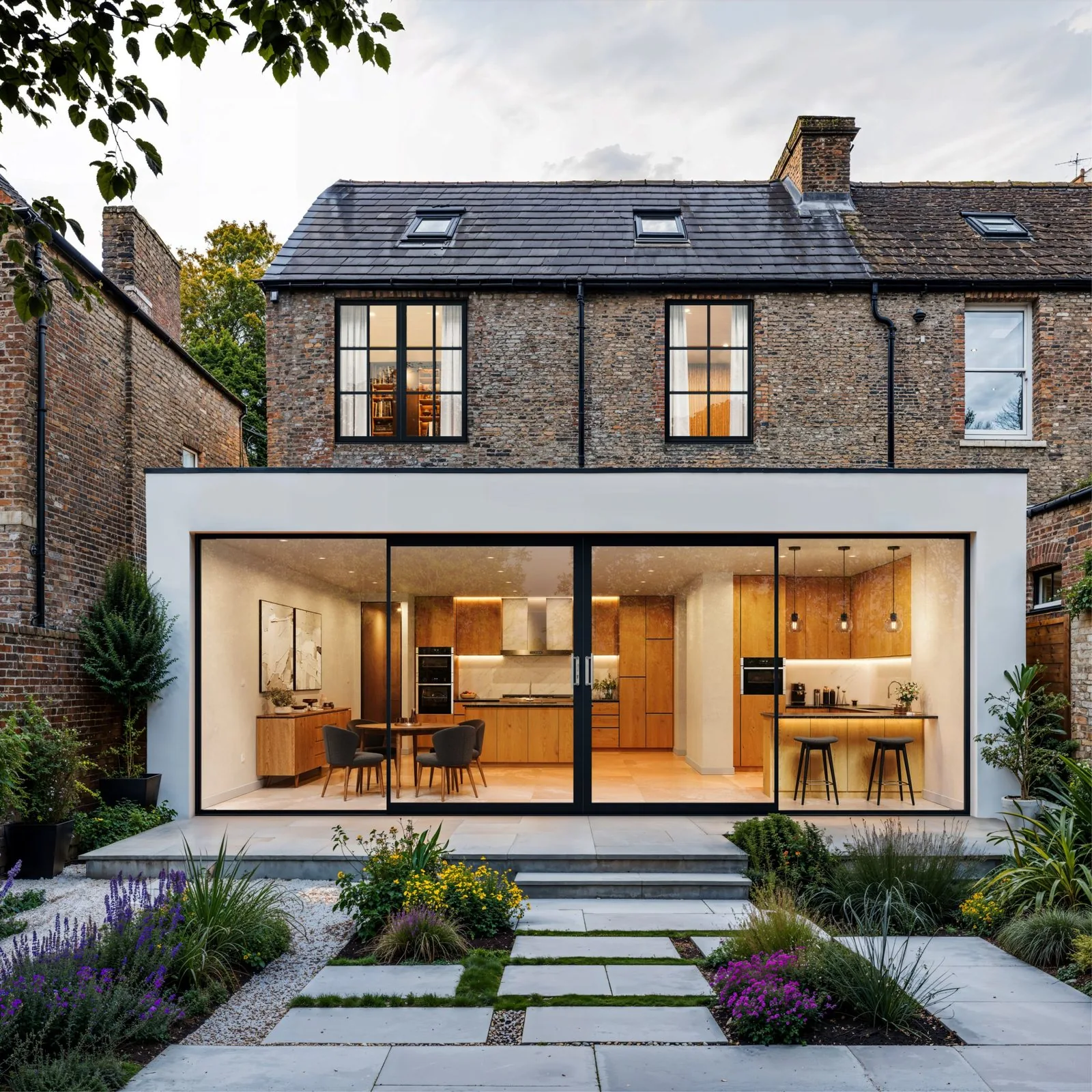
Most materials are chosen for what they add. Aluminium tends to be chosen for what it allows you to remove: frame. Because the metal is structurally strong in a very slender section, an aluminium window or door can hold a large pane of glass within a frame that barely announces itself. On a contemporary extension, a rear elevation or a tall stairwell window, that difference is the difference between a view and a series of framed pictures.
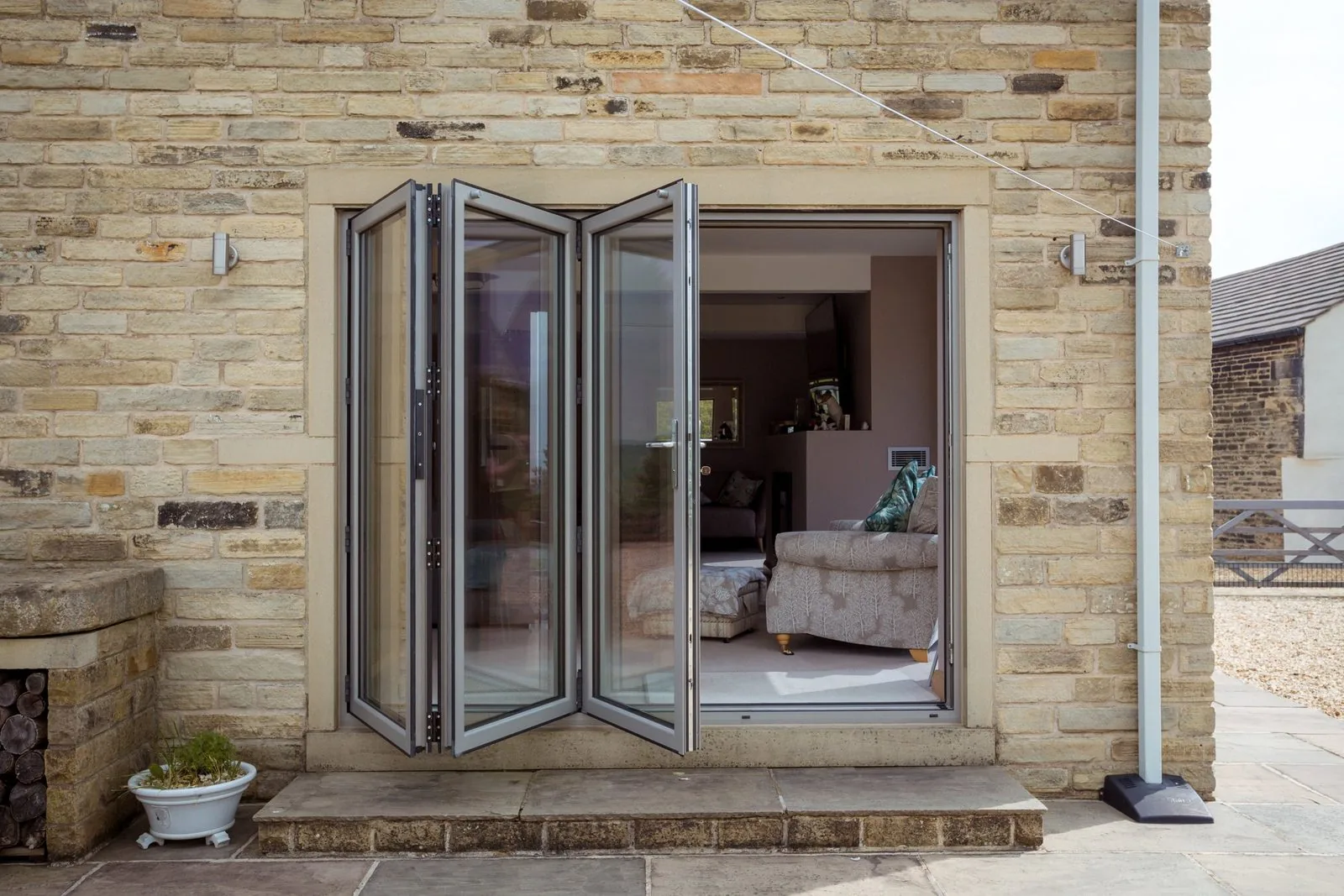
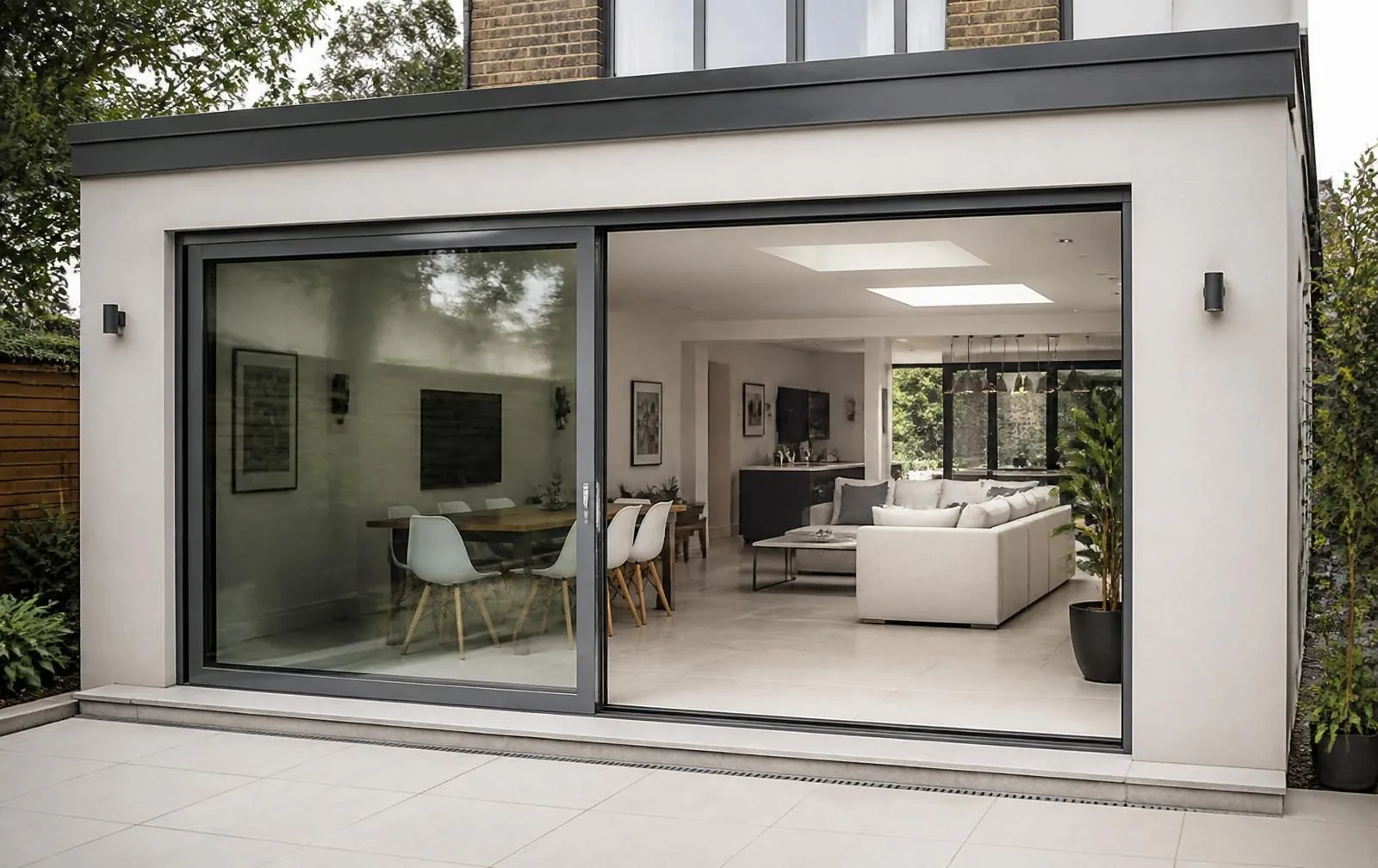
That structural quality also changes what is possible dimensionally. Wide sliding panels, tall bi-fold leaves and large fixed lights are all more comfortably achievable in aluminium than in the alternatives, and they stay true over time because the frame is not relying on internal reinforcement to hold its shape.
Aluminium is not automatically the right answer, and we will say so when it is not. It generally costs more than a comparable uPVC specification, and on some period elevations a timber or heritage detail is the more honest choice. But where design intent, sightline and panel size matter most, aluminium is usually where the conversation ends up.
Beautiful homes begin with better advice.
Material choice is a conversation about your property, not a preference we bring with us to the survey.
Why choose this material
Strength in a slim section, and a finish that stays put.
Thermally broken aluminium systems place an insulating polyamide barrier between the external and internal faces of the frame. This is the single most important development in the material, because it separates the modern product from the cold, condensation-prone aluminium windows that gave the material a poor reputation decades ago. Today's systems are designed as a complete thermal assembly rather than a metal surround.
The finish is applied as a polyester powder coating, cured onto the profile rather than painted onto it. This produces a hard, colour-stable surface that resists fading and chalking, tolerates coastal and urban exposure and requires nothing more than periodic washing. Colour consistency across a facade of windows, doors and roof glazing is one of the practical reasons architects specify aluminium so often.
Because the frame is dimensionally stable, hardware alignment tends to remain good over the long term. Doors that were adjusted correctly on installation generally stay adjusted, which matters a great deal on heavy sliding and folding sets where a small amount of movement becomes very noticeable in daily use.
Who this material is best for
Where aluminium consistently earns its place.
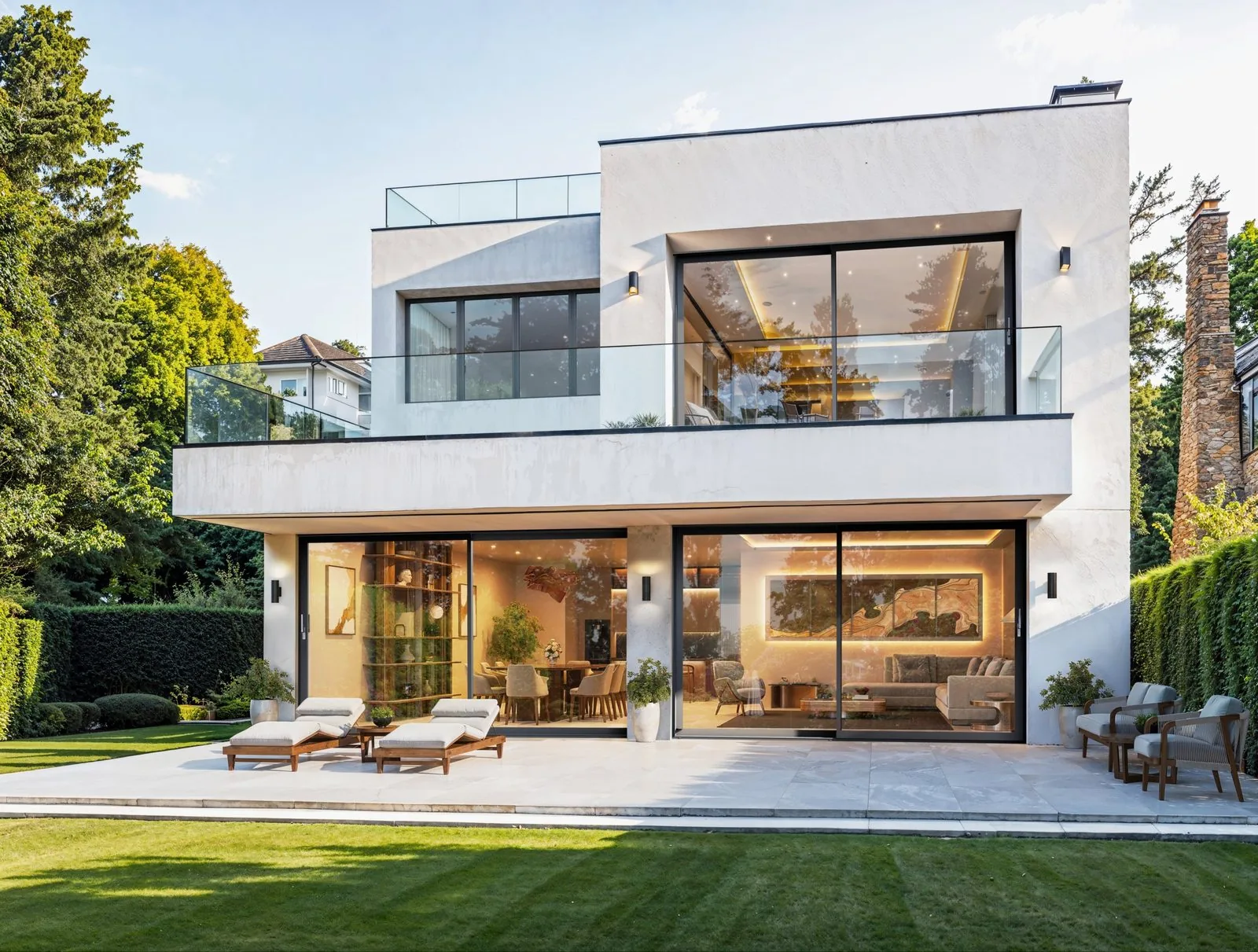
Aluminium suits homeowners for whom the appearance of the frame is part of the design rather than an inconvenience to be minimised. Rear extensions, garden rooms, loft conversions and whole-house architectural renovations are its natural territory, particularly where the glazing is intended to read as a single considered composition.
It also suits properties where the openings are simply large. If you are opening a wall to the garden, or replacing a bay with a modern equivalent, the structural performance of aluminium usually determines what is achievable without introducing extra mullions that break the view.
It is a less obvious choice where budget is the primary constraint, where openings are modest and conventional, or where a listed building consent will require authentic joinery. In those cases we would point you towards uPVC or timber, and explain why.
- Contemporary rear and side extensions
- Architectural renovations and refurbishments
- Wide sliding and bi-fold openings
- Tall stairwell and gable glazing
- Roof lanterns and rooflights
- Steel-look and heritage-style grids
- Coastal and exposed urban elevations
- Whole-elevation colour matching
Key benefits
What this material gives you, in practical terms.
Slim sightlines
Narrow frame sections carry more glass, so daylight and views take priority over framing.
Large panel capability
Structural strength makes wide sliding panels and tall leaves realistic rather than aspirational.
Colour consistency
Powder-coated finishes resist fading and hold their tone across an entire elevation.
Low upkeep
No painting, no swelling, no rot. Periodic washing and hardware lubrication is the routine.
Design & appearance
Restrained, precise and deliberately understated.
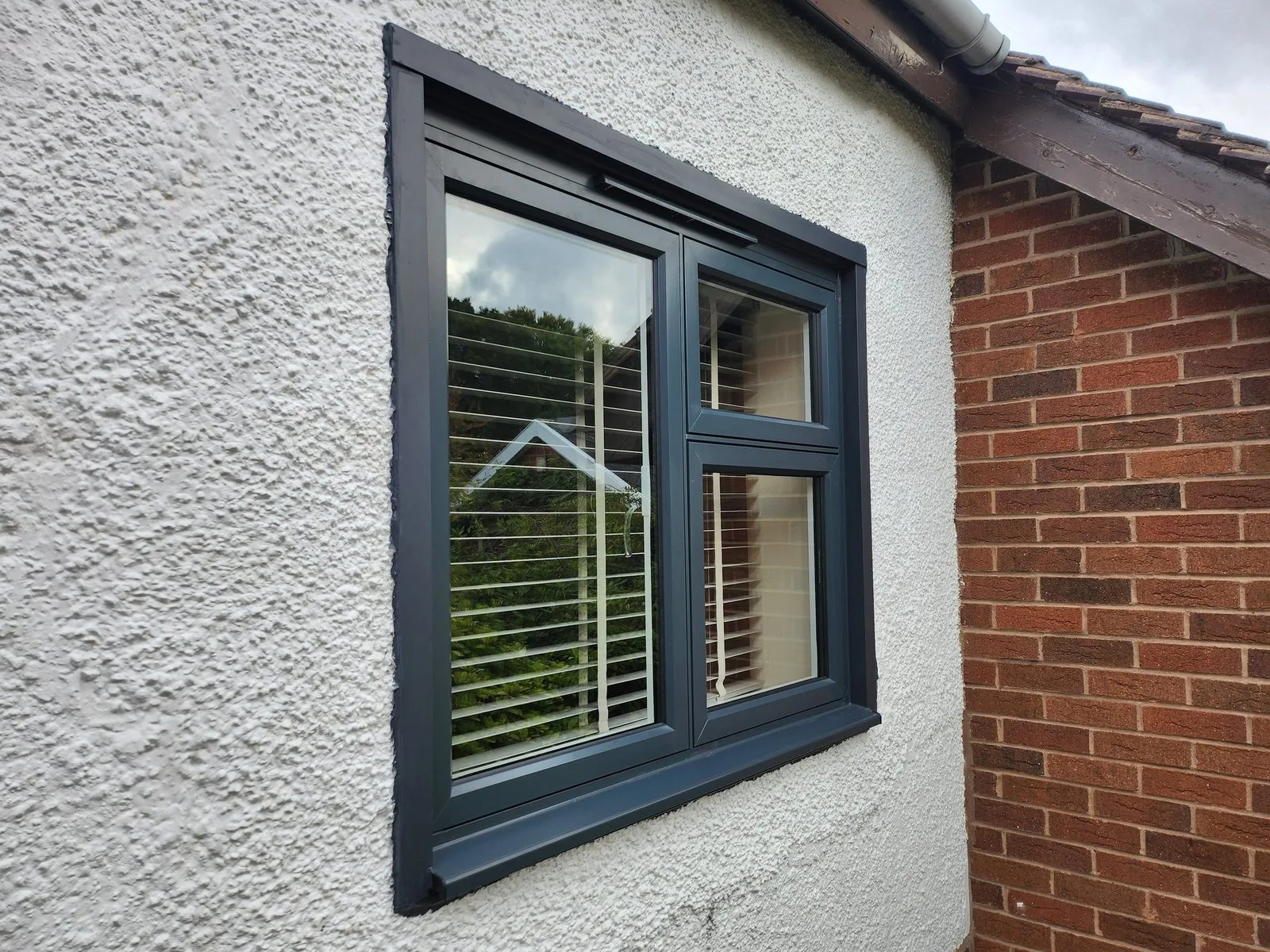
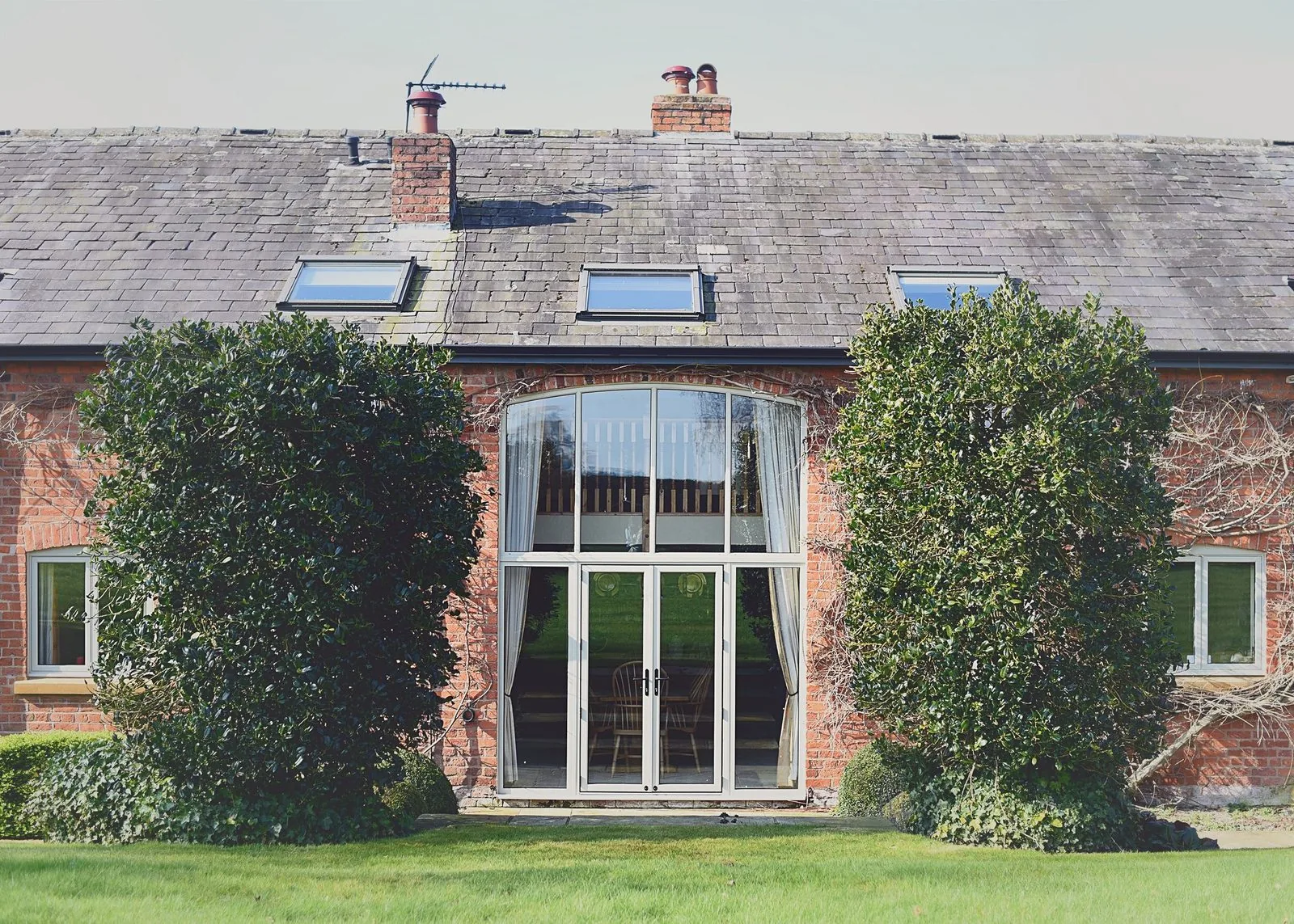
The visual language of aluminium is precision. Mitred corners, flat faces and consistent shadow gaps give the frame a machined quality that suits contemporary architecture and sits surprisingly well against traditional brickwork when the colour is chosen carefully.
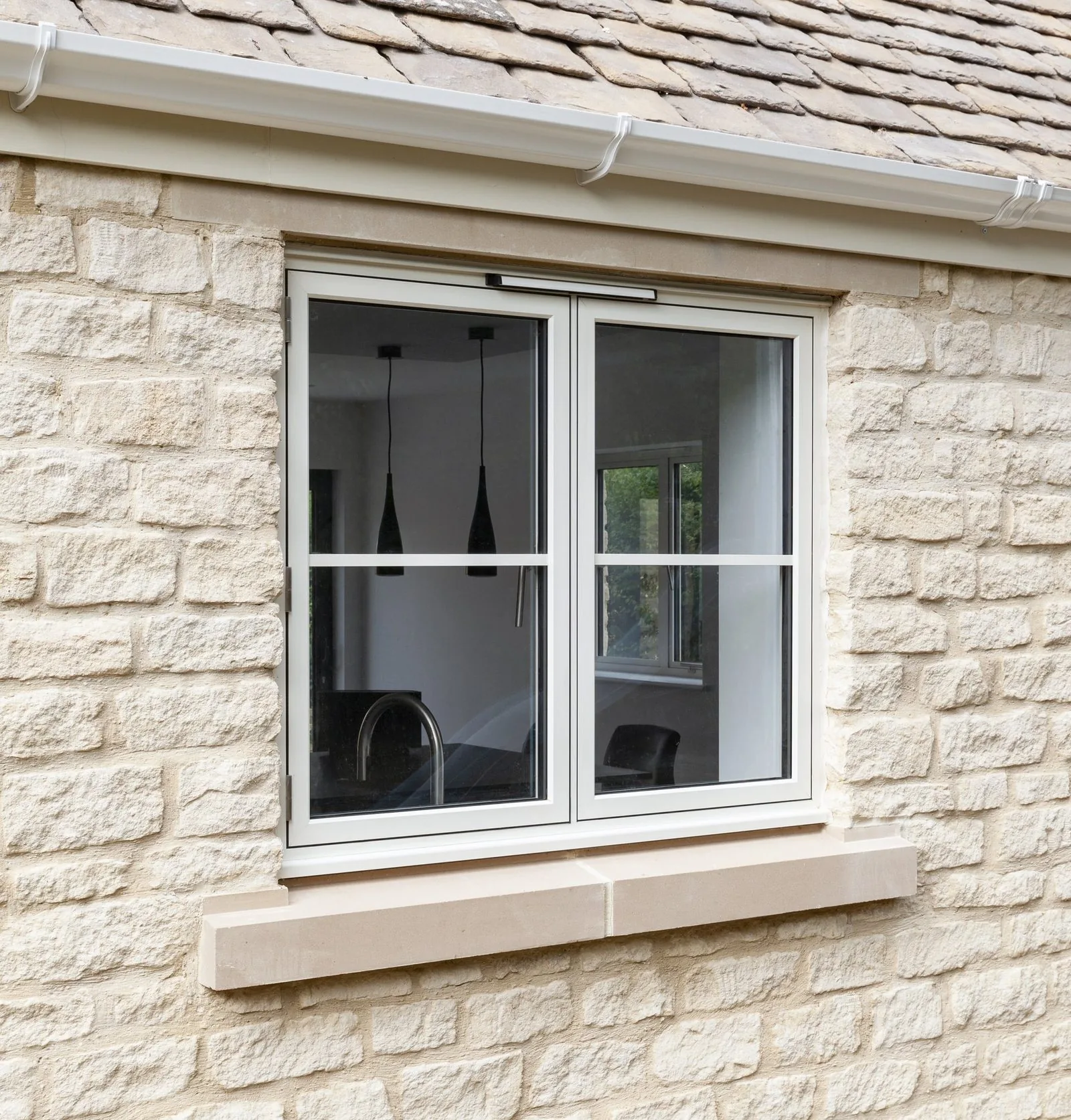
The same slenderness that suits modern design also makes aluminium credible in heritage-style applications. Steel-look systems reproduce the fine grids and slim bars of early twentieth-century glazing, offering the appearance associated with that era alongside modern thermal performance and weather sealing.
Because the material can be formed into very consistent sections, glazing across windows, doors and roof glazing can be visually coordinated: the same frame depth, the same colour, the same detailing, whether the opening is a small utility window or a five-metre sliding set.
- Slim frame sections with maximum glass area
- Flush, flat and heritage profile options
- Steel-look grid and bar detailing
- Coordinated detailing across windows, doors and roof glazing
- Concealed or minimal-appearance hardware options
- Matt, satin, gloss and textured finishes
Available products
Where aluminium appears in our ranges.
Aluminium is offered across windows, entrance doors, sliding and folding doors, French doors, heritage-style glazing and roof lanterns. Availability differs between individual systems and configurations, so the pages below explain what is realistic for each product family.
Available across selected product ranges.
Colour & finish options
Details you will look at every single day.
Finishes
Powder coating gives aluminium an unusually broad and stable colour palette. Dark neutrals dominate contemporary work because they recede visually and make the glass read as a void rather than a panel, while softer greys, greens and off-whites tend to suit older elevations and garden-facing rooms.
Finish texture is as important as colour. A matt or fine-textured finish absorbs light and looks quieter on a large expanse of frame, while satin finishes pick up more highlight and can lift a shaded elevation. We usually recommend looking at samples in place, on the actual elevation, before committing.
Dual-colour options are available across selected ranges, allowing a different internal and external finish. The specific colours and textures available depend on the system chosen, and are confirmed during specification.
Architectural neutrals
Greys, graphites and off-blacks that let the glazing dominate and pair cleanly with brick, render and timber cladding.
Heritage tones
Softer greens, blues and stone shades intended to sit comfortably on older elevations rather than compete with them.
Textured finishes
Fine-textured coatings that diffuse light, disguise surface marks and read as more solid on large frame areas.
Dual-colour
A recessive exterior with a lighter interior, available across selected product ranges.
Energy efficiency
Warmth, honestly explained.
Thermal performance in aluminium comes from the whole assembly: the thermal break within the profile, the glazing unit, the spacer bar and the quality of the installation seal. A modern system specified correctly performs to current standards, but the number that matters is the one calculated for your actual configuration rather than a marketing figure.
- Thermally broken profiles separate internal and external frame faces
- Double or triple glazing options across selected ranges
- Warm-edge spacer options to reduce edge heat loss
- Performance confirmed in writing at specification stage
- Installation sealing detailed as part of the survey
Security
Specified, not assumed.
Security is a function of the frame, the locking system, the glazing and how the unit is installed, not of the material alone. Aluminium's rigidity gives a stable platform for multipoint locking, and the reinforcement inherent in the profile means the frame resists the leverage that forced entry attempts rely on.
- Multipoint locking across window and door ranges
- Laminated glazing options where additional resistance is wanted
- Rigid frames that resist leverage without added reinforcement
- Concealed and shielded hinge options on selected systems
- Locking and glazing specification agreed before order
Performance & durability
How it behaves over decades.
Aluminium does not absorb moisture, so it does not swell, rot or distort with the seasons. That dimensional stability is why large aluminium doors tend to keep operating smoothly, and why frame geometry stays true on very wide openings where movement would otherwise be obvious.
- No rot, warping or moisture absorption
- Corrosion-resistant powder-coated surface
- Stable geometry on large and heavy panels
- Consistent hardware alignment over time
- Well suited to exposed and coastal elevations
Maintenance
What ownership actually involves.
Maintenance is deliberately undemanding: wash the frames periodically with clean water and a mild detergent, keep drainage slots clear, and lubricate hinges, rollers and locking gear as recommended for the system. Nothing needs sanding, filling or repainting.
- Periodic washing with mild detergent
- Keep drainage channels and slots clear
- Lubricate hinges, rollers and locking gear
- Check and clean weather seals annually
- No repainting or refinishing required
Sustainability
The longer view on environmental impact.
Aluminium is one of the most recycled construction materials in use, and the metal can be reprocessed repeatedly without losing its structural qualities. That matters at the end of a frame's life, when the profile has genuine material value rather than becoming waste.
The more significant environmental factor, though, is service life. A frame that stays sound and looking correct for decades avoids the impact of replacing it, and glazing that reduces heat loss reduces the energy the house consumes every winter it stands.
- Highly recyclable at end of life
- Long service life reduces replacement cycles
- No solvent-based refinishing over the frame's life
- Improved glazing reduces ongoing heating demand
Important considerations
Where this material may not be the right answer.
Aluminium generally represents a higher initial investment than uPVC for a comparable opening. On a modest replacement project with conventional window sizes, that additional spend may be better directed towards glazing quality or a larger scope of work, and we will tell you when we think that is the case.
Aluminium is also not always the right answer on sensitive elevations. Where a building is listed, or a conservation area requires authentic joinery detail, a timber solution is often what will secure consent. Heritage-style aluminium is credible in many settings, but not in every one.
Finally, availability is not uniform. Not every style, configuration or finish exists in aluminium across every product range, and we would rather set that out at the survey than after an order.
- Higher initial investment than comparable uPVC
- Not always accepted where authentic joinery is required
- Dark finishes show dust more readily on street elevations
- Options and sizes vary between systems
- Available across selected product ranges only
Frequently asked questions
The questions homeowners ask us most.
Are aluminium windows energy efficient?+
Modern architectural aluminium systems are thermally broken, meaning an insulating polyamide barrier separates the outer and inner sections of the frame so heat cannot pass straight through the metal. Combined with a well-specified sealed glazing unit, the result is a window that meets current Building Regulations comfortably. The exact figure depends on the system, the glass make-up and the size of the opening, so we confirm the performance of your specification in writing rather than quoting a headline number.
Do aluminium frames cause condensation?+
Older, non-thermally-broken aluminium frames from the 1970s and 1980s were notorious for internal condensation because the cold outside face conducted straight through to the room. Thermally broken systems behave very differently, keeping the internal frame face much closer to room temperature. Where condensation still appears, it is usually a ventilation and humidity issue in the room rather than a fault in the frame, which is something we look at during the survey.
How long do aluminium windows and doors last?+
Aluminium does not rot, warp or absorb moisture, and a polyester powder-coated finish is extremely stable, so a well-installed aluminium window or door has a very long service life. Rather than quote a single figure, we would say that hardware, seals and glazing units are the components most likely to need attention over time, while the frame itself typically remains sound and true well beyond the point at which other materials would need replacement.
Are aluminium windows more expensive than uPVC?+
Generally yes. Aluminium usually represents a higher initial investment than an equivalent uPVC specification. What you buy with that difference is slimmer sightlines, larger achievable panel sizes, a wider colour palette with excellent long-term consistency and a frame that holds its geometry on very large openings. Whether that premium is worth paying depends entirely on the property and the design ambition, and we are happy to tell you when it is not.
Can aluminium frames be used in period properties?+
Often, yes, provided the detailing is right. Steel-look and heritage-style aluminium systems reproduce the slim grids and fine sections associated with early twentieth-century glazing far more convincingly than bulkier alternatives. Whether it is appropriate on your elevation depends on local planning policy, whether the building is listed and whether the street is designated, all of which we check before recommending anything.
What colours are available?+
Aluminium is finished with polyester powder coating, which opens up an extensive range of architectural colours in matt, satin, gloss and textured finishes. Dark neutrals, greys, greens and off-blacks are the most frequently specified on contemporary extensions, while softer heritage tones suit older elevations. Finish availability varies between systems, so we confirm the exact options for your chosen range during specification.
Can the inside and outside be different colours?+
Dual-colour finishes are available across many aluminium ranges, which allows a dark, recessive exterior alongside a lighter interior that keeps rooms feeling open. It is a genuinely useful option where the external elevation and the internal decoration want different things. It is offered across selected product ranges rather than universally, so we confirm it against the system chosen.
Are aluminium frames suitable for large openings?+
This is one of aluminium's clearest strengths. Because the metal is inherently strong, a slimmer frame section can carry a heavier and larger glazed panel than the same section in another material. That makes aluminium the usual choice for wide sliding doors, generous bi-fold openings and tall fixed glazing. Actual maximum sizes are set by the specific system and the glass specification, and are confirmed at survey.
Begin the conversation
Talk the material through before you commit to anything.
Exact performance figures depend on the system, glazing and configuration finally selected, so we confirm them in writing during consultation and specification rather than guessing at them on a web page.