

Acrylic panel
Lightweight, low-cost and easy to handle, though more prone to scratching and slight UV yellowing over several years than glass.
Windows / Secondary Glazing / Magnetic
A lightweight panel on a magnetic strip, genuinely useful in the right room — and we will tell you plainly when it is not the right answer for yours.
Introduction
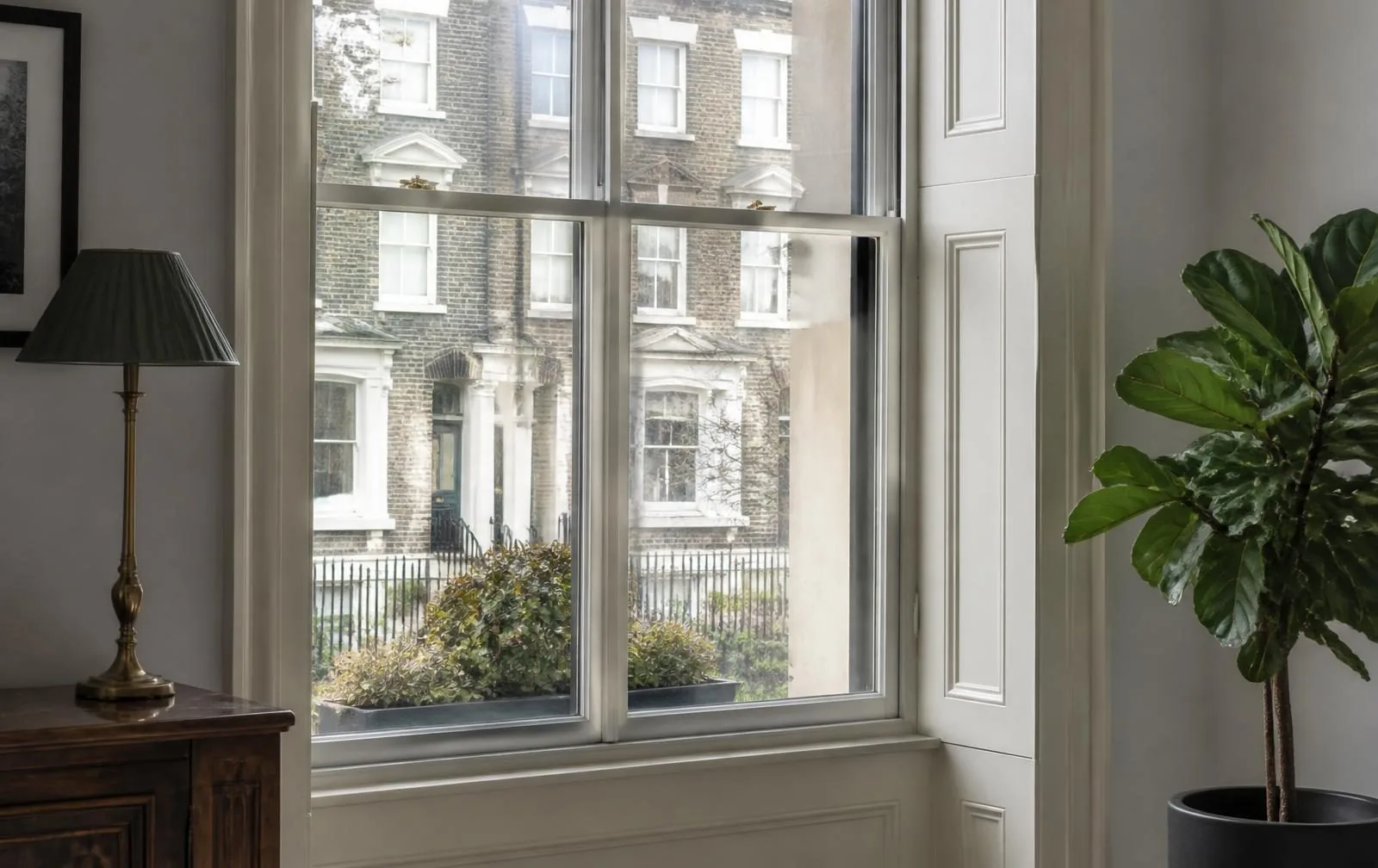
Magnetic secondary glazing is a slim acrylic or thin glass panel edged with magnetic tape, pressed against a discreet metal strip fixed around the window reveal. There is no frame, no track and no hardware to operate — the panel lifts off by hand in seconds and clips back into place just as quickly. It is the fastest, least expensive and least disruptive secondary glazing product we offer.
It is also, honestly, a lighter-duty product than a fully framed slider or casement, and we think you should know that before you order it rather than after. A magnetic seal does not compress with the same consistency as a proper perimeter gasket under locking hardware, and the panel material itself is more vulnerable to scratching and warping over the long term than framed glass. Neither of those things makes it a bad product — they make it the right product for some rooms and the wrong one for others.
This page sets out exactly that: how it works, what it is genuinely good at, and the situations — durability, acoustic performance, ventilation, means of escape — where we would recommend a framed alternative instead.
Beautiful homes begin with better advice.
We would rather spend an hour explaining why something is not right for your property than sell it to you.
Who this suits
Magnetic secondary glazing suits rooms with modest, occasional demands: a spare bedroom or study used seasonally, a rental property where a landlord wants a quick and affordable improvement without a full specification process, or a household that wants to trial the comfort improvement secondary glazing offers before committing to a permanent framed system.
It is also a sensible short-term measure in a listed building ahead of a full consultation with a conservation officer, since it involves nothing more than a slim strip fixed to the reveal and can be entirely removed in moments to view the original window.
It suits rooms that are opened rarely, since the panel has to be lifted off entirely for ventilation rather than slid or hinged open, and it is best avoided in rooms with a genuine condensation risk, a serious noise problem, or a heavy daily-use requirement — for those we would talk you through a framed slider or casement instead.

Benefits
The most affordable way to add a meaningful thermal buffer to an existing window.
No hardware, no running gear — the panel lifts on and off by hand in seconds.
A slim magnetic strip is the least visible and easiest fixing to remove of any secondary glazing product we offer.
With nothing locked or hinged, the panel can be lifted away instantly if a room needs to be used as an escape route.
Features
Material options
Lightweight, low-cost and easy to handle, though more prone to scratching and slight UV yellowing over several years than glass.
More scratch-resistant and optically clearer than acrylic, at a modest weight and cost premium, and our preferred option for higher-use rooms choosing this product.
A slim, powder-coated metal strip fixed to the reveal, doing the entire job of holding the panel in place with no additional hardware.
Colours & hardware
White
The most common finish for the reveal strip, disappearing against a painted surround.
Matched paint colours
The metal strip can be finished to closely match the existing reveal or window colour where a slightly closer match is wanted.
Clear panel edge
The panel itself is left uncoloured in all cases, since it is the transparency that matters, not a frame finish.
Magnetic tape edge
The entire fixing method — no handles, hinges, or locks are fitted, which is both the product's simplicity and its principal limitation.
Full-panel lift-out
The only method of access; there is no partial opening, which is why ventilation needs to be considered carefully at the point of ordering.
Reveal fixing strip
Screwed lightly to the reveal or wall face, the only permanent element of the installation and simple to remove without trace.
Glass options
The default lightweight panel material, suitable for the majority of magnetic installations.
A more durable, scratch-resistant alternative for rooms in more frequent use, at a higher weight than acrylic.
A lightly treated surface reducing reflections, worth considering on south-facing rooms used as a study or home office.
Security
Magnetic panels are not intended as a security product, and we are clear about that rather than overstating the benefit — a determined attempt to remove the panel from outside a ground floor window would not be meaningfully resisted.
Energy efficiency
The thermal improvement is real but more modest than a framed system, since the seal depends entirely on the strength and continuity of the magnetic strip rather than a compressed perimeter gasket.
Noise reduction
This is the area where we are most careful to manage expectations: a magnetic panel takes the edge off background noise but does not deliver the acoustic reduction a framed, sealed acoustic system achieves.
Maintenance
Maintenance is minimal, but the panel does need slightly more care over its lifespan than a framed glass unit, since the material itself is more vulnerable.
Frequently asked questions
A slim metal strip is fixed around the window reveal, and a lightweight panel — usually acrylic, sometimes thin glass — with a magnetic tape edge is pressed into place against it. There is no frame, no hinges and no running gear; the panel simply lifts off by hand and clips back on. It is the fastest and least invasive form of secondary glazing to fit, and the easiest to remove entirely.
For sealing and airtightness, generally no. A framed slider or casement compresses a continuous gasket around the full perimeter with locking hardware maintaining that pressure; a magnetic panel relies on the strength of the magnetic strip alone, which is weaker at the corners and can lift slightly over time or with a firm knock. It is a genuinely useful lighter-duty product, not a direct substitute for a fully framed acoustic or thermal specification.
It excels as a low-cost, low-disruption way to cut draughts and add a meaningful thermal buffer to a room that is only used seasonally, to a rental property where a landlord wants improvement without capital works, or as an interim measure while a household plans a more permanent specification. It is also popular in listed buildings for very short-term or trial use, since nothing is fixed permanently and it can be taken down for viewing the original window at any time.
A little, not meaningfully. The panel does add a second layer of resistance and will take the edge off casual background noise, but because the magnetic seal is not a continuous compressed gasket, sound leaks around the edges far more readily than through a properly sealed framed unit. If noise reduction is your primary goal, we would steer you toward a slider or casement system with proper acoustic seals rather than a magnetic panel, and explain why on site rather than let you spend money on the wrong product.
It is the least durable option in our range. Acrylic panels scratch more easily than glass and can discolour slightly with UV exposure over several years, the magnetic strip's adhesive can weaken with repeated removal, and larger panels can flex and warp if left in strong sun. For a spare room or a seasonal fix this is rarely a problem; for a room in daily use over a decade, we would generally recommend a framed system instead.
Only with care, and we assess this on every survey. Because the panel simply lifts away by hand with no lock or catch, it does not obstruct a means of escape in the way a locked framed unit could, which is actually an advantage over some framed systems in an escape window. However, we still confirm the panel can be removed quickly by any occupant of the room, including children, and we would not fit a magnetic panel with restrictors or additional fixings that could compromise that.
This is one of the product's real limitations. Because there is no opening mechanism, any ventilation has to happen either through the original window behind it or by lifting the panel off entirely, which most households will not do daily. In a room prone to condensation — a bathroom, kitchen, or bedroom with poor background ventilation — a fixed magnetic panel can trap moisture against the original glass, and we would recommend a slider or vented framed system instead in those rooms.
Because the wrong specification in the wrong room causes problems — condensation, frustration at not being able to ventilate, disappointment at the noise reduction achieved — that reflect badly on secondary glazing generally and, more importantly, leave you with a worse outcome than you were promised. We would rather lose a smaller magnetic panel order and keep your trust than fit something we know will not perform as you expect.
A seasonally used spare room or study needing a quick thermal improvement on a modest budget, a rental property where the landlord wants a fast, low-cost upgrade, a short-term measure ahead of a larger project, or a room where the original window is rarely opened and ventilation is not a live concern. In each of those cases it is genuinely good value and does the job asked of it.
The parent secondary glazing page covers framed sliders, verticals and hinged systems as the default recommendation for most households. Magnetic panels are a distinct, lighter-duty product with a different cost, a different fitting method and a narrower set of situations where they are the right answer, which is why we treat the decision between the two as a genuine conversation rather than assume one replaces the other.
Related articles
Related products
Begin the conversation
A consultation is a conversation about your property — its age, its orientation, its draughts and its planning constraints. You will receive a written specification you can understand and compare, and no follow-up pressure of any kind.
Systems & Profiles We Manufacture
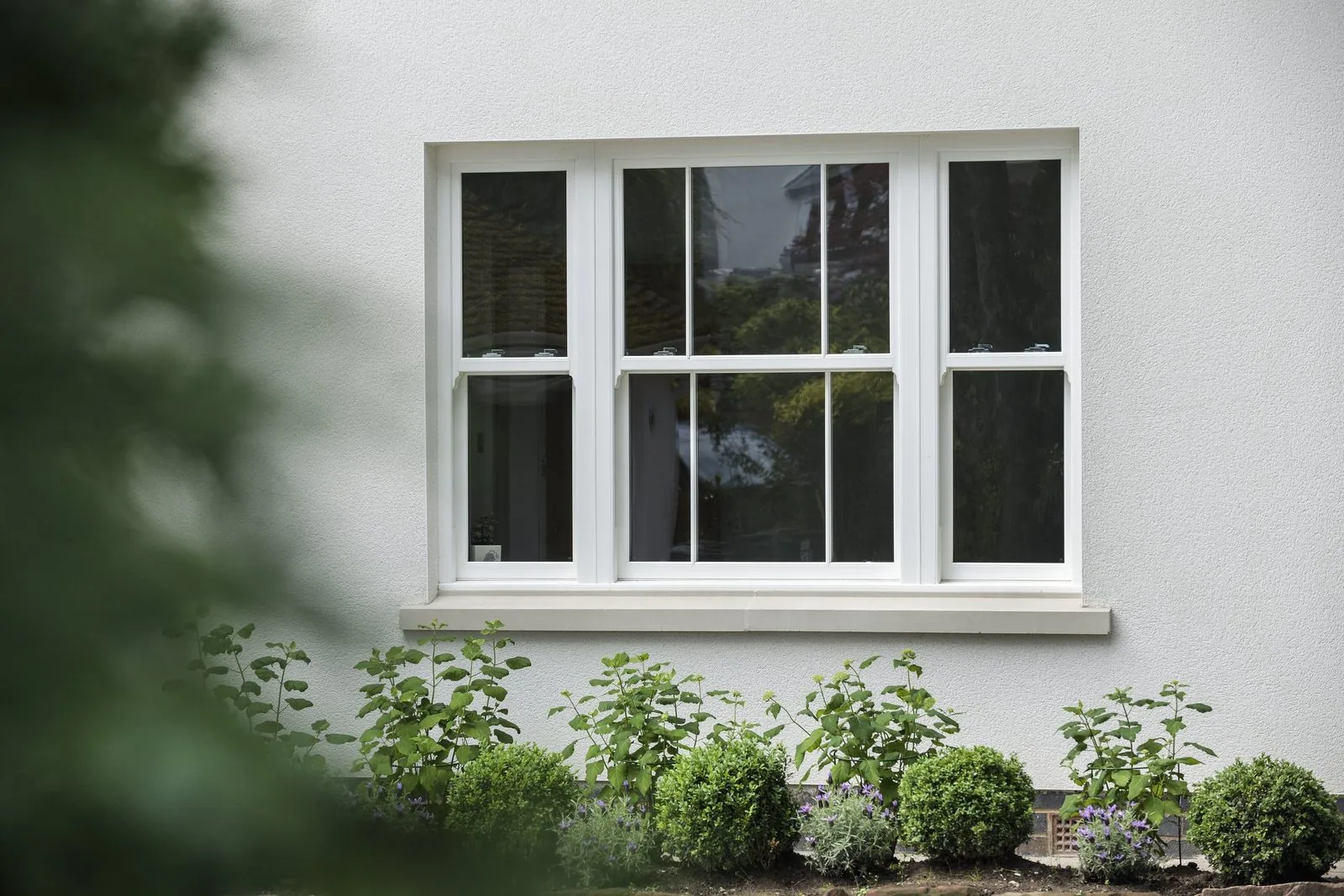
We design and fabricate using premium window and door systems from the UK and Europe's leading manufacturers — so every installation is built on proven, fully warrantied profiles.