
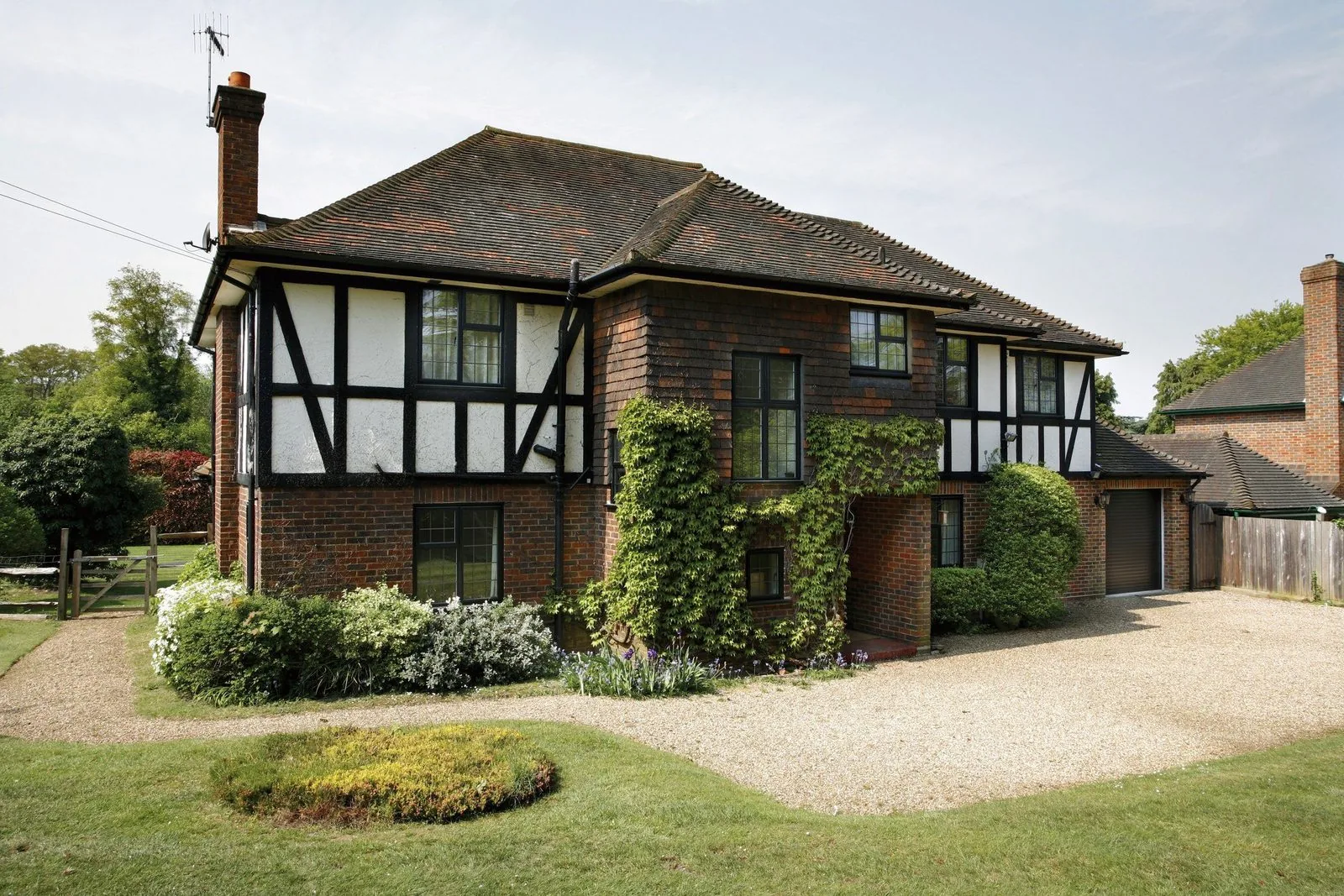
Standard thermally broken aluminium
Polyamide broken profile with load-rated gearing. The baseline specification and the right choice for most openings.
Windows / Tilt & Turn / Aluminium
Thermally broken frames stiff enough to carry a very large inward-opening sash — with the slimmest sightlines and the most glass we can put in an opening.
Introduction
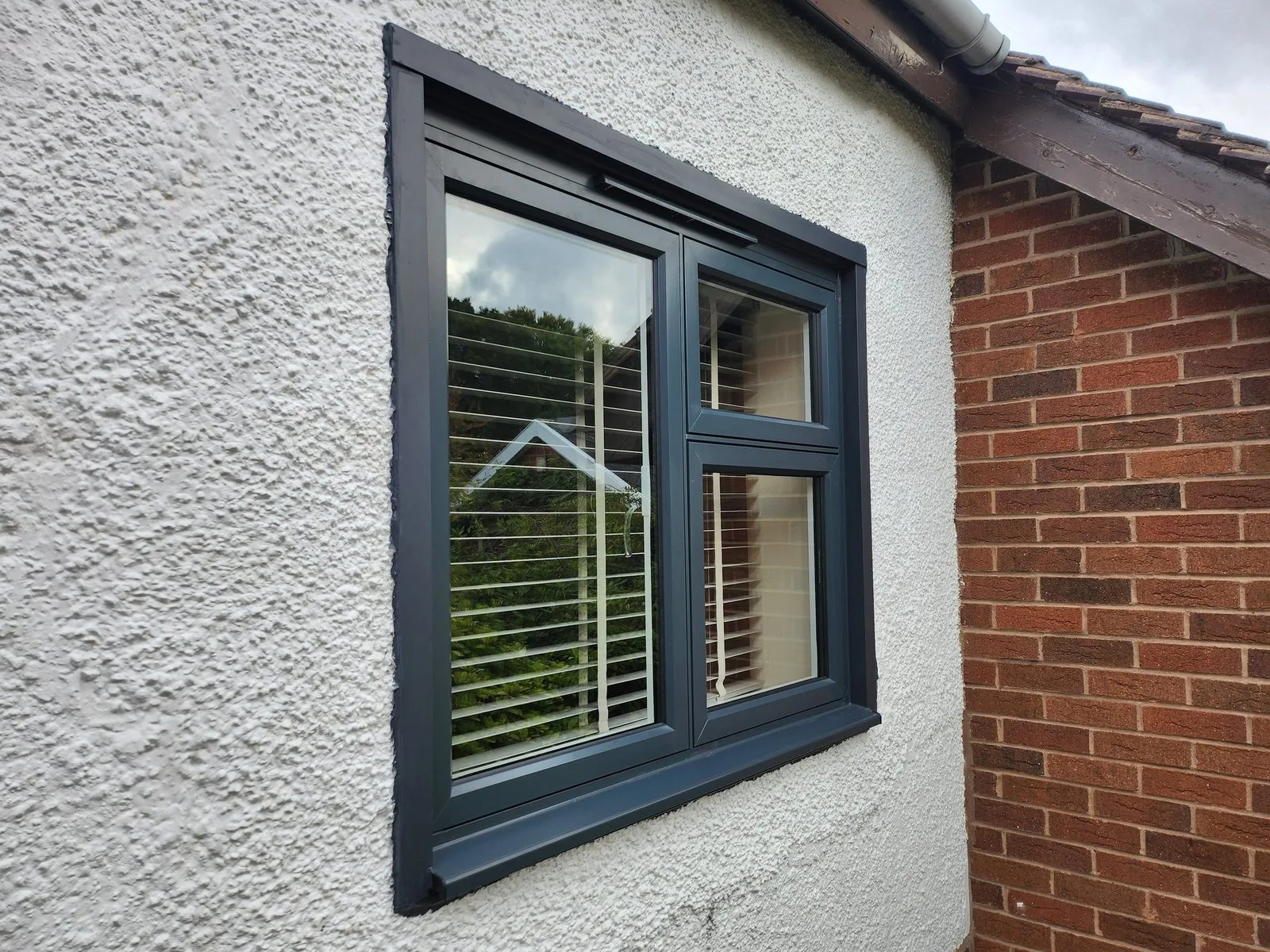
A tilt and turn window concentrates everything into one moving element. There is no mullion breaking the opening into smaller lights and no second sash sharing the load — a single pane hangs on concealed hinges and swings into the room. The frame either carries that without deflection or it does not.
Aluminium carries it. Extruded sections with a polyamide thermal break give a far higher strength-to-depth ratio than a polymer profile, so the frame can be slimmer while the sash gets bigger. In practice that means full-height glazing, stairwell windows and gable openings with a single operable vent and very little visible frame.
This page deals with the material. For how the dual-action mechanism works, where inward opening makes sense and where it conflicts with your interior, the parent tilt and turn page covers it properly.
Beautiful homes begin with better advice.
We would rather spend an hour explaining why something is not right for your property than sell it to you.
Who this suits
The clearest case is size. Once a single sash passes roughly 1.2m by 2.0m, aluminium is no longer a preference but the correct engineering answer, and the difference in long-term behaviour is not subtle.
The second case is sightline. On a large pane the frame is the only thing interrupting the view, and aluminium removes a quarter to a third of it. In contemporary extensions, glazed stairwells and apartments where daylight is the whole point, that is exactly what you are paying for.
The third is longevity and stability. Powder-coated aluminium does not move seasonally, does not require redecoration, and holds its dimensional accuracy — which matters when the gearing depends on the sash still fitting its frame precisely in twenty years.
Benefits
25 to 40 percent less visible frame than uPVC for the same aperture, so the view carries more glass and less profile.
Heavy-duty gearing on a stiff extruded frame carries sashes uPVC cannot sensibly support.
The frame does not move seasonally, so the gearing stays in adjustment and the seals keep compressing evenly.
Oven-cured polyester powder coating in any RAL colour, with marine-grade options for coastal exposure.
Features
Material options
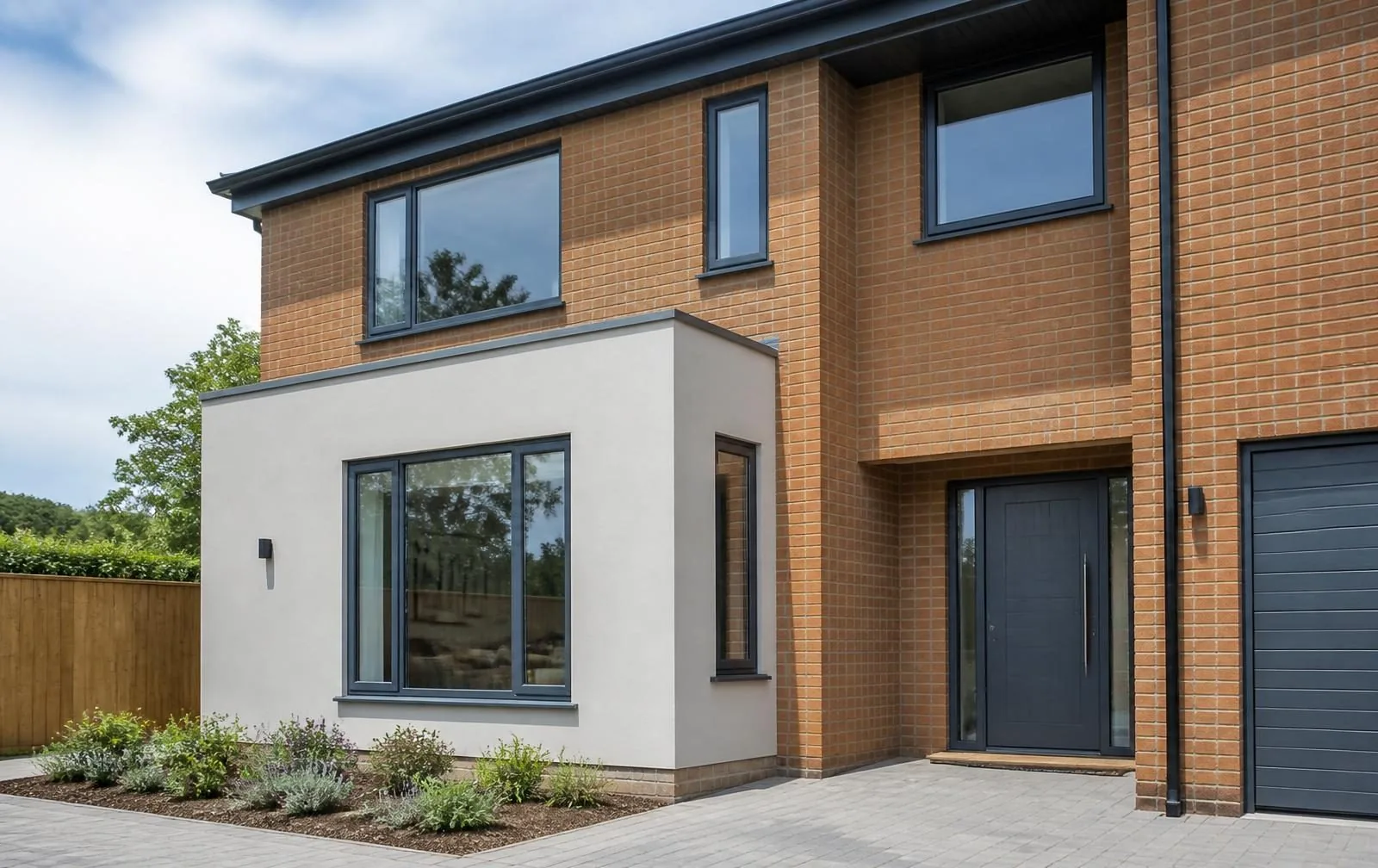
Polyamide broken profile with load-rated gearing. The baseline specification and the right choice for most openings.
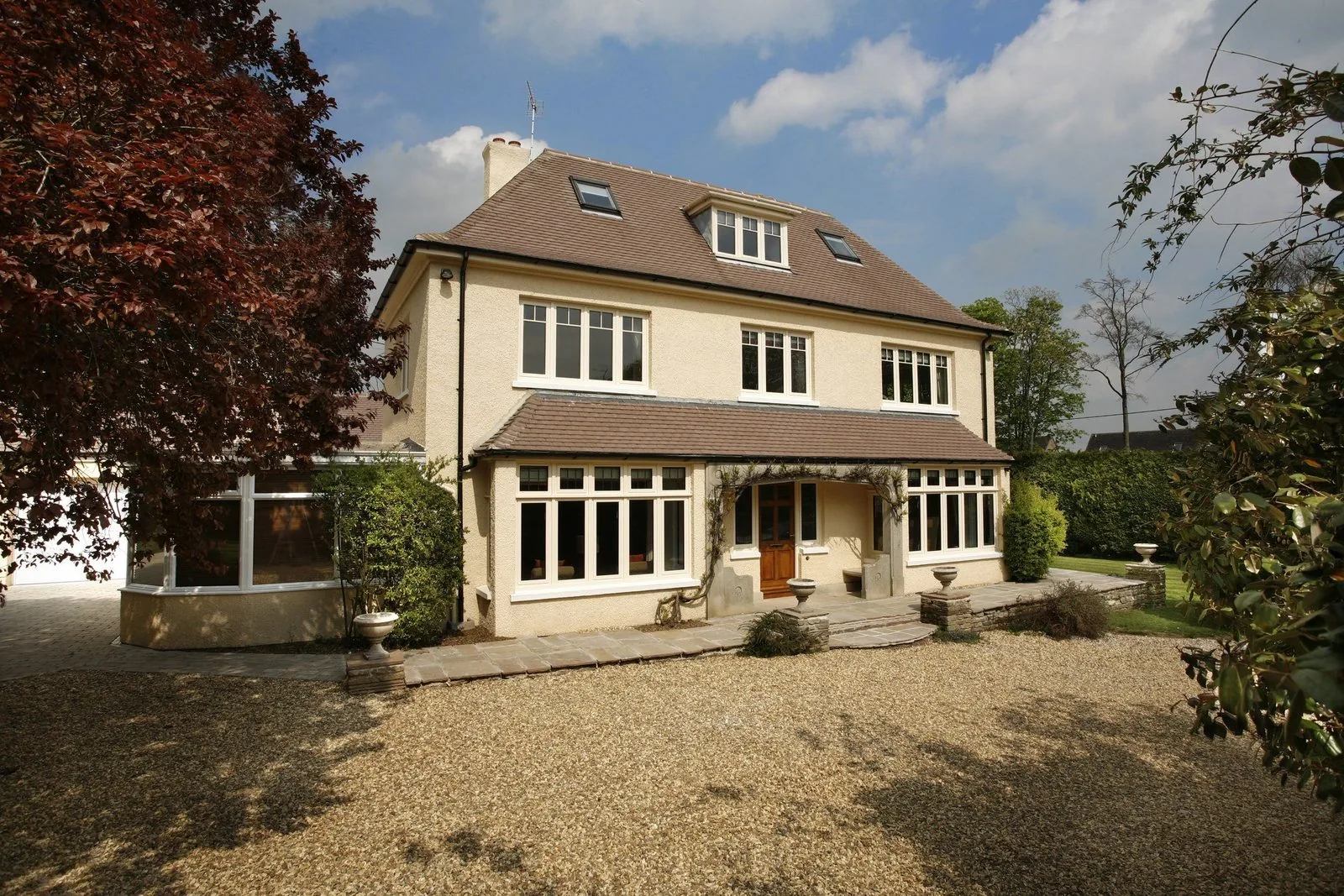
Wider or multi-bar thermal breaks with insulated cavities, specified where triple glazing and low U-values are the objective.
Deeper sections and upgraded hinge and drive gear for the largest single sashes we supply.
Colours & hardware
Anthracite grey RAL 7016
The most specified finish in the country, in matt or satin. Suits brick, render and timber cladding equally.
Jet black RAL 9005
Sharp and architectural, particularly effective where the frame is meant to disappear against the glass.
Graphite and slate greys
Softer alternatives to black on lighter brickwork and rendered elevations.
Dual colour
Dark externally, light internally. Possible because the thermal break separates the two halves of the profile.
Bespoke RAL
Any RAL reference to order, including textured and metallic finishes, with marine-grade coating for coastal sites.
Heavy-duty gearing
Continuous drive around the sash perimeter, rated to the glazed unit weight rather than the frame size.
Single lever handle
Locked, turn and tilt positions in anthracite, black, brushed steel, chrome and white, with key-locking options.
Concealed load-rated hinges
Sized to the sash and hidden inside the rebate, with nothing exposed externally to attack.
Turn restrictors
Limit or disable the full swing so the window can be left in tilt-only operation.
Night vent latch
Holds the tilt position securely for overnight background ventilation.
Trickle vents
Colour-matched and closable, sized to the equivalent area of the window replaced.
Glass options
Low-E inner pane, argon-filled cavity and warm-edge spacer. The standard build across the range.
44mm units in deeper sections with upgraded gearing, reaching around 0.9 W/m²K whole window.
Asymmetric pane thicknesses with an acoustic interlayer, effective on main roads and flight paths.
Strongly recommended on large south and west facing panes to control summer gain.
Standard on accessible openings and on any sash swinging into circulation space.
A photocatalytic coating worth considering on high-level glazing, even though the turn function makes cleaning possible.
Security
A rigid frame, four-sided locking and hinges buried in the rebate make this the most defensible opening window we supply. There is no exposed hardware and no external bead to attack.
Energy efficiency
The polyamide thermal break is what makes modern aluminium viable, and the four-sided compression seal is what makes tilt and turn airtight. Together they give figures that comfortably satisfy current regulations.
Noise reduction
Mass and asymmetry in the glass do the acoustic work. Aluminium's contribution is a rigid frame that does not resonate and a seal that stays evenly compressed over decades.
Maintenance
The frame asks for almost nothing. The gearing, which is carrying a heavy sash through two different motions, is worth ten minutes a year.
Frequently asked questions
Because aluminium is stiff. The whole point of a tilt and turn is a single large sash swinging inward on concealed hinges, and the frame has to carry that load without deflecting. Aluminium does it in a slimmer section than uPVC, which means more glass, less frame and a noticeably larger sash capacity.
Around 1.4m wide by 2.4m tall is comfortably achievable with heavy-duty gearing, and taller in some systems. Full-height stairwell and gable glazing with a single opening vent is exactly the situation aluminium tilt and turn was designed for.
Not in a modern system. A polyamide thermal break separates the internal and external halves of the profile, so the frame does not conduct heat straight through. Whole-window U-values from 1.3 W/m²K in double glazing and around 0.9 W/m²K in triple are routine.
Materially slimmer than uPVC — typically 25 to 40 percent less visible frame for the same aperture. On a large single pane that difference is obvious from inside the room, and it is the main reason people pay the premium.
No. Polyester powder coating is applied electrostatically and oven cured to BS EN 12206, and marine-grade specifications are available for coastal sites. Washing is all it requires, and the finish is typically guaranteed for 25 years.
Yes. Because the profile is split by the thermal break, the two halves can be coated separately — a dark external finish with a light internal one is a very common specification.
The principle is identical but the components are heavier. Hinge sets are load rated to the glazed unit weight, and on the largest sashes we specify upgraded drive gear and additional locking points around the perimeter.
On the rear elevation and in extensions, frequently. On a period front elevation, rarely — the proportions read as contemporary. Where a slim steel-look appearance is the objective on a period house, our steel look windows page is the better starting point.
Expect 30 to 40 years from a thermally broken powder-coated aluminium frame. The gearing and hinges are the wearing parts and are replaceable; the sealed units carry a 10 to 20 year guarantee.
Slimmer frames, a larger maximum sash, better long-term dimensional stability and a longer service life. If your openings are conventional in size and the sightline is not critical, we will tell you plainly that uPVC is the better value.
Related articles
Related products
Begin the conversation
A consultation is a conversation about your property — its age, its orientation, its draughts and its planning constraints. You will receive a written specification you can understand and compare, and no follow-up pressure of any kind.
Systems & Profiles We Manufacture
We design and fabricate using premium window and door systems from the UK and Europe's leading manufacturers — so every installation is built on proven, fully warrantied profiles.