
Materials
Crafted Timber Windows and Doors with Lasting Character
Authentic profiles, genuine bespoke capability and the ability to be repaired rather than replaced. Timber remains the right answer for many period and premium properties.
Introduction
The only material that can be made to match what was there before.
Timber is the material every other glazing material is imitating. Foils, powder coatings and moulded profiles are all, in one way or another, attempts to reproduce the depth, proportion and shadow line of painted joinery. On the right property, going back to the original material is not nostalgia — it is the shortest route to an elevation that looks correct.
What has changed is the timber itself. Modern joinery uses engineered sections: laminated timber, moisture-stabilised, with the grain deliberately arranged to resist movement, and finished under factory conditions with microporous coatings that flex with the timber instead of sealing it under a brittle film. The result behaves very differently from a single-piece softwood frame painted on site fifty years ago.
Timber does ask more of an owner than uPVC or aluminium, and we will not pretend otherwise. In exchange, it offers authenticity of detail, genuine bespoke manufacture, and the ability to be repaired and refinished indefinitely rather than replaced when a component fails.
Beautiful homes begin with better advice.
Material choice is a conversation about your property, not a preference we bring with us to the survey.
Why choose this material
Character, craftsmanship and the ability to be put right.
The first argument for timber is visual. Section depth, moulding profile, putty-line glazing detail, astragal bar thickness and the way light falls across a painted surface are all things timber achieves without approximation. On a Georgian, Victorian or Edwardian elevation those details are the character of the building, and they are the first thing lost in a poorly chosen replacement.
The second is bespoke capability. Because joinery is made rather than assembled from standard extrusions, arched heads, non-standard sizes, unusual proportions and specific mouldings are all achievable. Where an opening is genuinely one of a kind, timber is often the only practical way to fill it correctly.
The third, and the one that pays back longest, is repairability. A timber window is a serviceable object. Rot can be cut out and spliced, joints can be rebuilt, coatings can be renewed and a frame that is fifty years old can be returned to sound condition. That is a fundamentally different ownership model to replacing a sealed manufactured unit.
Who this material is best for
Where timber is the recommendation we would stand behind.
Timber is the natural choice for period properties where the original joinery defines the elevation, and it is very often the necessary choice where a building is listed or sits in a conservation area with an Article 4 direction restricting permitted development.
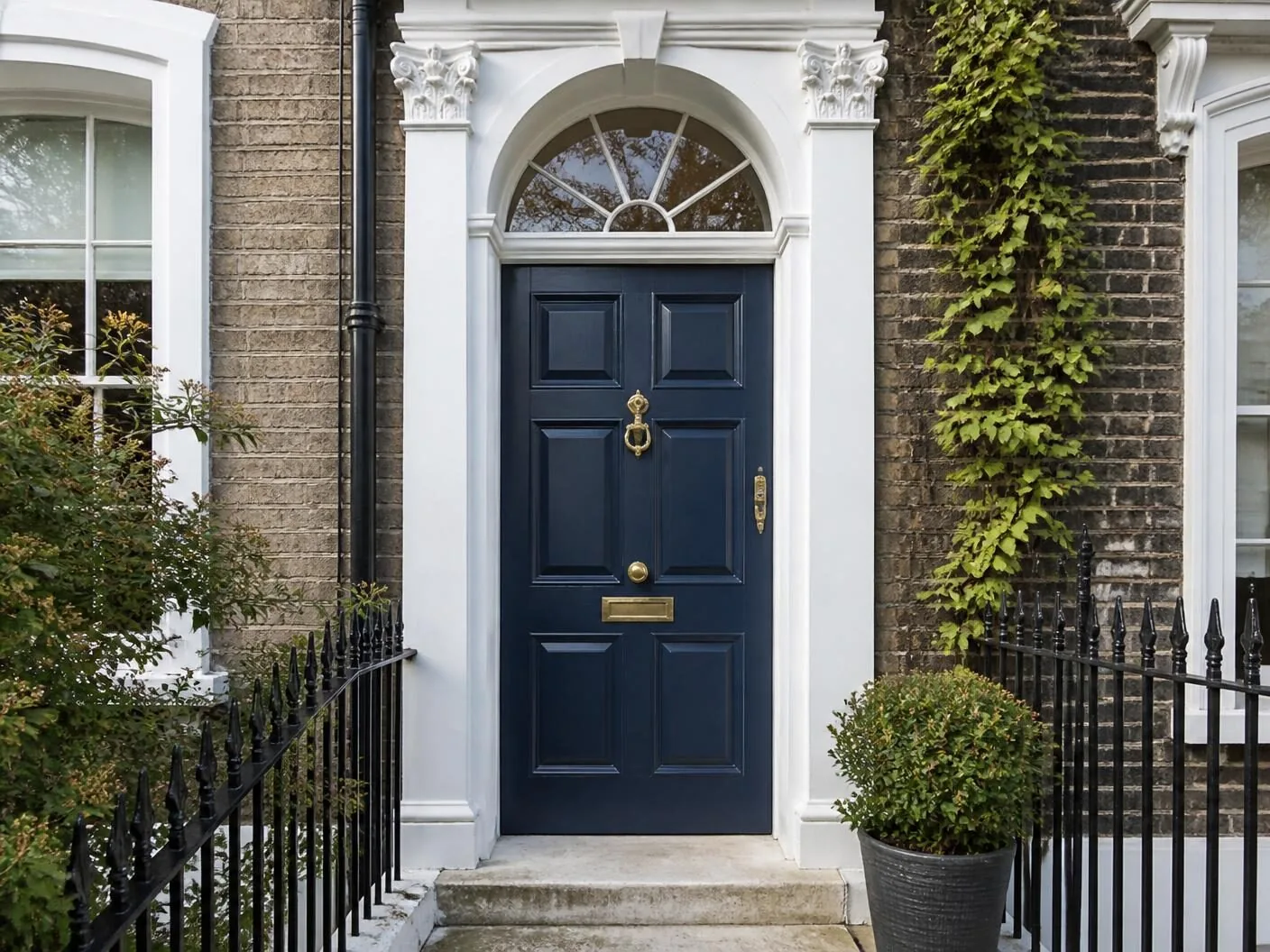
It also suits premium projects where design flexibility matters more than upkeep: bespoke sizes, particular mouldings, specific paint colours matched to an interior scheme, and entrance doors intended to be a genuine piece of joinery rather than a manufactured slab.
It is a poor fit where maintenance access is difficult, where a property is let and upkeep cannot be relied upon, or where the budget is better spent achieving good performance across a whole house. In those situations we would recommend uPVC or aluminium honestly and explain the reasoning.
- Listed buildings and consented works
- Conservation areas and Article 4 streets
- Georgian, Victorian and Edwardian elevations
- Bespoke and non-standard openings
- Arched, curved and specialist joinery
- Entrance doors as a piece of craftsmanship
- Repair and like-for-like replacement schemes
- Premium refurbishment projects
Key benefits
What this material gives you, in practical terms.
Authentic detail
Sections, mouldings and glazing lines that match what the building was designed with.
Genuinely bespoke
Made to order, so unusual sizes, arches and profiles are achievable rather than approximated.
Repairable
Splicing, rebuilding and refinishing keep a frame serviceable instead of replacing it.
Naturally insulating
Timber conducts heat poorly, making it an inherently strong frame material thermally.
Design & appearance
Where proportion and moulding do the work.
Timber design lives in the details that other materials have to simplify. The depth of a glazing bar, the profile of a moulding, the projection of a cill and the reveal of a sash against the frame are all specified individually, which is why timber replacements can be indistinguishable from the joinery they replace.
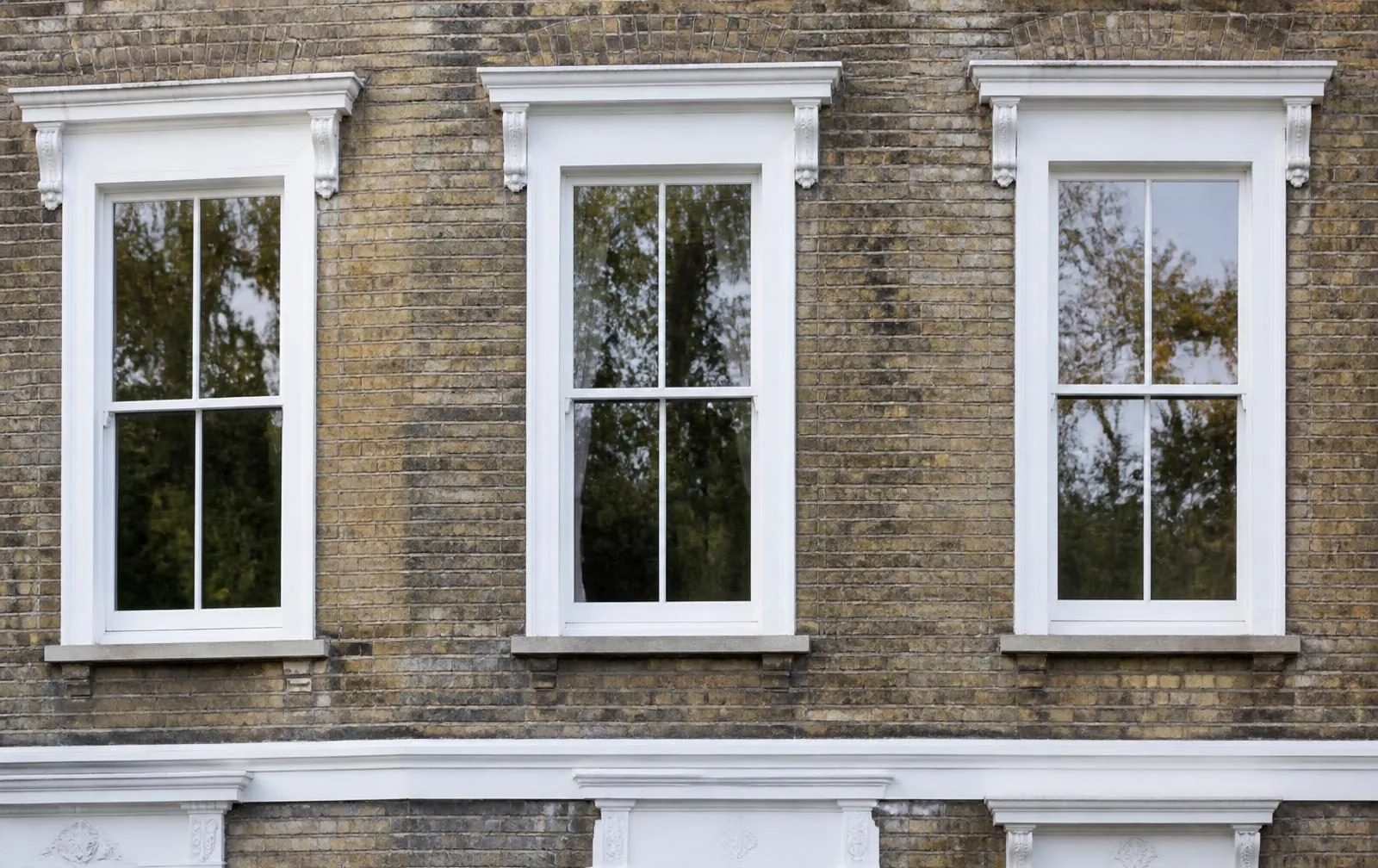
Vertical sliding sash windows are the clearest example. Correct meeting rail alignment, run-through horns, deep bottom rails and slim glazing all read instantly on a period elevation, and they are the difference between a replacement that disappears and one that draws the eye for the wrong reason.
Colour is handled as paint or stain rather than as a fixed manufactured finish, so bespoke colour matching is straightforward and a change of scheme later is a repaint rather than a replacement.
- Authentic mouldings and section profiles
- Traditional sash detailing including horns and deep rails
- Slim double-glazed unit options for period sightlines
- Arched, curved and non-standard openings achievable
- Bespoke paint and stain colour matching
- Traditional ironmongery in period finishes
Available products
Where timber appears in our ranges.
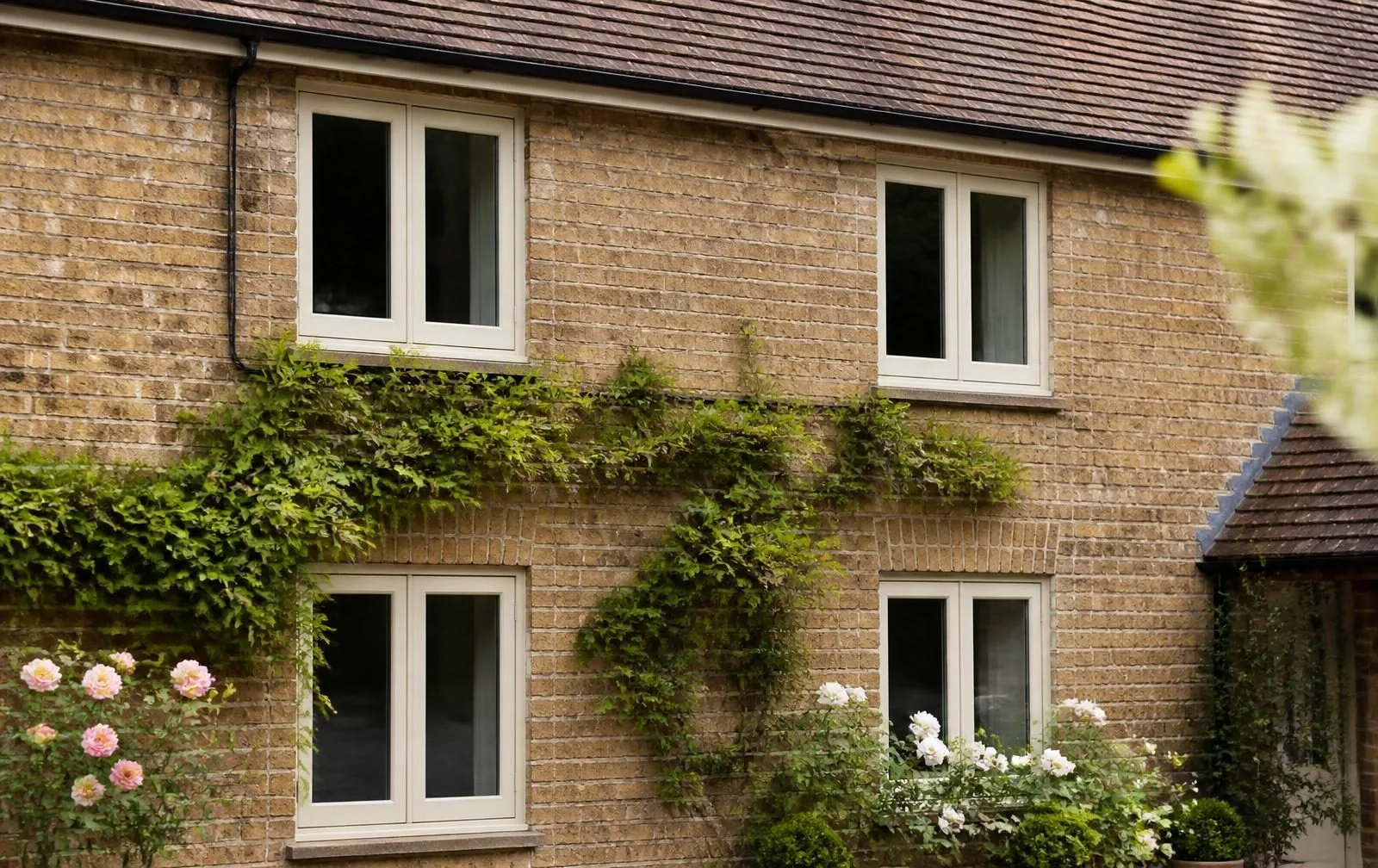
Timber is offered across flush casement and sash windows, heritage and conservation glazing, entrance doors and French doors. Because joinery is made to order, scope is discussed project by project rather than picked from a fixed list.
Available across selected product ranges.
Colour & finish options
Details you will look at every single day.
Finishes
Because timber is coated rather than manufactured in colour, the palette is effectively open. Factory-applied microporous paint systems are available in bespoke colour matches, which is particularly useful where an interior scheme or a neighbouring property sets the reference.
Stains and translucent finishes are the alternative where the grain should remain visible, and they suit hardwood entrance doors and garden-facing joinery. They weather differently from opaque paint and generally need attention sooner, which is worth knowing before choosing.
Different internal and external colours are straightforward in timber, since each face is simply finished separately. Available finishes depend on the joinery range and are confirmed during specification.
Heritage paint colours
Traditional off-whites, greys, greens and blues appropriate to period elevations and conservation settings.
Bespoke colour matching
Factory-applied finishes matched to a specific reference for interior or streetscape coherence.
Stains and translucent finishes
Where the grain should remain visible, typically on hardwood entrance doors and garden joinery.
Separate inside and outside finishes
Each face finished independently, available across selected joinery ranges.
Energy efficiency
Warmth, honestly explained.
Timber is naturally insulating, so the frame contributes rather than detracts. The larger variable is glazing: slim units preserve period sightlines while still improving performance substantially over single glazing, and standard units perform better again where the sightline allows.
- Naturally low thermal conductivity
- Slim double-glazed unit options for heritage sightlines
- Draught sealing incorporated into sash refurbishment
- Secondary glazing as a reversible alternative in listed interiors
- Performance confirmed for your specification at survey
Security
Specified, not assumed.
Modern timber joinery accepts contemporary locking hardware, so period appearance and current security expectations are not in conflict. Sash windows use restrictors and locking fasteners, casements and doors use multipoint locking, and glazing can be upgraded where more resistance is wanted.
- Multipoint locking on casements and doors
- Locking fasteners and restrictors on sash windows
- Laminated glazing options where extra resistance is wanted
- Period-appropriate ironmongery with modern mechanisms
- Security specification agreed before manufacture
Performance & durability
How it behaves over decades.
Engineered timber is laminated so that opposing grain directions resist movement, and factory coating seals the whole section including end grain. Longevity then depends on water being allowed to leave the joinery: sound cills, clear drainage and intact coatings are what keep timber serviceable for decades.
- Laminated engineered sections resist movement
- Factory-sealed end grain and full-section coating
- Repairable rather than disposable components
- Longevity dependent on maintenance being carried out
- Exposure varies by elevation and orientation
Maintenance
What ownership actually involves.
Timber asks for periodic attention rather than constant work. Wash the frames, keep cills and drainage clear, inspect the coating annually with particular attention to south and west-facing elevations, and recoat when the finish begins to dull or craze rather than after it has failed.
- Annual visual inspection of coatings and joints
- Keep cills, glazing rebates and drainage clear of standing water
- Recoat before the finish cracks rather than after
- Lubricate ironmongery and check sash cords or balances
- Address small areas of damage promptly to avoid decay
Sustainability
The longer view on environmental impact.
Timber is the only renewable frame material, and responsibly sourced joinery from managed forestry carries a genuinely different environmental profile from manufactured alternatives. We ask for documented sourcing on the ranges we specify.
The larger factor, though, is repairability. A window that is repaired rather than replaced consumes almost nothing compared with a new unit, and on period properties repairing existing joinery is frequently the lowest-impact option available — something we will recommend when it is the right answer, even though it is smaller work for us.
- Renewable material from responsibly managed sources
- Repair extends service life instead of replacing
- Retaining original joinery avoids replacement impact
- Recoating rather than replacing at end of finish life
Important considerations
Where this material may not be the right answer.
Timber requires more maintenance than uPVC or aluminium. That is the honest headline, and it should be the first thing considered rather than the last. If nobody will inspect and recoat the joinery, timber will not perform as intended and another material is the better decision.
It also generally represents a higher initial investment, because joinery is made to order rather than assembled from stock profiles, and lead times are correspondingly longer than for manufactured systems.
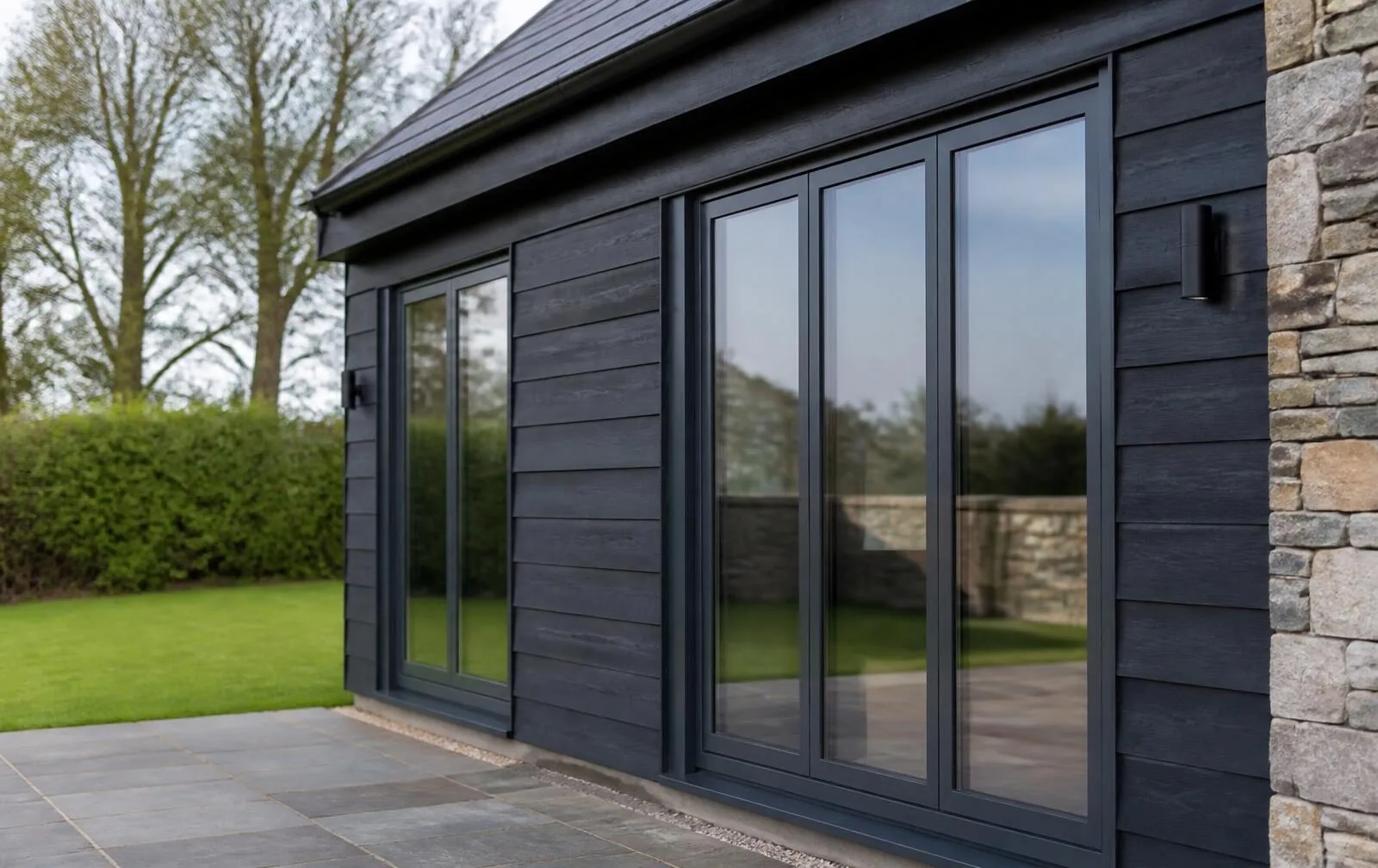
Finally, timber is not the right tool for very slim sightlines on large modern openings. Where a wide sliding set or a minimal-frame glazed wall is the design intent, aluminium will do it better, and we would recommend it without hesitation.
- Higher maintenance commitment than uPVC or aluminium
- Higher initial investment and longer lead times
- Exposed elevations weather finishes faster
- Not suited to minimal-frame modern glazed walls
- Available across selected product ranges only
Frequently asked questions
The questions homeowners ask us most.
How often do timber windows need repainting?+
Modern factory-applied microporous coatings last considerably longer than site-applied paint, but they are still a coating and they will eventually need attention. In practice, south and west-facing elevations weather fastest and are the ones to inspect first. Rather than a fixed interval, we recommend an annual visual check and recoating when the finish begins to lose its sheen or shows hairline cracking, because exposure varies enormously between elevations and locations.
Do timber windows rot?+
Untreated or poorly maintained timber can rot, which is exactly the reputation that older frames earned. Modern engineered timber is a different product: laminated sections are moisture-stabilised, end grain is sealed, and factory coatings are applied under controlled conditions to the whole section rather than brushed onto the visible faces. Decay is a maintenance failure rather than an inevitability, and it usually begins at joints and cills where water has been allowed to sit.
Are timber windows energy efficient?+
Timber is naturally a poor conductor of heat, which makes it an inherently strong frame material thermally. Paired with a modern sealed glazing unit, a timber window performs very well, and slim double-glazed units allow good performance even where a period sightline must be preserved. The precise figures depend on the section, glazing and configuration selected, and we confirm them during specification.
How long can timber windows last?+
Longer than most people assume, and longer than the alternatives in many cases, because timber is repairable in a way other materials are not. A cill can be spliced, a joint can be rebuilt, a section can be replaced and the whole window refinished. That repairability is why original Georgian and Victorian joinery survives in use today. It is entirely dependent on maintenance being carried out rather than deferred.
Are timber windows suitable for listed buildings?+
Timber is usually the material that makes listed building consent achievable, because it can reproduce the exact section, moulding profile and glazing detail of the original joinery. Consent still depends on the specific building, the listing and the local authority's view, and it is never guaranteed in advance. We look at what has been approved in comparable properties nearby before making a recommendation.
What timber species are available?+
Both engineered softwood and engineered hardwood options are used in modern joinery, and the choice affects stability, grain appearance, coating behaviour and cost. Hardwood sections are typically specified where exposure is high or where a very fine moulding profile is required. Species availability varies by manufacturer and range, so we confirm the options with you rather than assuming a default.
Can timber windows be repaired?+
Yes, and this is timber's most distinctive advantage. Damaged sections can be cut out and spliced, joints can be reworked, ironmongery can be replaced and the whole frame refinished so that the repair is invisible. Where an original window has heritage value, repair is often both the better and the more economical route, and it is frequently what a conservation officer will expect to see explored first.
Are timber windows more expensive than uPVC?+
Generally yes, both in initial investment and in ongoing maintenance, because the joinery is made to order and the finish requires periodic attention. What that buys is authenticity of profile, genuine bespoke capability, repairability and a level of design flexibility the other materials cannot match. On period and premium properties that trade is frequently worth making, and on later housing stock it frequently is not.
Begin the conversation
Talk the material through before you commit to anything.
Exact performance figures depend on the system, glazing and configuration finally selected, so we confirm them in writing during consultation and specification rather than guessing at them on a web page.