
Composite and uPVC doors are frequently compared as a straight upgrade decision, with composite presented as the premium option and uPVC as the budget one. That is broadly true, but it skips over the more useful question of where the extra spend on composite genuinely earns its keep.
This guide compares the two on security, thermal performance, durability and appearance, and sets out where each is the more sensible specification.
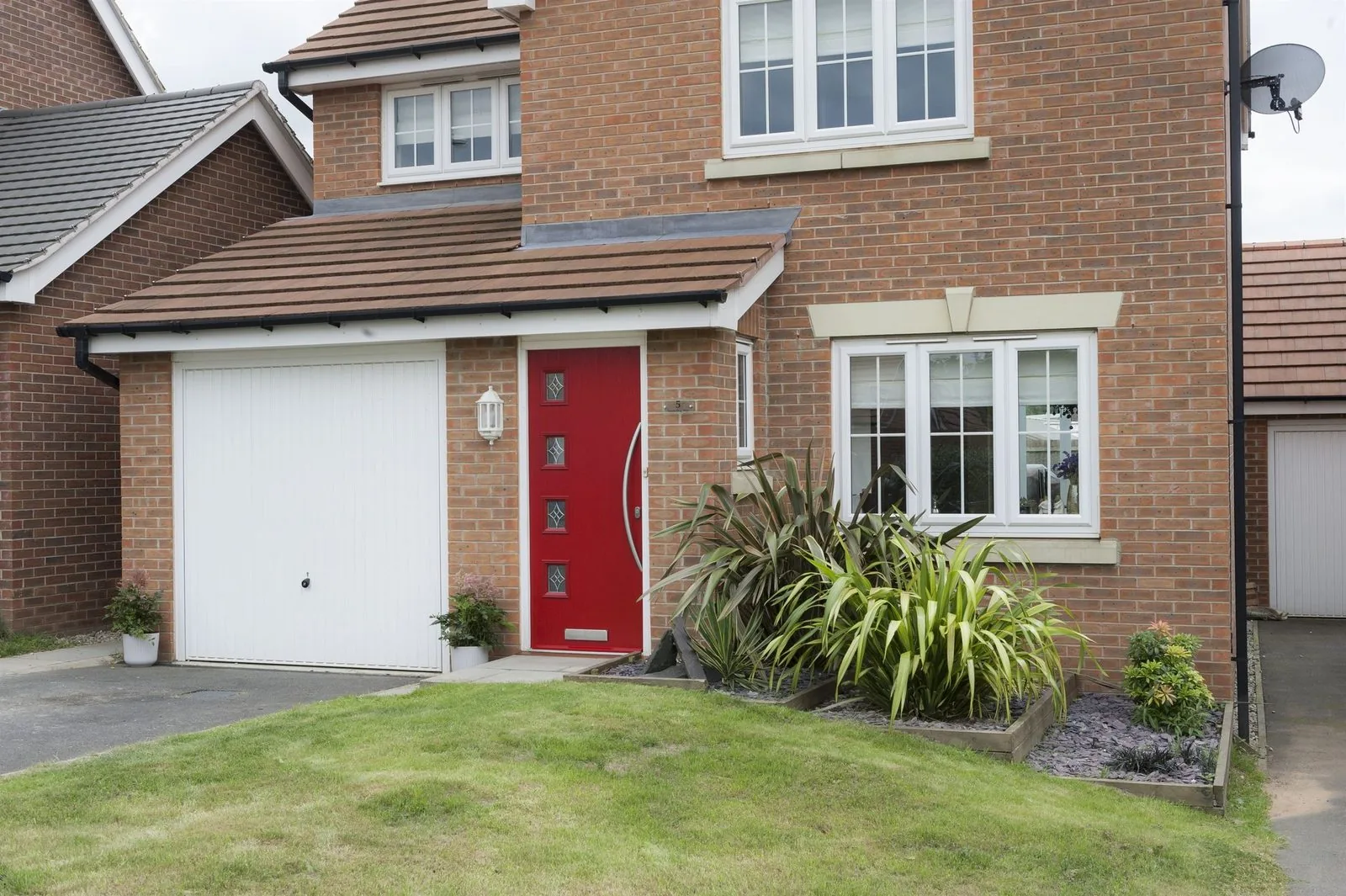
The core difference
A uPVC panel door is built the same way as a uPVC window — a multi-chambered plastic profile with a moulded or glazed panel — while a composite door is a solid slab with a GRP skin bonded to an insulating foam core reinforced with a timber frame. That difference in construction, not just the finish, is what separates the two products in performance and price.
It's a genuinely useful comparison because, unlike composite versus aluminium, uPVC and composite doors often sit side by side in the same manufacturer's range at noticeably different price points, which makes the trade-off easy to see on a single quotation.
Security and durability
Both can be specified to PAS 24 with an appropriate multipoint lock and cylinder, but the underlying slab matters. A composite door's solid core resists impact, kicking and drilling attempts more effectively than a hollow uPVC panel, which is one reason composite is now the more commonly specified front door where security is a stated priority.
Over time, uPVC panel doors are also more prone to slight sagging or panel movement on the hinge side under years of daily use, particularly on larger doors, whereas a composite slab's rigidity resists that kind of long-term wear.
| Factor | uPVC | Composite |
|---|---|---|
| Typical cost | Lower | 30–60% higher |
| Core construction | Hollow, multi-chambered | Solid insulated slab |
| Impact resistance | Moderate | High |
| Thermal performance | Good | Better |
| Colour and finish range | Wide, foiled | Wide, factory finished |
| Best suited to | Back doors, budget fronts | Front doors, high-use entrances |
Thermal performance
Composite's continuous foam core typically achieves a lower whole-door U-value than an equivalent uPVC panel door, since there is no internal air chamber losing heat the way a hollow uPVC slab does. Both will comfortably meet current Building Regulations requirements for a replacement door, so the practical difference is more about long-term consistency than passing or failing a threshold.
Appearance and finish
uPVC panel doors are foiled or woodgrain finished in a similar way to uPVC windows, with a decent colour range but a slightly less premium feel to the touch and finish than composite's GRP skin, which is textured to closely resemble painted timber. For a highly visible front elevation, that tactile and visual difference is often what tips buyers towards composite even before the security and durability arguments are considered.
Where each makes sense
uPVC remains an entirely sensible choice for back doors, utility room doors and side returns, where daily practical use matters more than kerb appeal and the cost saving carries no meaningful downside. Composite is the stronger choice for a front door, particularly where the door is highly visible, gets significant daily use, or security is a stated priority for the household.
It's also common, and sensible, to specify composite at the front and uPVC at the back of the same house, putting the budget where it is seen and used most.
Our view
Our view
For a front door that is highly visible, heavily used and a stated security priority, composite's solid core and superior durability justify the additional cost over the life of the door. For a back door, utility entrance or budget-constrained project where the door is functional rather than a design statement, a well-specified uPVC panel door remains a genuinely sound choice.
We would caution against the cheapest uPVC panel door on a busy front entrance purely to save money, since the long-term durability gap is where that saving is usually lost.
Frequently asked questions
Is a composite door really stronger than uPVC?+
Generally yes. A composite door's core is a solid, dense insulating foam bonded within a timber sub-frame and GRP skin, which resists impact and forced entry better than a uPVC door's hollow, multi-chambered slab, even when both are fitted with equivalent multipoint locks.
How much more does a composite door cost than uPVC?+
Expect to pay roughly 30 to 60 percent more for a composite door than a comparable uPVC panel door, reflecting the more complex manufacturing process and the solid core construction.
Does uPVC warp or fade faster than composite?+
uPVC panel doors can be more prone to slight warping in prolonged, intense heat, particularly on darker foiled colours, because the slab is hollow. Composite's timber-reinforced core makes it dimensionally more stable, and its GRP skin is also more resistant to surface fading over time.
Is uPVC a false economy for a front door?+
Not necessarily — a well-specified uPVC door with a reinforced sub-frame and a quality multipoint lock is a perfectly sound choice for a back door, side door or budget-conscious front entrance. The false economy risk is buying the cheapest uPVC panel door available for a heavily used, highly visible front entrance where composite's extra durability earns its cost back over the door's life.
Which is better insulated, composite or uPVC?+
Composite doors typically achieve a lower U-value than uPVC panel doors because the solid foam core has no internal air chambers or cavities to lose heat through, whereas a uPVC slab is a lighter hollow construction.
Do composite doors need less maintenance than uPVC?+
Both are low maintenance compared with timber, requiring only occasional cleaning, but composite's GRP skin resists scratching and denting from keys, bikes and pushchairs noticeably better than a uPVC surface over a decade of daily use.
Where does uPVC make more sense than composite?+
uPVC is the sensible choice for back doors, utility doors and any secondary entrance that takes daily practical use but is rarely on show, where the cost saving is not offset by any visible or security downside worth paying to avoid.