Security is one of the few areas of a window specification with clear, independently tested standards behind it, yet it's also one of the most loosely marketed — 'high security' hardware and 'anti-snap' cylinders are terms used with wildly varying rigour across the industry. Understanding what PAS 24, Secured by Design and Part Q actually require lets you ask for evidence rather than taking a claim at face value.
This guide covers the standards that matter, the glass types that genuinely resist forced entry, and the hardware specification worth insisting on regardless of whether a regulation technically applies to your project.
Why window security is a specification decision, not an add-on
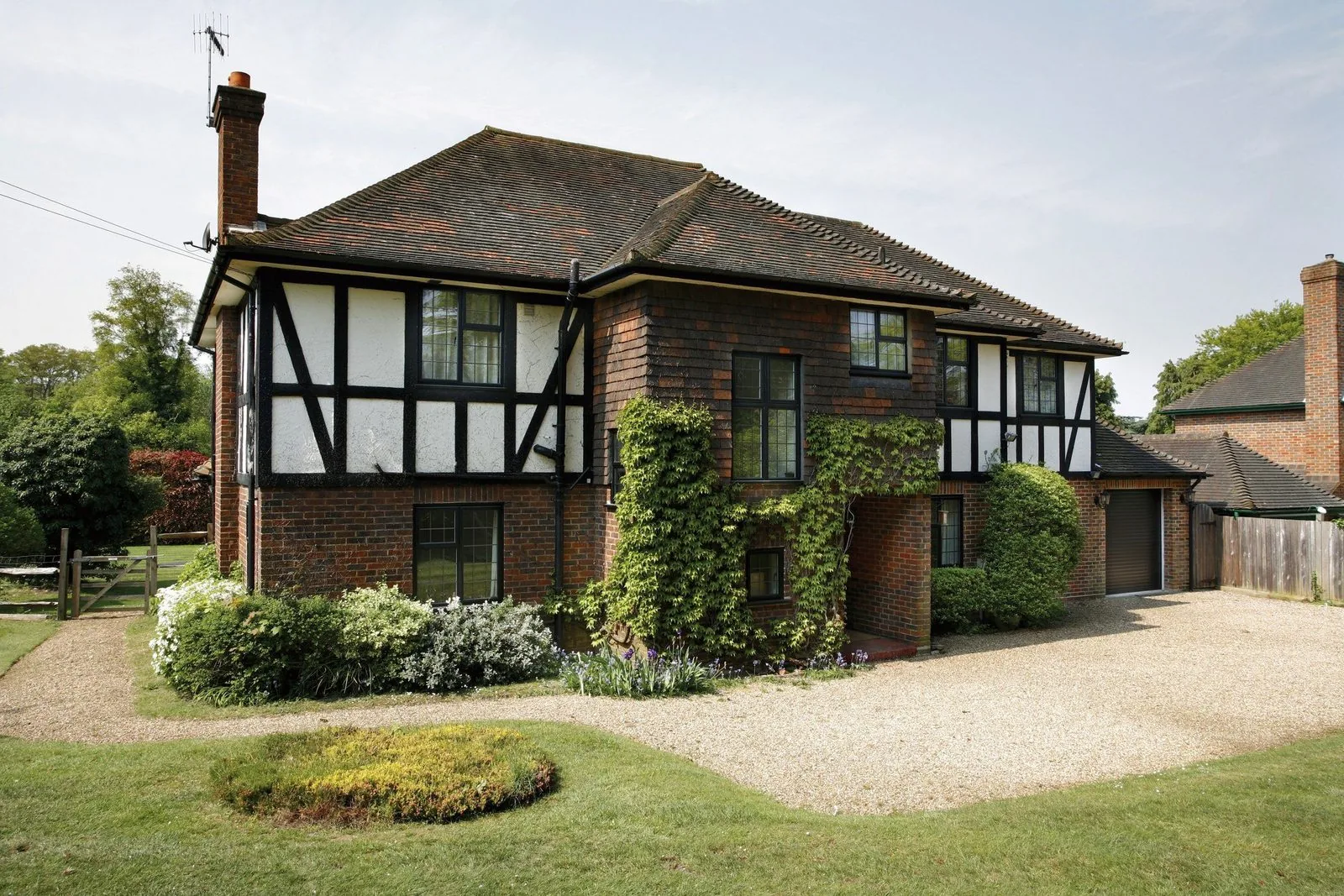
Windows and doors remain the most common point of entry in UK domestic burglaries, and the difference between a window that resists a determined attempt for several minutes and one that gives way in seconds usually comes down to decisions made at the point of specification — the glass type, the lock mechanism, and whether the whole assembly has actually been tested together. None of these show up in a photograph, which is why security is worth understanding on its own terms rather than assuming it as a given.
It's also worth separating genuine, tested security performance from marketing language. Terms like 'high security' or 'anti-snap' are used loosely across the industry; the standards below — PAS 24, Secured by Design, TS007 and Part Q — are the specific, independently tested benchmarks that actually mean something on a quote.
PAS 24: what the test actually involves
PAS 24 is a Publicly Available Specification developed with the British Standards Institution, currently in its 2016 revision, that tests a complete window or door assembly against manual attack methods — using tools like screwdrivers, chisels and crowbars — for a set period, followed by a mechanical loading test on the locking points. To pass, the assembly must resist entry for the full test duration without the lock or frame failing.
Crucially, PAS 24 tests the window as a whole system: frame, glass, hardware and lock working together, not any single component in isolation. That's why a certificate is only valid for the exact combination tested — swap the glass for a thinner unit, or the lock for a cheaper cylinder, and the certification no longer applies, even if the frame profile looks identical.
Secured by Design and how it differs from PAS 24
Secured by Design (SBD) is the official police-backed initiative supporting crime prevention through design, and it's often mentioned alongside PAS 24 as though it's a separate technical standard. In practice, SBD accreditation requires a product to have already passed PAS 24 (or an accepted equivalent) and then adds a licensing and audit layer — manufacturer membership, installation checks and periodic compliance reviews — rather than a different physical test.
SBD is frequently specified on social housing and new-build developments partly because it gives housing providers and planners a recognisable, policed standard to reference in specifications. For a private homeowner, an SBD-labelled product tells you the underlying PAS 24 test has been passed and the manufacturer maintains ongoing compliance, but it isn't evidence of a higher physical security threshold than PAS 24 itself.
Approved Document Q and when it applies
Approved Document Q sets security requirements for doors and easily accessible windows on new dwellings in England, requiring that they either meet PAS 24 as a tested assembly or that door hardware, glazing and letterplates meet component-level standards referenced within the document. It applies to new-build homes and, in some cases, to material changes of use that create a new dwelling.
It is easy to assume Part Q applies to every window replacement, but for a straightforward like-for-like replacement in an existing house, it typically doesn't — Part Q is triggered by the creation of a new dwelling, not by replacing glazing in one that already exists. That said, we routinely recommend PAS 24-tested specifications on replacement projects regardless, particularly on ground-floor and easily accessible upper-floor windows, because the security benefit doesn't depend on which regulation happens to apply.
| Standard | What it tests | When it applies |
|---|---|---|
| PAS 24:2016 | Forced-entry resistance of the whole window/door assembly | Voluntary on replacements; mandatory to satisfy Part Q |
| Secured by Design | PAS 24 pass plus scheme membership and audits | Often specified on social housing and new-build |
| Approved Document Q | Security of doors and accessible windows on new dwellings | New-build and qualifying material changes of use |
| TS007 (cylinders) | Resistance of euro cylinders to snapping, bumping, picking | Referenced by insurers and within PAS 24-tested assemblies |
Laminated versus toughened glass for security
Toughened (tempered) glass is heat-treated to be four to five times stronger than standard annealed glass and, when it does break, shatters into small, relatively blunt granules rather than dangerous shards — which is why it's specified for safety in low-level glazing under Approved Document K and BS 6206. But once broken, it leaves an open hole immediately, offering no further resistance to an intruder reaching through.
Laminated glass sandwiches a tough polyvinyl butyral (PVB) interlayer between two panes. It can crack under impact, but the interlayer holds the fragments in place, meaning an intruder has to punch or cut through a flexible, energy-absorbing layer even after the glass itself has failed — a slower, noisier process that acts as a genuine deterrent. For ground-floor and easily accessible windows, laminated glass on the inner pane is one of the most effective single upgrades available, and it's a standard component of most PAS 24-tested units.
- Toughened glass: strong until it breaks, then offers no further resistance
- Laminated glass: interlayer holds together after cracking, slowing forced entry significantly
- Laminated glass also improves acoustic performance and blocks more UV than standard toughened units
- Most PAS 24-tested double-glazed units use a laminated inner pane as standard
Multipoint locks, cylinders and restrictors
A multipoint lock engages the sash to the frame at three, five or more points along its length when the handle is turned, distributing load across the whole sash rather than concentrating it at a single latch — this is what actually resists a sash being levered or jemmied open at one corner. Look specifically for hook or mushroom-shaped cams rather than simple flat bolts, since hooks resist being pulled outward under leverage in a way flat bolts don't.
On doors within the same specification, the cylinder matters as much as the multipoint gearbox itself — a standard euro cylinder can be snapped in seconds with basic tools, which is why we specify cylinders tested to TS007 and rated at least 1-star, or preferably a 3-star cylinder used alone or a 1-star cylinder combined with 2-star hardware, satisfying the 'Sold Secure' 3-star equivalent commonly requested by insurers. Restrictors, meanwhile, serve a dual purpose: a key-locking friction restrictor allows a window to be left ajar for ventilation without it being pushed open from outside, while also meeting the fall-prevention guidance in Approved Document K for upper-floor windows.
Our view
Our view
We treat PAS 24 testing as close to a default recommendation on ground-floor and easily accessible windows, whether or not Part Q technically applies to the project, because the physical security benefit is the same either way and the cost difference over a standard specification is modest.
Ask any supplier for the PAS 24 certificate covering the exact frame, glass and lock combination you're being quoted — not a general claim about the product range — and check the cylinder is rated to at least TS007 1-star alongside 2-star hardware, or a 3-star cylinder alone.
Frequently asked questions
What is PAS 24 and is it a legal requirement?+
PAS 24 is a British Standards Institution test that subjects a window or door to manual and mechanical forced-entry attacks for a set duration to see whether it can be breached with common tools. It is not a legal requirement for most replacement windows, but it is mandatory to satisfy Approved Document Q on new-build and some material-change projects.
What does Secured by Design add beyond PAS 24?+
Secured by Design is a police-backed accreditation scheme that requires products to have passed PAS 24 (or an equivalent standard) as a baseline, then adds scheme membership, installation audits and ongoing compliance checks. It's often specified by housing associations and used as a marketing differentiator, but the underlying physical test is the same PAS 24 standard.
Does Part Q apply to window replacements?+
Approved Document Q applies to new dwellings and to material changes of use that create a new dwelling; it doesn't automatically apply to like-for-like window replacements in an existing home. That said, many homeowners choose to specify PAS 24-tested windows anyway as good practice, even where it isn't a regulatory requirement.
Is laminated glass more secure than toughened glass?+
Yes, against forced entry. Toughened glass shatters into small granular pieces once broken, leaving an open hole. Laminated glass has a plastic interlayer that holds the fragments together even when cracked, meaning an intruder has to work through the interlayer as well as the glass itself, which takes considerably longer and is much noisier.
What should I look for in a window lock?+
A multipoint locking system engaging at three or more points around the sash, hook or mushroom cams (which resist being levered outward rather than just latching), and a cylinder rated to TS007 3-star or equivalent, which resists snapping, bumping and picking far better than a standard euro cylinder.
Are window restrictors a security feature or a safety feature?+
Both. Restrictors limit how far a window opens, which stops young children falling from upper floors, but a good key-locking restrictor also allows secure night ventilation on ground and accessible floors without leaving the window vulnerable to being pushed fully open from outside.
Do all uPVC and aluminium windows come with PAS 24 as standard?+
No. PAS 24 testing applies to a specific frame, glass and hardware combination as a system, so a manufacturer's standard product may or may not have been tested. Always ask for the test certificate for the exact specification you're buying, not just a general claim that the product range 'meets PAS 24'.
Does upgrading security affect the appearance of my windows?+
Very little on a well-designed system. Modern multipoint locks and laminated glass sit within the same sightlines as standard hardware and glazing, and Secured by Design-accredited ranges are available across casement, flush casement and sash styles without visibly different frames.