
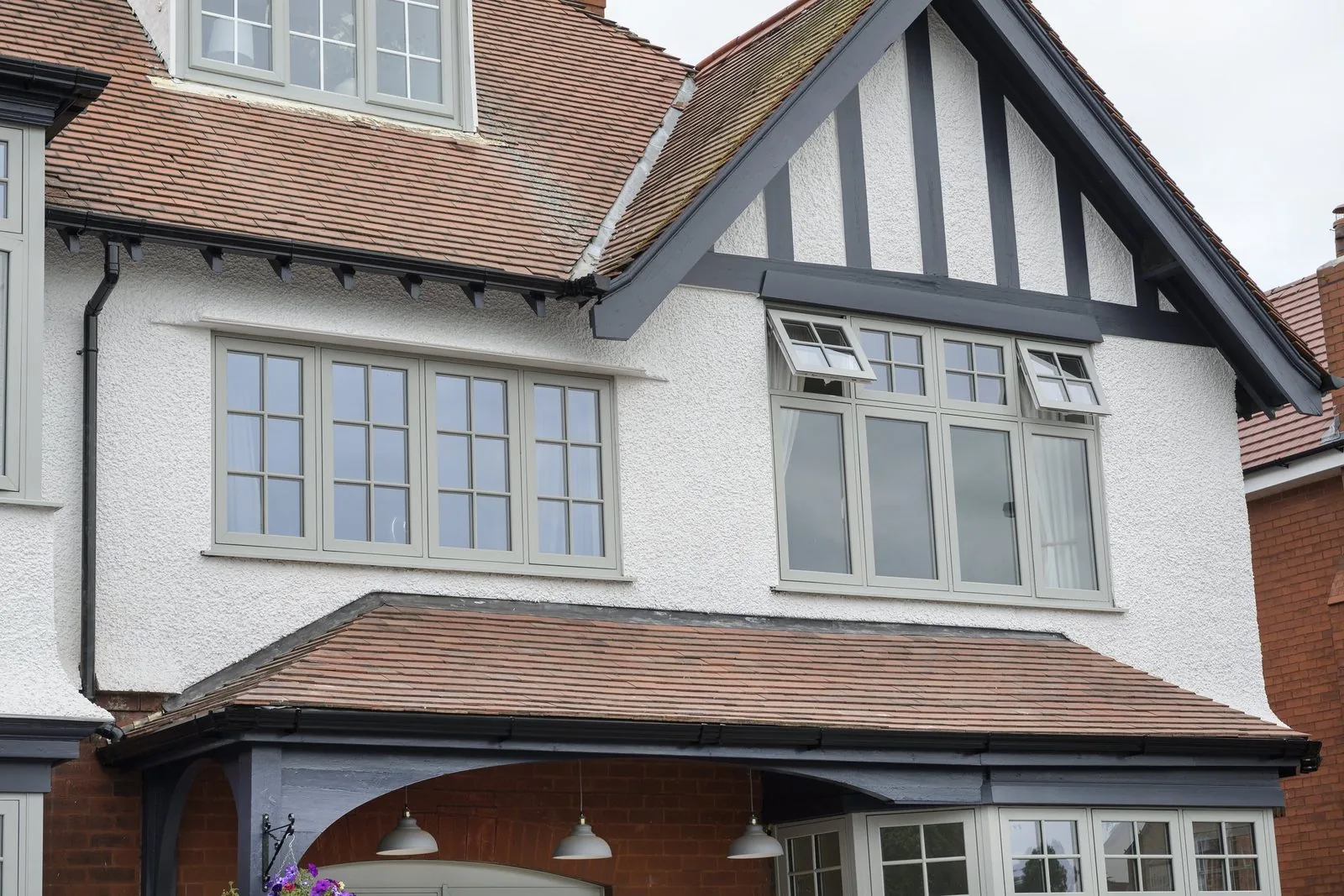
uPVC triple glazed
The most cost-effective route to a sub-1.0 U-value, using a 90mm profile with composite reinforcement. The frame is visibly deeper than standard.
Windows / Casement / Triple Glazed
Genuinely excellent in the right building — and an expensive way to add weight in the wrong one. Here is how to tell which you have.
Introduction
Triple glazing is sold as the obvious next step from double, as though windows improve in a straight line. They do not. Adding a third pane changes the weight, the frame depth, the light transmission and the acoustic behaviour of the window, and each of those changes is a trade-off that has to be worth making in your specific property.
Where it is unambiguously right: exposed elevations, north-facing rooms, homes with rooms that never feel warm despite the heating, and any project already targeting a high fabric standard. In those situations the difference between 1.4 and 0.8 W/m²K is felt as radiant comfort near the glass, not just read on a certificate.
Where it is not: modest openings, sheltered south-facing elevations, and houses where the loft insulation is thin. We would rather tell you to spend the money on the roof.
Beautiful homes begin with better advice.
We would rather spend an hour explaining why something is not right for your property than sell it to you.
Who this suits
Exposure is the strongest predictor. A detached house on an open aspect, a top-floor flat with three external walls, or any elevation that takes the prevailing south-westerly weather will feel the benefit immediately.
Orientation matters nearly as much. North-facing rooms receive almost no compensating solar gain, so their windows are a net heat loss all winter. Those are the windows to triple glaze first, and it is entirely reasonable to triple glaze some elevations and not others.
New build, extensions and deep retrofits are the other clear case, because the frame depth and the weight are designed in from the start rather than worked around.
Benefits
The internal pane sits closer to room temperature, removing the cold downdraught that makes seating near windows unpleasant.
Roughly a third less heat loss than a good double glazed casement, on a whole-window rather than centre-pane basis.
A warmer internal pane stays above dew point in normal humidity, reducing winter condensation on the glass.
Meets and exceeds the direction of travel in Part L, which matters if you plan to stay long term or install a heat pump.
Features
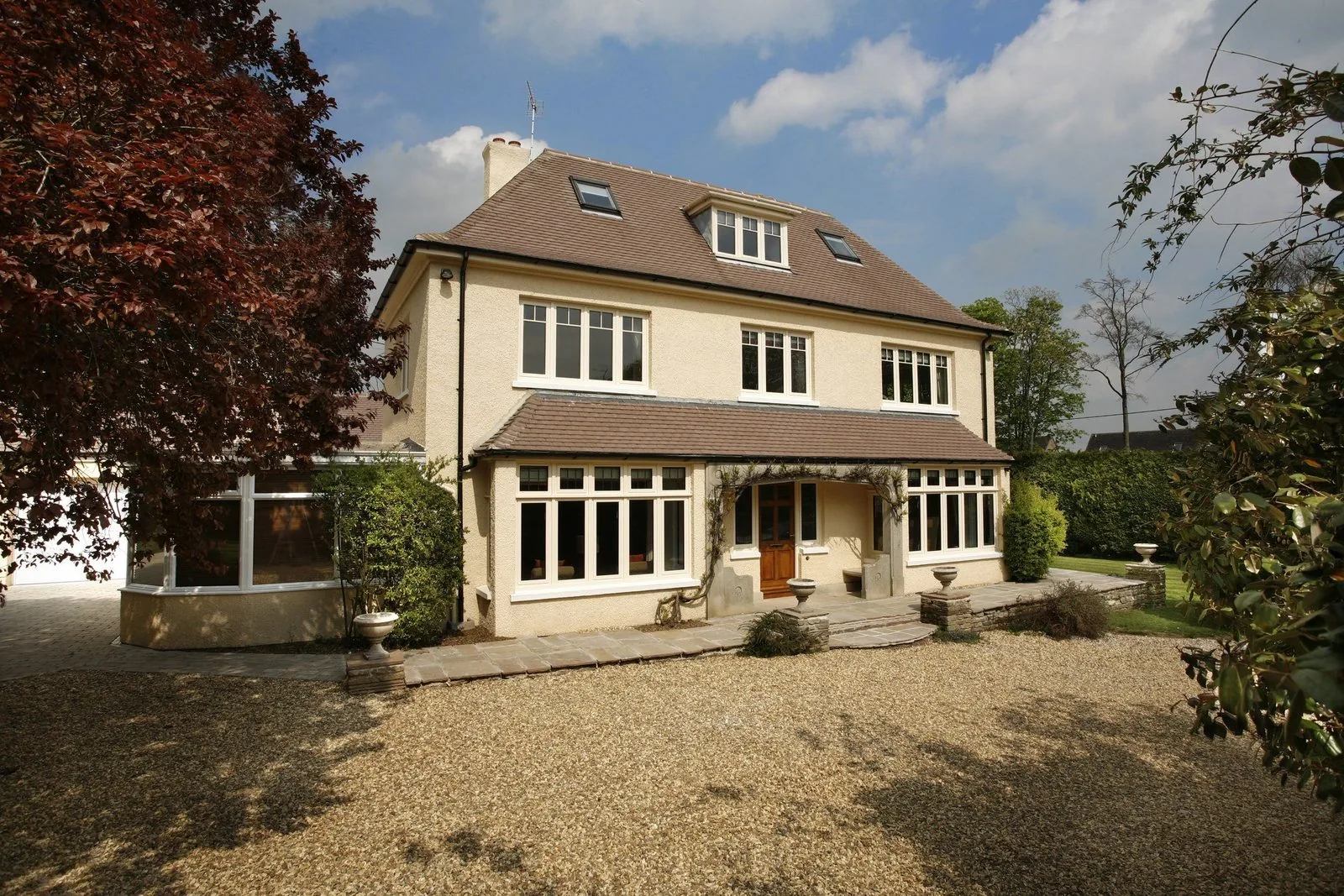
Material options
The most cost-effective route to a sub-1.0 U-value, using a 90mm profile with composite reinforcement. The frame is visibly deeper than standard.
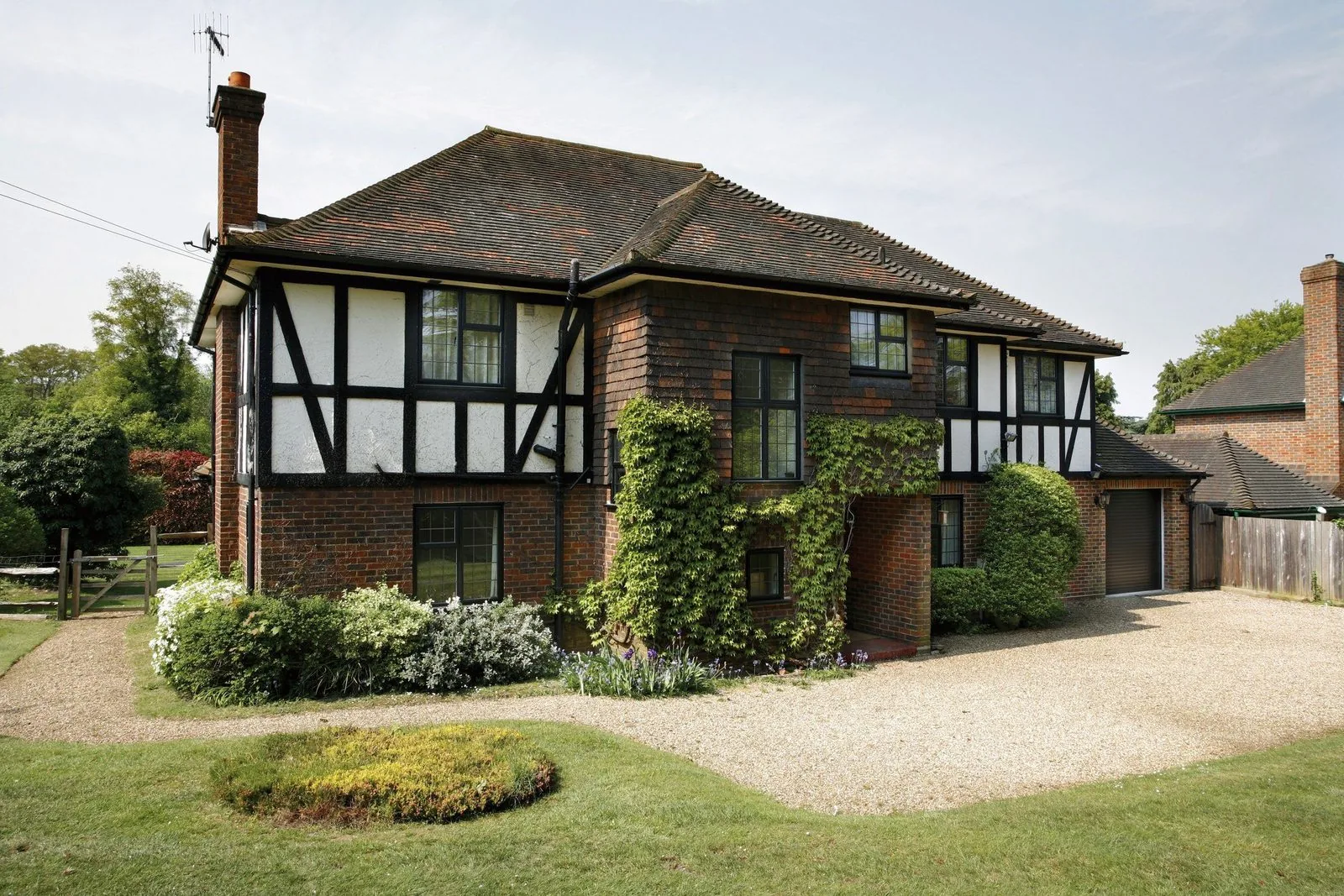
Deeper thermally broken sections with a wider polyamide break. Handles the weight comfortably and keeps sightlines slimmer than uPVC at the same performance.
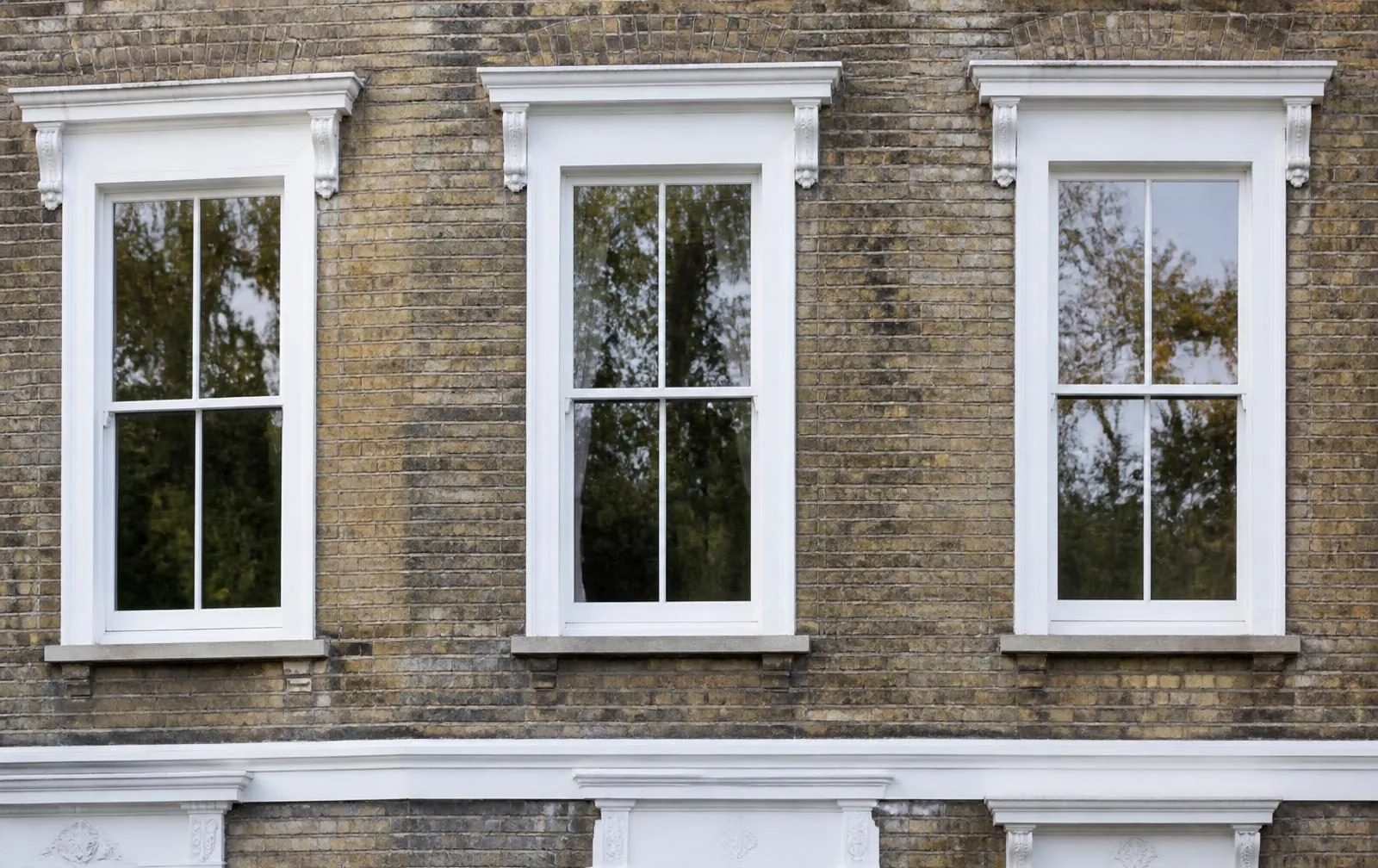
Engineered timber has excellent inherent insulation, making it a strong triple glazing carrier where the property calls for timber frames.
Colours & hardware
Full standard range
Triple glazing does not restrict colour choice; the same foils, RAL powder coatings and dual-colour options apply.
Consider frame prominence
Deeper profiles show more frame, so lighter colours help the window recede where the aperture is small.
Dark externally
Anthracite and black read well on deeper aluminium sections, where the extra depth is expressed as a strong shadow line.
Woodgrain foils
Available, though the deeper profile is less convincing as timber than a slim flush casement would be.
Dual colour
Especially worthwhile here, since the deeper internal frame face is more visible from inside.
Heavy-duty friction stays
Specified by calculated sash weight rather than by size, in grade 316 stainless steel.
Reinforced fixing points
Additional metal within the profile at the hinge positions to prevent long-term sagging.
Multi-point locking
PAS 24 tested gearing with additional locking points on heavier sashes.
Handles
Standard range throughout; the extra weight is carried by the stays, not the handle.
Restrictors
Recommended above ground level, since a heavier sash carries more momentum in wind.
Glass options
4-4-4mm panes with two 14mm argon cavities and two low-E coatings. The baseline triple specification.
Better performance in narrower cavities, used where profile depth is constrained. Materially more expensive.
Important on south and west elevations, where a highly insulated window can trap unwanted summer gain.
Only worthwhile with asymmetric pane thicknesses and a laminated outer; symmetrical triple can perform worse than good double.
Required in critical locations and recommended on accessible openings.
Full privacy range available within triple units.
Security
A triple unit is inherently harder to break through than a double, simply because there are three panes to defeat. The security specification is otherwise identical to the standard casement range.
Energy efficiency
This is the entire point of the product, so we quote it precisely: whole-window U-values, tested to BS EN 14351, not centre-pane figures.
Noise reduction
We want to be direct about this, because it is where triple glazing is most often mis-sold. Three equal panes are not an acoustic solution — mass and asymmetry are.
Maintenance
The same routine as any casement, with one addition: the hardware carries more load, so annual lubrication genuinely matters rather than being merely advisable.
Frequently asked questions
On a well-insulated house with already-modern windows, the payback period is long enough that the case is comfort rather than economics. Where it makes clear financial sense is replacing single glazing or failed early double glazing in an exposed or north-facing property, and in new build where you are specifying from scratch anyway.
Not necessarily, and this is the most common misunderstanding we correct. Three thin panes with two narrow cavities can perform worse acoustically than two thicker asymmetric panes with one wide cavity. If noise is your priority, specify acoustic laminated double glazing rather than triple.
Roughly fifty percent more than the equivalent double glazed unit. That changes the hinge specification, the maximum practical sash size and the long-term wear on the hardware. A frame not engineered for the weight will drop within a few years.
A good triple glazed casement achieves a whole-window U-value between 0.8 and 1.0 W/m²K, against 1.2 to 1.4 for good double glazing. The centre-pane figure quoted in marketing is always better than the whole-window figure; ask for the latter.
Slightly. Each additional pane and coating reduces light transmission, typically from around 75 percent to around 65 percent. On a north-facing room that is noticeable; on a south-facing one it rarely is.
Yes. A 44mm triple unit needs a profile of around 90mm in uPVC, against 70mm for standard double glazing. That means a visibly deeper frame and slightly less glass in the same aperture.
No — it is evidence the window is working. External condensation forms because so little heat escapes that the outer pane drops to dew point on clear nights. It is a well-known and entirely benign characteristic of high-performance glazing.
On small openings, on already well-performing double glazed windows, on period profiles where the frame depth would look wrong, and where the same budget spent on loft and wall insulation would deliver more comfort per pound. We will say so.
Related articles
Related products
Begin the conversation
A consultation is a conversation about your property — its age, its orientation, its draughts and its planning constraints. You will receive a written specification you can understand and compare, and no follow-up pressure of any kind.
Systems & Profiles We Manufacture
We design and fabricate using premium window and door systems from the UK and Europe's leading manufacturers — so every installation is built on proven, fully warrantied profiles.