
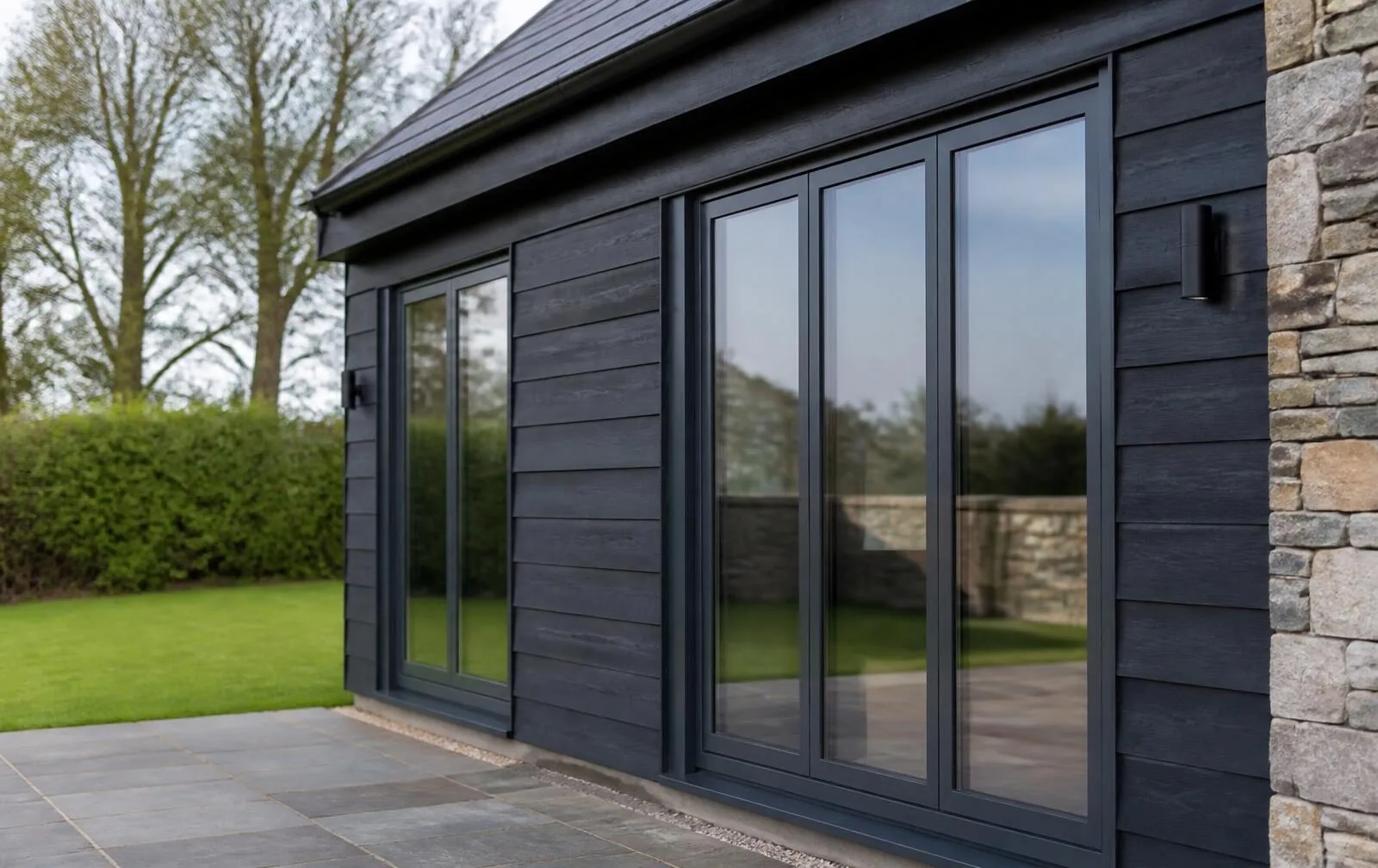
Engineered European redwood
The standard specification for painted finishes. Stable, well proven, and the most economical route into timber.
Windows / Flush Casement / Timber
The original, engineered properly — laminated sections, factory coatings and modern glazing behind a genuinely traditional profile.
Introduction
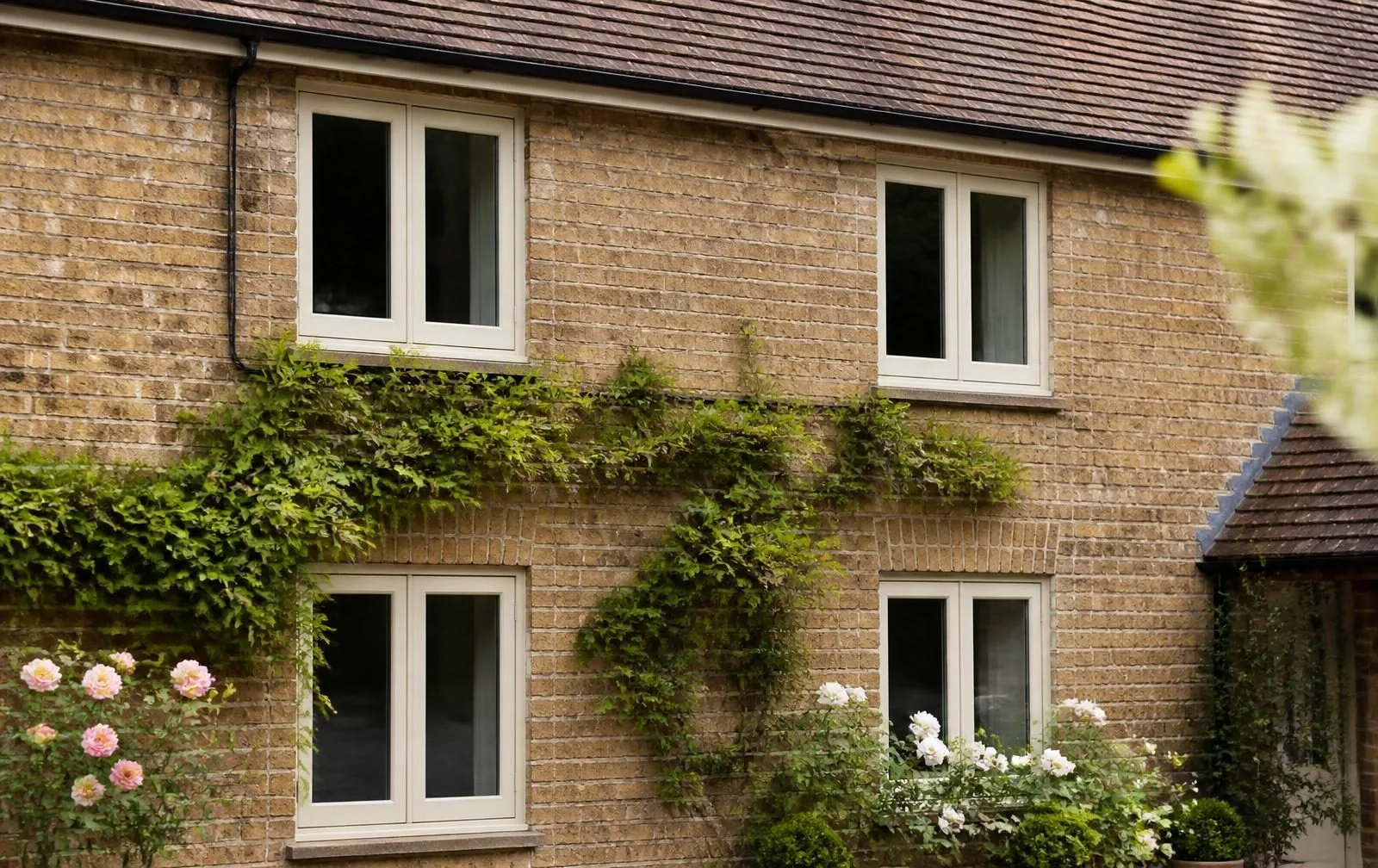
Every other flush casement on this site is an attempt to reproduce what timber does naturally. Timber closes flush because that is how a joiner makes a window; the sightlines are slim because wood is strong in section; the finish looks like paint because it is paint.
What has changed since the windows you are replacing were made is the engineering. Modern sections are laminated from multiple layers with alternating grain, vacuum-impregnated with preservative, machined to tolerances a hand-plane could not reach, and finished in a factory-controlled environment with microporous coatings that flex with the timber rather than cracking off it.
Timber costs more to buy and it costs time to own. We think it is the right answer on listed buildings, on genuinely fine period houses, and for owners who want the real thing. We will not pretend it is the right answer everywhere.
Beautiful homes begin with better advice.
We would rather spend an hour explaining why something is not right for your property than sell it to you.
Who this suits
Listed buildings first, because consent conditions usually require it. Grade II listing is common across London's Georgian and early Victorian stock, and in those cases the material is not a preference but a condition of approval.
Then conservation areas with Article 4 directions, where permitted development rights for window replacement have been withdrawn and the council assesses each application. Timber applications succeed; uPVC applications frequently do not.
And finally, properties where the joinery is part of the architecture — Arts and Crafts houses, good Edwardian villas, and rural cottages where the depth and shadow of real timber sections is doing visual work that a foil cannot.
Benefits
Not a reproduction. The sections, joints, mouldings and finish are the same craft that made the original windows.
Timber's strength in section allows narrower frames and glazing bars than any polymer profile can achieve.
The material listed building officers expect, supported by drawings and specifications for your application.
A damaged section can be spliced and repaired rather than replaced, which is why 150 year old windows still exist.
Features
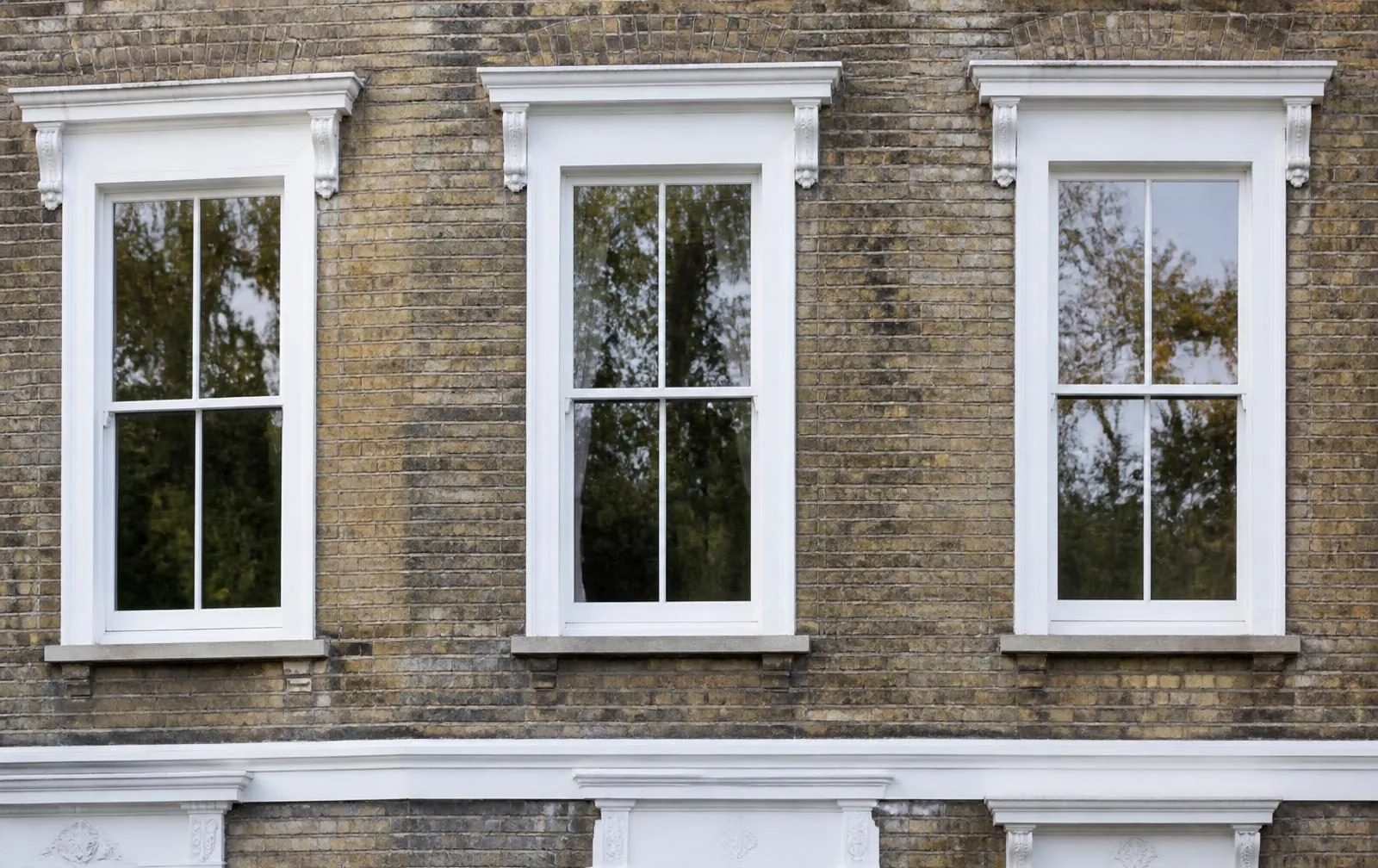
Material options
The standard specification for painted finishes. Stable, well proven, and the most economical route into timber.
Specified where a stained or clear finish is wanted, and where the grain is part of the intended appearance.
Acetylated softwood with a 50 year above-ground durability guarantee and exceptional dimensional stability. The premium choice for exposed elevations.
Colours & hardware
Historic paint matching
Any Farrow and Ball, Little Greene or Dulux Heritage reference matched in the factory coating.
Traditional off-whites
The warm whites and stone tones of period joinery, rather than the brilliant white of modern plastics.
Heritage greens and greys
Chartwell Green, sage, olive, slate and lead grey, appropriate to most nineteenth-century elevations.
Stained finishes
Translucent stains on oak and hardwood, from light natural to deep walnut, showing the grain.
Dual finish
External colour matched to the elevation with a different internal finish matched to the room.
Monkey-tail handles
Forged or cast in black, pewter and antique brass, screwed into solid timber rather than a polymer chamber.
Traditional butt hinges
Visible period-correct hinges, or concealed alternatives where the elevation should be uninterrupted.
Casement stays
Pin stays in matching finishes, functional as well as decorative.
Concealed espagnolette
Modern multi-point gearing routed into the sash, invisible when the window is closed.
Bespoke ironmongery
Matching or reproducing existing handles on a property where some original windows are being retained.
Glass options
12 to 14mm cavities within narrow heritage rebates, balancing sightline against thermal performance.
20 to 28mm argon-filled units where the profile depth allows, for best efficiency.
Individual small panes within timber glazing bars — only fully achievable in timber.
Hand-drawn or cylinder-effect glass with authentic irregularity for the finest projects.
Available within the rebate depth, valuable on period properties fronting busy roads.
In critical locations as required by Approved Document K.
Security
Timber's security advantage is the fixing. Screws into solid laminated section hold better under attack than fixings into a hollow chamber, and the locking gear itself is identical to the rest of our range.
Energy efficiency
Timber is a naturally insulating material — better than aluminium and comparable to uPVC in the section — so the efficiency question here is really about glazing cavity depth in period-slim profiles.
Noise reduction
Timber's density and its ability to damp vibration give it a small genuine acoustic advantage over hollow frames, though as always the glass specification dominates.
Maintenance
This is the honest trade-off, and we would rather set it out plainly. Timber needs attention on a predictable cycle, and if you give it that attention it will outlast every other material here.
Frequently asked questions
No, and that is a good thing. Modern engineered timber is laminated from three or more layers with the grain alternated, which resists the twisting and cupping that afflicted single-section joinery. The slow-grown redwood used in Victorian windows is largely unavailable; engineered laminate is more stable than what it replaces.
A factory-applied microporous coating typically lasts 8 to 10 years on a sheltered elevation and 6 to 8 on an exposed one before it needs recoating. Recoating is a wash, a light abrade and a fresh topcoat, not a strip back to bare wood, provided you do not leave it too long.
Not if it is detailed and maintained properly. Rot in period windows almost always begins at the bottom rail where standing water collects, and modern designs address this with sloped weathering, factory-sealed end grain and vacuum-impregnated preservative treatment throughout the section.
Engineered European redwood for painted finishes, and engineered oak, meranti or accoya where a stained finish or exceptional durability is required. Accoya carries a 50 year above-ground durability guarantee and is worth considering on exposed elevations.
It is usually the only material that will. Consent conditions on listed buildings routinely specify timber, often with a required profile, sightline dimension and glazing bar arrangement. We prepare the drawings and specification to support the application.
Typically between two and three times the uPVC equivalent, before the decoration cycle is considered. That is a real difference and we would rather you knew it at the outset than at the quotation.
Yes, and slim-cavity double glazed units are available for narrow heritage rebates. True triple glazing is possible in deeper sections, though it is rarely appropriate on the profiles that suit period elevations.
Yes. The same PAS 24 tested multi-point locking gear is fitted, with steel keeps screwed into solid timber, which is arguably a stronger fixing than into a hollow polymer chamber.
Related articles
Related products
Begin the conversation
A consultation is a conversation about your property — its age, its orientation, its draughts and its planning constraints. You will receive a written specification you can understand and compare, and no follow-up pressure of any kind.
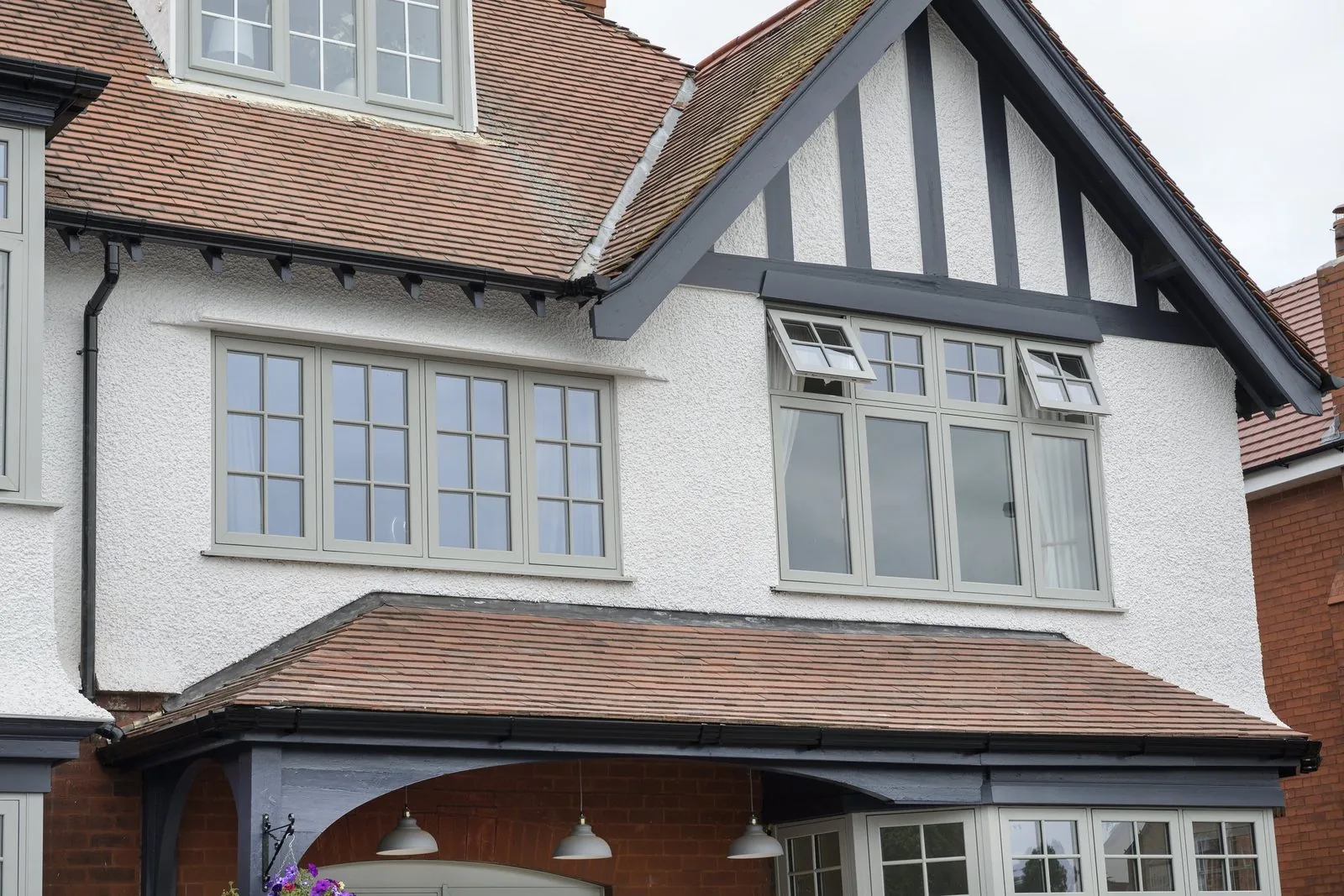
Systems & Profiles We Manufacture
We design and fabricate using premium window and door systems from the UK and Europe's leading manufacturers — so every installation is built on proven, fully warrantied profiles.