Colour is one of the most visible decisions in a window specification and often the one given the least technical thought, treated as a purely aesthetic choice made from a small sample chip rather than a decision with real implications for heat performance, planning policy and resale value.
This guide sets out how RAL and foil colour systems actually work, why dark uPVC needs a different specification to white, and how to weigh your own taste against the constraints of your street and your property's future value.
How RAL and foil colour ranges actually work
Most window colour choices in the UK are specified using the RAL Classic system, a European standard that assigns a unique four-digit code to each shade — RAL 9016 for traffic white, RAL 7016 for anthracite grey, RAL 6009 for fir green, and so on. Referring to a RAL code rather than a manufacturer's marketing name (which varies between brands even for the same shade) is the most reliable way to make sure everyone in your project — installer, architect, planning officer — is talking about exactly the same colour.
On uPVC frames, colour is most commonly applied as a foil: a coloured or woodgrain film laminated onto the profile under heat and pressure before the frame is cut and welded, giving a consistent, durable finish that's part of the profile itself rather than a coating applied afterwards. Aluminium frames are typically finished with polyester powder coating, sprayed on and then cured in an oven, which allows an almost unlimited range of RAL shades including metallics and textured finishes, and tends to be more resistant to fading than uPVC foils over a very long service life.
Anthracite grey and the shift away from white
Anthracite grey, most commonly specified as RAL 7016, has become the default contemporary choice for both new-build and replacement windows over the past decade, and for good reason: it reads as considered and architectural against brick, render and stone in a way that gloss white can struggle to on more modern elevations, and it tends to disguise dust, algae staining and minor scuffs better than white over a long lifespan.
Saturation matters more than most homeowners expect when choosing between anthracite, jet black and slate grey options. True black (RAL 9005) reads as a very strong, high-contrast statement that suits crisp modern architecture but can look severe on a traditional brick terrace; anthracite grey sits in a middle ground that works across a wider range of house styles, which is a large part of why it has become the volume choice rather than a niche one.
Heat absorption and dark uPVC: what to check on the spec
Dark colours absorb more solar radiation than light ones, and on a south- or west-facing elevation in direct summer sun, a dark uPVC frame can reach a noticeably higher surface temperature than a white one. Early dark-foiled uPVC profiles from the 1990s and 2000s were sometimes prone to slight bowing or warping under sustained heat because the base profile and reinforcement weren't designed with that thermal load in mind.
Modern systems address this directly: reputable manufacturers now offer foils specifically formulated and tested for use in darker RAL colours, often incorporating heat-reflective pigment technology and additional galvanised steel reinforcement within the chamber to resist thermal distortion. When specifying a dark colour, particularly on a south-facing elevation or a large sliding or bifold configuration, it's worth asking explicitly whether the colour is rated for that exposure, rather than assuming every shade in the brochure is treated equally.
| Colour category | Typical RAL examples | Heat consideration |
|---|---|---|
| Whites and creams | RAL 9016, RAL 9001 | Lowest solar absorption; standard reinforcement usually sufficient |
| Mid greys | RAL 7015, RAL 7040 | Moderate absorption; check manufacturer's south-facing guidance |
| Anthracite grey | RAL 7016, RAL 7021 | Higher absorption; usually needs heat-resistant foil and reinforced steel |
| Black | RAL 9005, RAL 9004 | Highest absorption; confirm the specific foil is rated for full sun exposure |
Dual colour: matching the street outside, your taste inside
Dual colour (or duo colour) windows use a different foil or coating on the external and internal faces of the same frame, most commonly pairing a stronger external colour — anthracite grey, sage green, a heritage flint — with a lighter internal finish such as white, cream or light grey that sits more comfortably against interior décor and reflects more daylight into the room.
This is now a standard option across most uPVC and aluminium ranges rather than a costly bespoke request, and it's a genuinely useful way to satisfy two different requirements at once: presenting the right, contextually appropriate colour to the street, while giving yourself a neutral, light-enhancing internal reveal that won't clash with future redecoration.
- External colour is chosen to suit the street, the brickwork and neighbouring properties
- Internal colour is chosen to suit décor, natural light and personal preference
- No cost premium on most ranges compared with a single-colour specification
- Particularly useful in conservation areas requiring a specific external colour
Reading the street before you choose
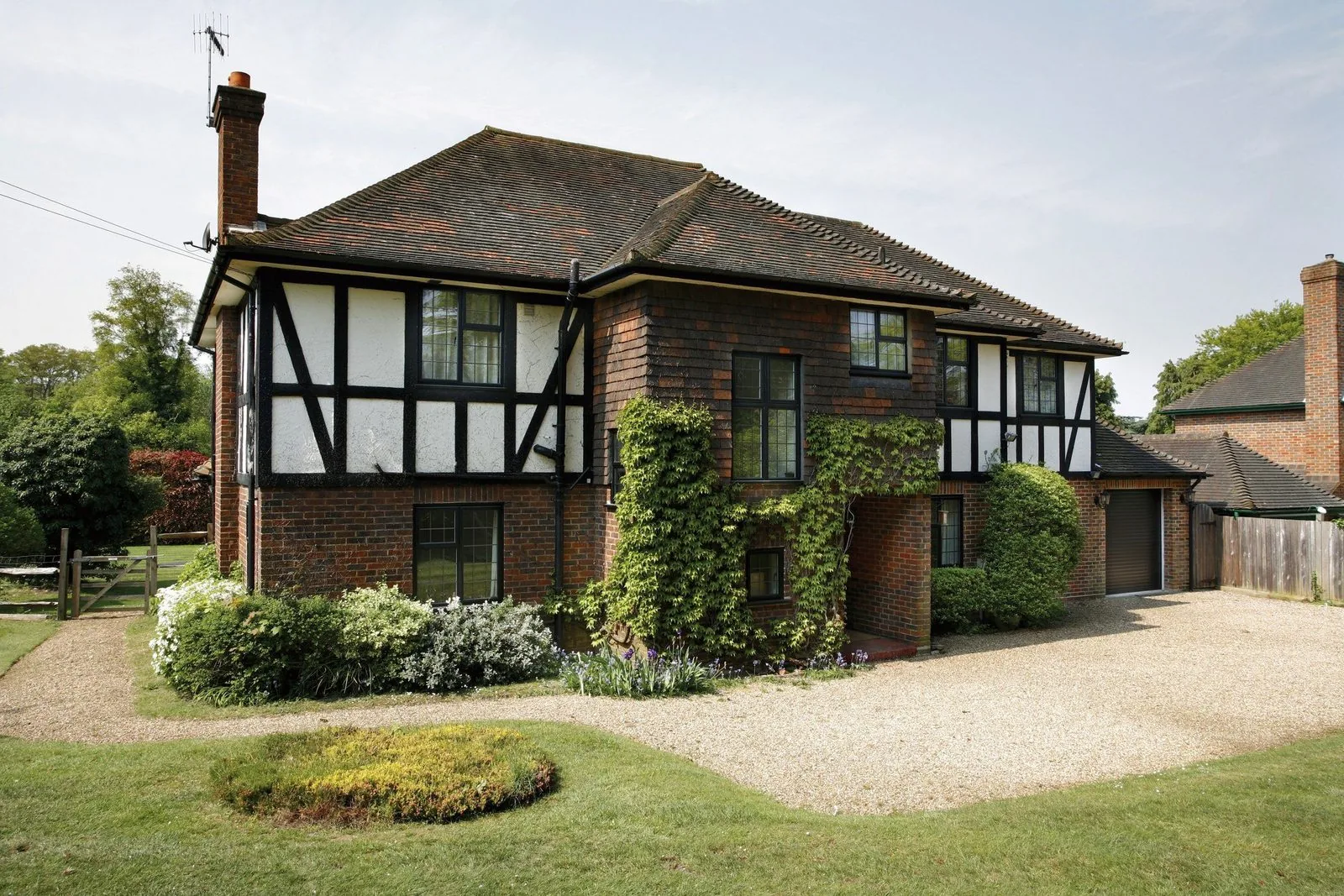
The single biggest factor in whether a window colour looks right is not the colour in isolation but how it sits against the brick, render, roofline and neighbouring properties on the street. A colour that looks striking on a manufacturer's sample chip can look disconnected from its surroundings once installed at scale across a whole elevation — it's worth looking at real installations on similar properties, ideally on a similar brick tone, before committing.
On conservation areas and streets with an Article 4 direction removing permitted development rights, colour is often one of the specific things local planning policy addresses, typically requiring white, cream or a defined heritage palette on street-facing elevations to preserve visual consistency. It's worth checking your local conservation area guidance before ordering, since planning departments can and do refuse retrospective consent for a colour that doesn't match the approved palette.
Colour choice and resale value
Colour is one of the more subjective areas of a window specification, but it does have a measurable effect on how a property is perceived by future buyers, particularly on the street-facing elevation that forms a large part of first impressions. Anthracite grey has become enough of a mainstream default that it now reads as a safe, contemporary choice to most buyers, in the way white once did for previous generations.
More unusual or highly saturated colours — bold blues, greens or true black — can work very well on the right property and divide opinion on the wrong one; they tend to suit distinctive architecture or a confident overall design scheme better than a standard terrace where a more neutral choice will appeal to a broader range of future buyers. If resale value is a material consideration, we'd generally steer towards anthracite grey, a heritage flint or grey-green, or a well-matched white or cream over a highly personal colour statement.
Our view
Our view
Anthracite grey remains the most versatile choice across the widest range of London and South East property types, and it's popular for genuinely good reasons rather than fashion alone — but it isn't automatically correct for every elevation, particularly period properties in conservation areas where a heritage white or cream may be the only approvable option.
Whatever colour you're drawn to, ask specifically whether it's rated for your elevation's sun exposure, and always specify by RAL code rather than a brochure name to guarantee consistency across the whole order.
Frequently asked questions
What is a RAL colour and why does it matter for windows?+
RAL is a European colour matching system using a numbered code, such as RAL 7016 for anthracite grey, that lets manufacturers, installers and architects specify an exact shade regardless of brand. Asking for a RAL number rather than a brochure name like 'graphite' guarantees you get the same precise colour across every frame, cill and trim on the order.
What's the difference between a foil and a spray or laminate finish?+
A foil is a coloured or woodgrain film heat-fused onto the surface of a uPVC profile before it's fabricated into a frame, giving a durable, consistent finish across the whole window. Spray-applied finishes are painted on after fabrication and can offer bespoke colours, but historically have been more prone to chipping at corners and joints than a factory-applied foil.
Why is anthracite grey so much more popular than white uPVC now?+
Anthracite grey (commonly RAL 7016) reads as a more contemporary, architectural colour that suits both modern extensions and updated period properties, and it hides weathering and minor marks better than gloss white over a ten-to-twenty-year lifespan, which has driven a significant shift in specification trends over the past decade.
Do dark-coloured uPVC frames absorb more heat and warp?+
Dark colours do absorb more solar heat than white, and early dark uPVC profiles were more prone to bowing in direct summer sun as a result. Reputable modern systems address this with reinforced, heat-resistant foils and additional steel reinforcement in the frame specifically rated for use in darker RAL colours — always ask whether a colour is rated for use on a south-facing elevation before specifying it.
Can I have a different colour inside and outside my windows?+
Yes — dual colour (sometimes called duo colour) is now a standard option on most uPVC and aluminium ranges, typically pairing a bold or dark external colour with a lighter internal foil such as white or cream to suit interior décor without affecting the street-facing appearance.
Will an unusual window colour affect the resale value of my home?+
It can, particularly on a traditional street where anthracite grey or a heritage colour like flint or cream reads as a safe, well-regarded choice, whereas a strong or unusual colour is more polarising to future buyers. Neutral, contextually appropriate colours tend to be the safer choice if resale value is a consideration.
Do conservation areas restrict window colour choices?+
Often, yes. Conservation area guidance and Article 4 directions frequently specify approved colours for street-facing elevations — commonly white, cream or a specific heritage colour matching the historic joinery palette of the area — so it's worth checking local planning policy before committing to a colour on a designated street.
How do I make sure the colour I choose matches across doors and windows?+
Always specify the same RAL code across your whole order, including doors, cills, trims and any secondary glazing, and ask your supplier whether it's coming from the same foil batch — small colour variations between manufacturing runs are more noticeable across large areas of glazing than on a single sample chip.