Materials
Practical, Energy-Efficient uPVC Windows and Doors
The most adaptable material in British housing: strong thermal performance, an unusually wide style range and upkeep measured in minutes rather than weekends.
Introduction
A proven material that has moved on a very long way.
Much of the scepticism about uPVC belongs to a product that no longer exists. The windows that gave the material its reputation were bulky, uniformly white and thermally unremarkable. Contemporary profiles are a different proposition: multi-chambered for insulation, mechanically jointed for cleaner corners, available in flush and sculptured forms and finished in a palette that includes convincing woodgrains and heritage colours.
The reason uPVC remains the most specified glazing material in the country is not that it is the cheapest option. It is that for a very large number of homes it offers the strongest balance of thermal performance, style choice, security and long-term upkeep for the money invested. That is a genuine engineering answer, not a compromise.
This page sets out what modern uPVC does well, where it is the sensible recommendation, and where we would honestly point you towards aluminium or timber instead. Material choice should follow the property, not the brochure.
Beautiful homes begin with better advice.
Material choice is a conversation about your property, not a preference we bring with us to the survey.
Why choose this material
Performance, versatility and upkeep that stays out of your way.
The insulating behaviour of uPVC comes from its structure. The profile is extruded with a series of sealed internal chambers, each of which slows the movement of heat, and the material itself conducts poorly compared with metal. Add a modern sealed unit with a low-emissivity coating and a warm-edge spacer, and the assembly performs strongly against current standards without exotic specification.
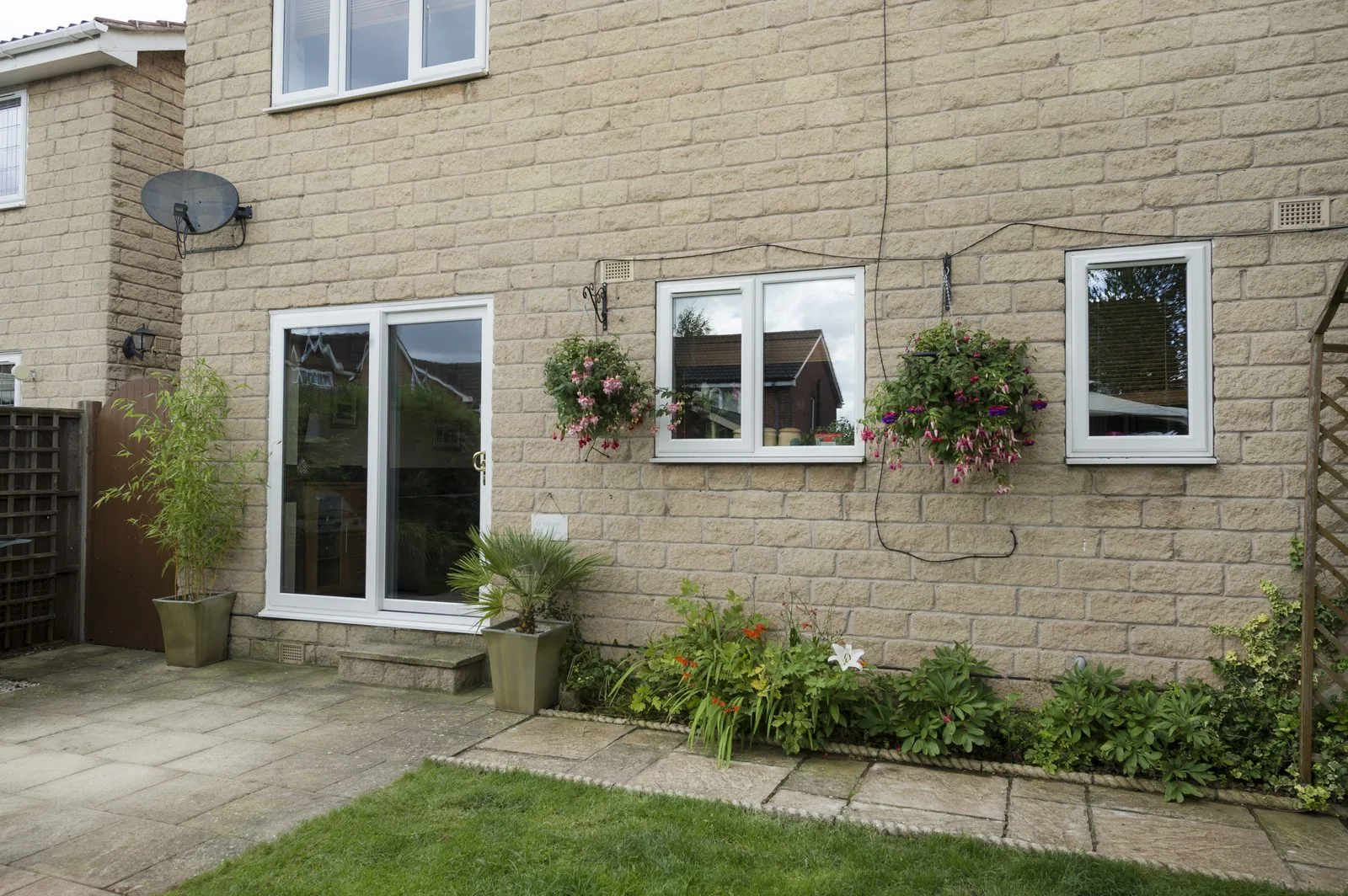
Versatility is the second argument. Casement, flush casement, vertical sliding sash, tilt-and-turn, French doors, patio doors, rear doors and conservatory frames are all available in uPVC, which means a whole house can be treated coherently. Reinforcement is introduced within the profile where spans and loads require it, so larger openings remain achievable within sensible limits.
Third, and least glamorous but most appreciated over time: it asks almost nothing of you. There is no repainting cycle, no swelling in wet weather and no seasonal adjustment ritual. For most households that is the difference between a maintained house and a house with a job list.
Who this material is best for
Where uPVC is usually the sensible recommendation.
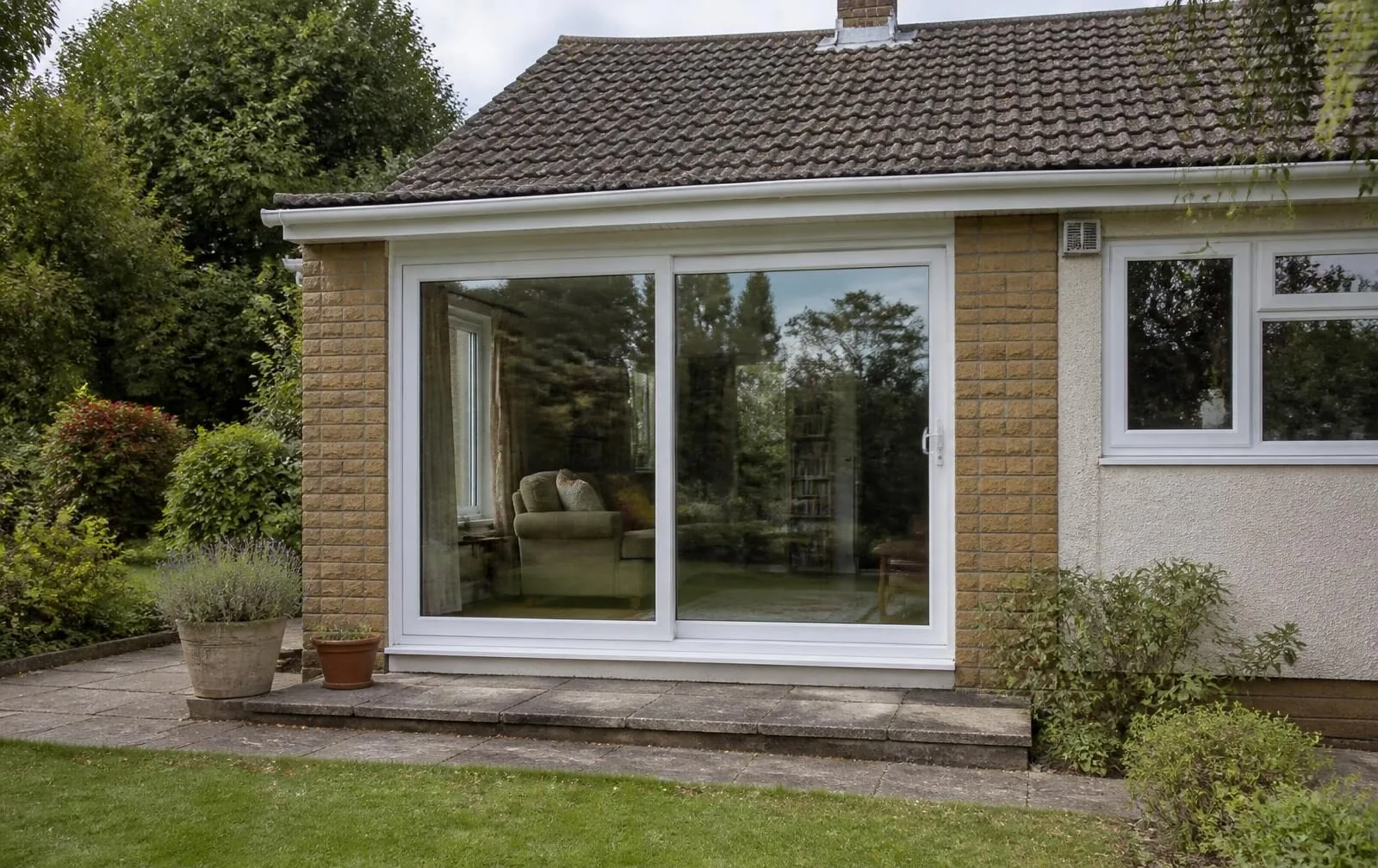
uPVC suits replacement projects on the great majority of UK housing stock: post-war semis, detached and terraced homes, bungalows, and later Victorian and Edwardian properties outside restrictive designations. If the openings are conventional in size and the priority is warmth, security and low upkeep, it is very often the right specification.
It also suits phased work. Because the range is broad and consistently available, a project can begin with the rear elevation and continue to the front a year later without a visible mismatch, which is harder to guarantee with more bespoke materials.
It is a weaker choice for exceptionally large openings, for elevations where the very slimmest possible sightline is the whole point of the design, and for listed buildings and strictly controlled conservation settings. In each of those cases we would recommend aluminium or timber and explain exactly why.
- Whole-house window and door replacement
- Post-war semis, terraces and detached homes
- Bungalows and modern estate housing
- Later period homes outside strict designations
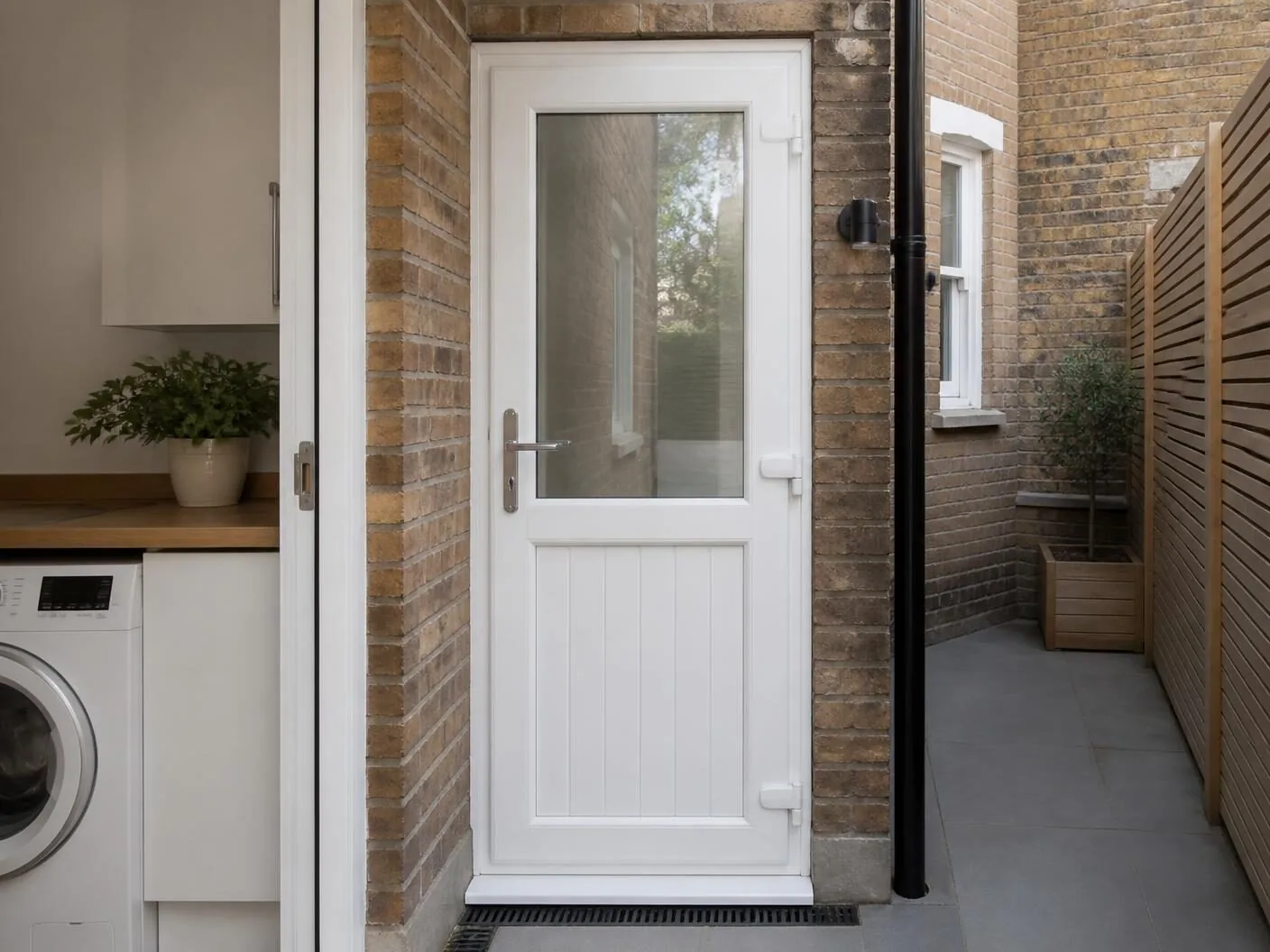
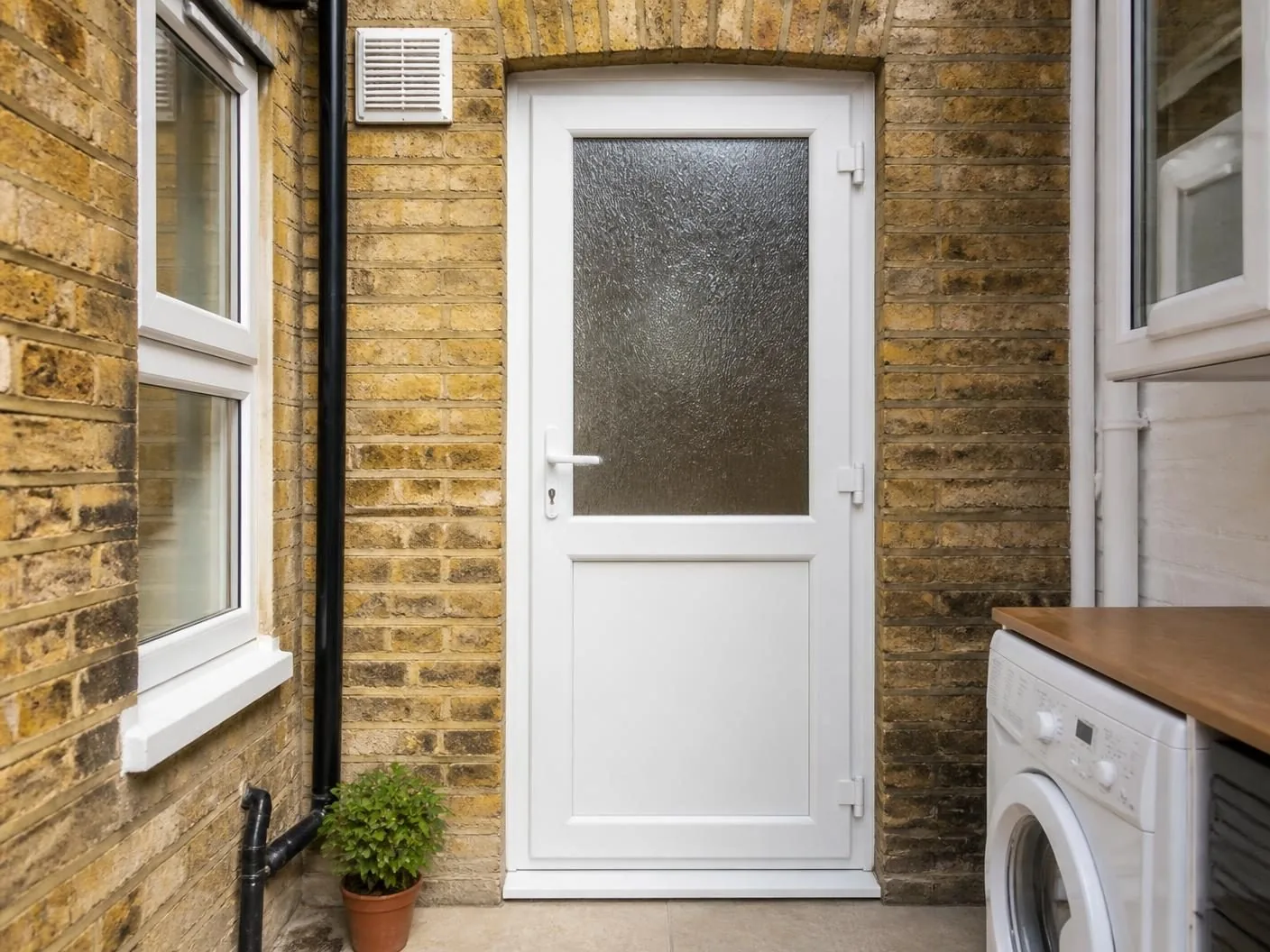
- Rear doors, utility rooms and side returns
- Conservatory frames and glazing
- Phased, elevation-by-elevation projects
- Rental and investment properties
Key benefits
What this material gives you, in practical terms.
Strong value
The best balance of thermal performance, security and upkeep for the money on most homes.
Thermal performance
Multi-chambered profiles and modern sealed units meet current standards comfortably.
Wide style range
Casement, flush, sash, French, patio and rear doors in one coherent material.
Genuinely low upkeep
Washing, clear drainage slots and annual lubrication. No sanding or repainting.
Design & appearance
More design range than its reputation suggests.
The two profile families that matter visually are sculptured and flush. Sculptured profiles carry a softly rounded external face that suits later twentieth-century housing, while flush casements close level with the frame to produce the quieter, flatter elevation associated with traditional joinery. Choosing correctly between them does more for how a house looks than the colour does.
Foiled finishes have transformed what uPVC can convincingly imitate. A woodgrain foil carries texture as well as colour, so it catches light in a way plain colour does not, and paired with mechanically jointed corners it avoids the welded-mitre appearance that gave older frames away.
Detail decisions still matter. Astragal bars, deep bottom rails, run-through horns on sashes and appropriate ironmongery are what make a uPVC window read correctly on an older elevation, and skipping them is the usual reason a replacement looks wrong even though the specification was sound.
- Sculptured and flush profile options
- Mechanically jointed corner detailing on selected ranges
- Foiled woodgrain and painted-timber effect finishes
- Astragal bars, horns and deep bottom rails for period detail
- Coordinated windows, doors and conservatory frames
- Slim and standard sightline variants across ranges
Available products
Where uPVC appears in our ranges.
uPVC is offered across casement and flush casement windows, vertical sliding sash windows, French and patio doors, rear and utility doors and conservatory frames. Configurations and finishes vary by system, so each page below explains what is realistic for that product family.
Available across selected product ranges.
Colour & finish options
Details you will look at every single day.
Finishes
Colour in uPVC is achieved either through the body of the profile or, more commonly for anything other than white, through a foil laminated onto the surface. Good foils are durable and colour-stable, and they allow finishes that plain extrusion cannot achieve, including grain texture and deep heritage shades.
White is still the most practical choice on many elevations because it is the easiest to match in future and shows dirt least on a busy road. Greys and blacks look excellent on modern properties but do show dust more readily, while heritage greens, blues and creams tend to flatter older brickwork.
Dual-colour finishes, with one colour outside and another inside, are available across selected ranges. Exact colour and foil availability depends on the profile system and is confirmed during specification.
White and off-white
The most straightforward finish to match in future phases, and the least sensitive to urban dust.
Greys and blacks
Contemporary neutrals that pair well with render, brick and modern cladding on newer homes.
Woodgrain foils
Textured oak, rosewood and painted-timber effects that read convincingly as joinery from the street.
Heritage shades
Softer greens, blues and creams intended to complement older brick and stone elevations.
Energy efficiency
Warmth, honestly explained.
Thermal performance depends on the profile, the glazing unit, the spacer and the quality of the installation seal, and all four are specified together. Modern uPVC is a genuinely strong performer here because the material itself conducts heat poorly and the chambered structure adds insulation before the glass is even considered.
- Multi-chambered profiles that trap insulating air
- Double and triple glazing options across selected ranges
- Low-emissivity coatings and warm-edge spacer options
- Draught sealing addressed as part of installation
- Performance figures confirmed at specification stage
Security
Specified, not assumed.
Security comes from the locking system, the reinforcement within the profile, the glazing and the installation, rather than the material on its own. Modern uPVC windows and doors use multipoint locking that engages at several points around the frame, and reinforcement is specified where the size and loading require it.
- Multipoint locking across window and door ranges
- Internal reinforcement specified to suit size and loading
- Laminated glazing options where extra resistance is wanted
- Key-operated handles and shielded hinge options
- Locking specification agreed before order
Performance & durability
How it behaves over decades.
uPVC does not rot, rust or absorb water, and it is unaffected by the damp that punishes untreated timber. Modern profiles include ultraviolet stabilisers to resist yellowing, and the reinforcement inside the frame is what maintains geometry on larger sashes and doors over time.
- No rot, rust or moisture absorption
- UV-stabilised profiles to resist discolouration
- Reinforcement maintains geometry on larger units
- Serviceable hardware, gaskets and glazing units
- Dependable weather performance in exposed conditions
Maintenance
What ownership actually involves.
The routine is short. Wash the frames with warm water and mild detergent, avoid abrasive cleaners that dull the surface, keep drainage slots clear so water leaves the frame as designed, and lubricate hinges and locking gear once a year.
- Wash two or three times a year with mild detergent
- Avoid abrasive creams and solvent cleaners
- Keep bottom drainage slots clear of debris
- Wipe gaskets and check for perishing
- Lubricate hinges and locking gear annually
Sustainability
The longer view on environmental impact.
The strongest environmental argument for replacement glazing is the heat it stops losing. A well-sealed, well-glazed window reduces the energy a house consumes every winter it stands, and that ongoing saving is where most of the benefit accumulates.
uPVC profiles are also recyclable, and reclaimed material is increasingly used within the core of new profiles. Longevity matters here too: the longer a frame stays serviceable, the less often the whole cycle of manufacture and installation is repeated.
- Recyclable profiles at end of life
- Recycled content used within modern profiles
- Reduced heating demand over the frame's life
- No solvent-based refinishing cycle
Important considerations
Where this material may not be the right answer.
uPVC frames are necessarily thicker than aluminium for the same structural job, because the material is less strong in a slim section. If the design intent is the slimmest possible sightline or the largest possible unbroken pane, aluminium is the more honest recommendation and we will say so.
Exceptionally large openings are the second limit. Wide sliding sets and very tall leaves push beyond what is sensible in uPVC, and forcing it usually means adding mullions that undermine the reason for the opening in the first place.
Finally, heritage constraints. Where a building is listed, or a conservation area requires authentic joinery profiles and materials, timber is often the only route to consent. Surface damage is also worth noting: unlike timber, a scratch or heat mark in uPVC cannot be sanded out and refinished.
- Wider frame sections than aluminium equivalents
- Not suited to exceptionally large openings
- Often unsuitable for listed buildings and strict designations
- Surface damage cannot be refinished
- Available across selected product ranges only
Frequently asked questions
The questions homeowners ask us most.
How long do uPVC windows last?+
A well-made, properly installed uPVC window has a long service life, and the components that usually need attention first are the hinges, handles and sealed glazing units rather than the frame itself. Rather than quote a single figure, we would say that the quality of the profile, the reinforcement inside it and the standard of the installation matter far more to longevity than the material label, which is precisely why we specify system by system rather than by price alone.
Are modern uPVC windows energy efficient?+
Yes. Contemporary uPVC profiles use multiple internal chambers that trap air and slow heat transfer, and they pair with modern sealed units, low-emissivity coatings and warm-edge spacers. The result is thermal performance that meets current Building Regulations comfortably. The precise figure depends on the profile, glazing make-up and opening size, so we confirm it for your specification during the consultation.
Can uPVC windows look like timber?+
Considerably better than most people expect. Foiled woodgrain finishes reproduce grain texture and colour depth convincingly, and when combined with a flush casement profile, mechanically jointed corners and appropriate ironmongery, the result reads as painted joinery from the pavement. Close inspection will still reveal the difference, and on a listed building that difference may matter, which is something we always discuss honestly.
What colours are available?+
White remains the most specified finish, but the palette is far wider than it once was: greys, greens, black, cream and heritage shades are widely available, as are woodgrain foils in oak, rosewood and painted-timber effects. Dual-colour options with a different internal and external finish exist across selected ranges. Exact availability depends on the profile chosen and is confirmed at specification.
Can uPVC frames be repaired?+
Many issues are repairable rather than terminal. Hinges, handles, locking gear, gaskets and sealed units can all be replaced without touching the frame, and misted double glazing is usually a unit replacement rather than a window replacement. What cannot be restored in the way timber can is the surface itself: a deep scratch or a heat mark in the profile is permanent, so damage is a genuine consideration.
Is uPVC suitable for period homes?+
Frequently, yes, provided the style is chosen with care. A flush casement or a vertical sliding sash in a woodgrain finish, with the correct proportions, bar layout and deep bottom rail, can sit well on a Victorian or Edwardian elevation. Where the property is listed, or a conservation area carries an Article 4 direction, timber is often required instead. We check the constraint on your specific address before recommending anything.
Can uPVC windows be triple glazed?+
Yes, across selected ranges. Triple glazing adds a third pane and second cavity, and the profile must be deep enough to accept the heavier unit while the hinges must be rated to carry it. Whether it is worthwhile is a separate question: on an exposed elevation or a room used as an office it often is, while elsewhere the same budget may achieve more spent on better sealing or a higher-specification double unit.
How should uPVC frames be maintained?+
Very simply. Wash the frames a couple of times a year with warm water and a mild detergent, avoiding abrasive creams and solvents that dull the surface. Keep the drainage slots at the bottom of the frame clear, wipe the gaskets, and lubricate the hinges and locking mechanism annually. There is nothing to sand, fill or repaint at any point.
Begin the conversation
Talk the material through before you commit to anything.
Exact performance figures depend on the system, glazing and configuration finally selected, so we confirm them in writing during consultation and specification rather than guessing at them on a web page.