Roof glazing is the most performance-sensitive part of any conservatory or extension. A rooflight admits more direct sun in summer than a vertical window and loses more heat in winter because warm air rises towards it. That means the glass specification is not a cosmetic detail — it is what determines whether the room below is comfortable, expensive to heat, and easy to maintain.
This guide explains solar-control glass, low-E glass, self-cleaning coatings and how to choose the right combination for your rooflight.
Why roof glazing matters more than wall glazing
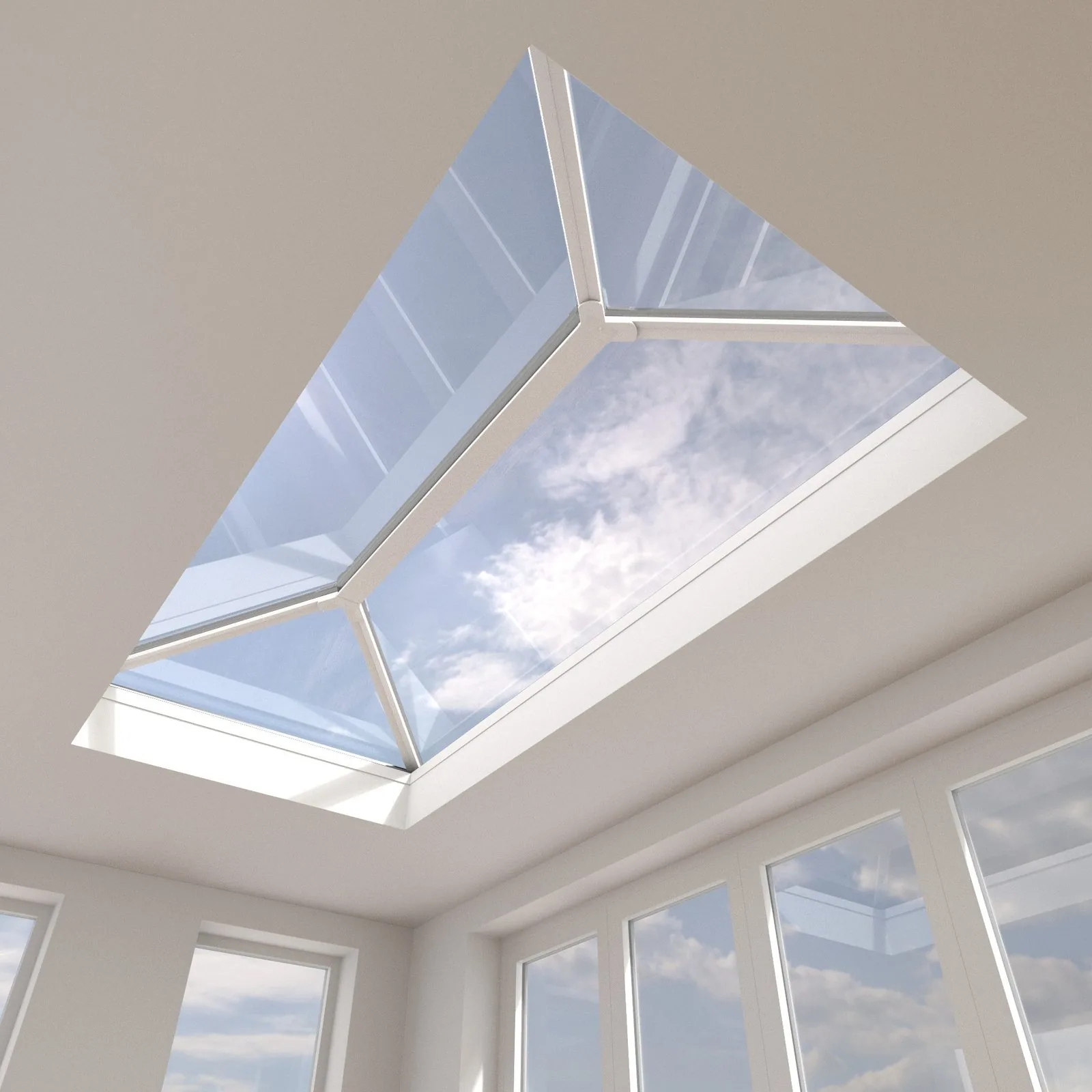
Roof glazing is exposed to the sun at a much more direct angle than vertical windows. In summer, a rooflight can admit several times more solar heat than a similarly sized vertical window, because the sun is high and the rays strike the glass at a near-perpendicular angle. In winter, the same rooflight loses heat quickly because warm air rises directly towards it and the cold sky above acts as a heat sink.
That combination — intense summer heat gain and rapid winter heat loss — makes the glazing specification of a rooflight one of the most important decisions in the project. The right glass can make a rooflight the best feature of the room. The wrong glass can make it uncomfortable for half the year.
Solar control: managing summer heat
Solar-control glass works by reflecting or absorbing a portion of the sun's infrared energy while allowing visible light to pass through. The effect is a cooler room with no significant loss of brightness. Modern coatings are tuned to be selective, so they reject heat without making the room feel gloomy.
The level of solar control needed depends on the orientation and size of the rooflight. A large south-facing lantern over a kitchen needs strong solar control. A small north-facing rooflight over a hallway may not need any special treatment. Over-specifying solar control is a common mistake that adds cost and slightly reduces light without delivering a benefit.
Low-E glass: keeping heat in during winter
Low-E glass has a microscopically thin coating that reflects long-wave heat back into the room. It is the standard for energy-efficient glazing and is essential for any rooflight that is part of a heated space. Without a low-E coating, the inner surface of the glass stays cold, leading to radiant heat loss and condensation.
Low-E coatings are usually combined with argon or krypton gas filling between the panes to further reduce heat loss. The result is a rooflight that performs much better in winter than an uncoated double-glazed unit, and often approaches the performance of the walls around it.
Self-cleaning glass: reducing maintenance
Self-cleaning glass has a transparent photocatalytic coating on the outer surface. When exposed to daylight, the coating reacts with organic dirt, breaking it down into smaller particles. When rain hits the glass, it spreads out and washes the loosened dirt away, rather than beading into droplets that leave marks.
The effectiveness depends on rainfall and the angle of the glass. Roof lanterns with pitched glass tend to perform better than very flat rooflights because the rain runs off more readily. Self-cleaning glass does not remove all maintenance — occasional cleaning may still be needed — but it reduces the frequency and effort significantly, especially for rooflights that are difficult to access.
Acoustic, safety and other specialist options
Beyond thermal and cleaning performance, rooflight glazing can also be specified for acoustic, safety and security reasons. Acoustic laminated glass reduces noise from rain, aircraft and traffic, which is valuable in bedrooms and quiet rooms. Toughened glass is a safety requirement for overhead glazing in most cases. Laminated glass can add security and hold together if broken.
These options can be layered together. For example, a rooflight over a busy street might use solar-control, low-E, acoustic laminated glass with a self-cleaning outer surface. The right combination depends on the room's specific needs and the budget.
How to choose the right glazing specification
Start with orientation and use. A south-facing rooflight over a kitchen or living room needs strong solar control and good ventilation. A north-facing rooflight over a hallway or bedroom needs low-E glass and possibly acoustic laminate. A rooflight over a bathroom or utility room may need privacy glass.
Then consider size and access. Large rooflights generate more heat and are harder to clean, so solar control and self-cleaning become more valuable. Small rooflights may not justify the extra cost of premium coatings. Finally, match the specification to the budget. A small rooflight with good standard low-E double glazing is often better than a large rooflight with every upgrade.
Our view
Our view
For any rooflight that is part of a heated room, low-E glass is non-negotiable. Solar control is valuable on south-facing and large rooflights, and usually unnecessary on small north-facing ones. Self-cleaning glass is worth considering on rooflights that are hard to reach, especially on pitched roofs where rain helps the coating do its work. The best specification is the one that matches the room's orientation, use and access, not the one with every available upgrade.
Frequently asked questions
What is solar-control glass?+
Solar-control glass is glass with a coating or tint that reflects a large proportion of the sun's heat while letting visible light through. It helps prevent a rooflight from turning the room below into a greenhouse in summer while still allowing plenty of daylight.
Does solar-control glass make a room darker?+
Slightly. Solar-control coatings reduce the total light transmission by a small amount, but modern coatings are designed to block heat while preserving brightness. The visible light transmission is usually still high enough to keep the room feeling bright and open.
What is self-cleaning glass?+
Self-cleaning glass has a transparent coating on the outer surface that reacts with sunlight to break down organic dirt. Rain then washes the loosened dirt away. It does not eliminate all maintenance, but it significantly reduces how often a rooflight needs to be cleaned.
Does self-cleaning glass work on roof lanterns?+
Yes, but its effectiveness depends on rainfall and roof angle. Self-cleaning glass works best when rain can run across the surface. Steeply pitched roof lanterns tend to perform better than very flat rooflights, where water can pool and leave residue.
Is solar-control glass worth the extra cost?+
For south-facing rooflights and large roof lanterns, yes. The extra cost is usually modest compared with the comfort benefit and the reduced need for blinds or air conditioning. For small north-facing rooflights, it may be unnecessary.
What is low-E glass?+
Low-E, or low-emissivity, glass has a microscopic coating that reflects heat back into the room. It is the standard for energy-efficient glazing and helps keep the room warm in winter. It is different from solar control, which reduces heat gain from the sun.
Can I have solar control and low-E on the same glass?+
Yes. Most high-performance rooflight glazing combines low-E coatings to keep heat in during winter with solar-control coatings to keep heat out during summer. The combination gives the best year-round performance.
Do I need tinted glass for solar control?+
Not necessarily. Modern solar-control coatings are often nearly invisible, so you can get the heat-reduction benefit without the blue or grey tint that older tinted glass had. Tinted glass is still available for very high solar gain situations, but it is not the only option.
Products discussed