
A conservatory is only as useful as its temperature. The most beautifully designed space is wasted if it is too cold to sit in for six months of the year or too hot to enjoy in the height of summer. Heating is the obvious answer, but the right heating system depends on the roof, the glazing, the insulation and how the room will be used.
This guide compares the main heating options, explains why insulation must come first, and covers the ventilation and cooling strategies that prevent summer overheating.
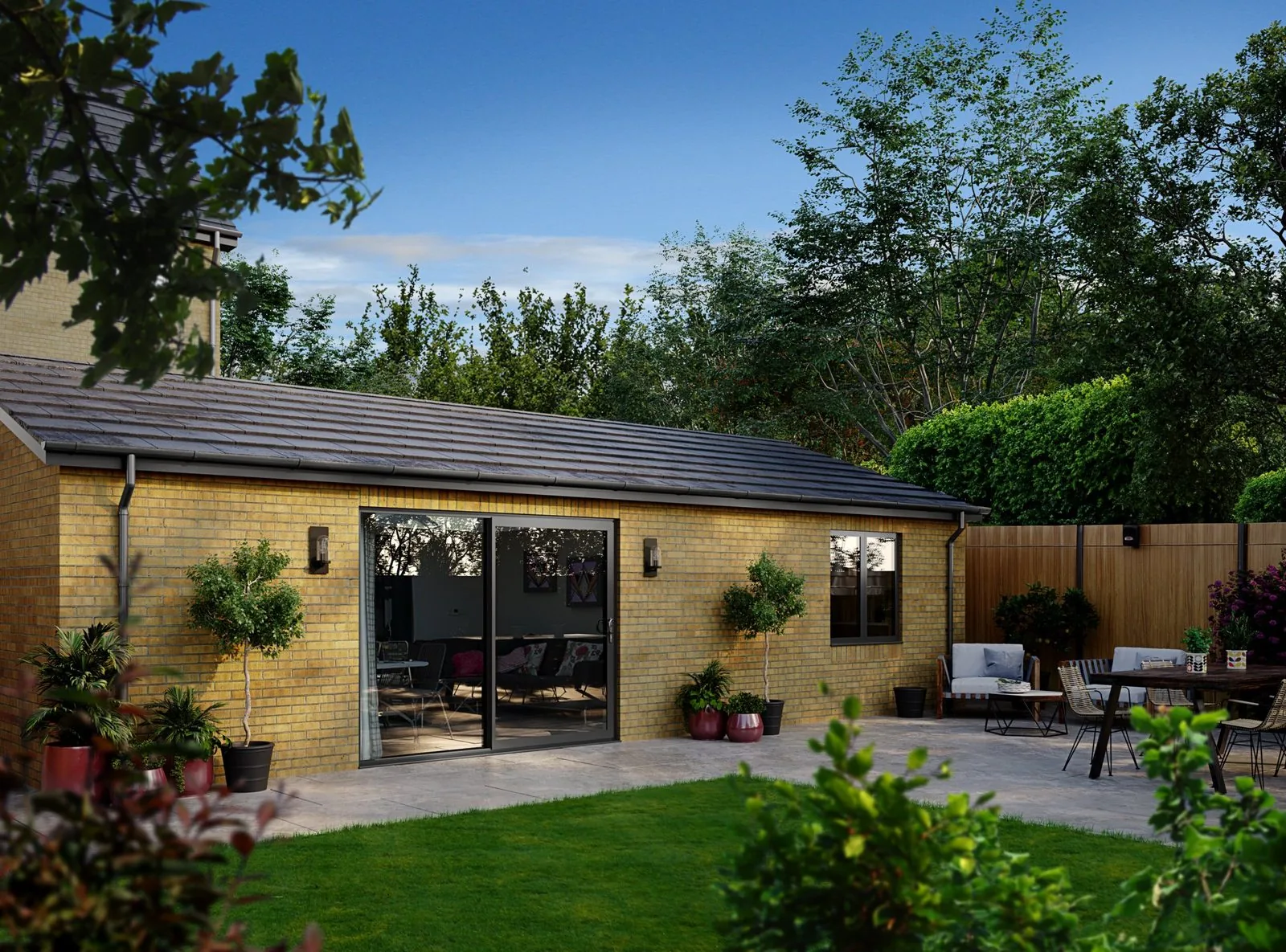
Why conservatories are hard to heat
Conservatories are harder to heat than normal rooms because they have a large glazed surface area, a lightweight structure, and often a roof that is only a thin barrier between the interior and the sky. In winter, heat escapes quickly through the roof and glass. In summer, the same glass can trap solar heat and create a greenhouse effect. The heating system has to work around this fundamental reality.
The first question is therefore not which heater to buy, but how well the conservatory has been designed to retain heat. A conservatory with a polycarbonate roof, single-glazed doors and poor draught-proofing will be expensive and uncomfortable to heat regardless of the radiator. A conservatory with a warm roof, high-performance glazing and good seals can be heated with a modest system.
Underfloor heating: even, invisible warmth
Underfloor heating is the most popular solution for conservatories because it addresses the room's biggest weakness: heat stratification. In a conservatory with a high glass roof, heat from a wall-mounted radiator rises quickly and escapes through the roof. Underfloor heating warms the floor and the lower part of the room first, creating a more even and comfortable temperature.
Electric underfloor heating is often easiest to retrofit and is well suited to conservatories where extending the central heating pipework is awkward or expensive. Wet underfloor heating connected to the boiler can be cheaper to run but is more complex to install and may require boiler upgrades for the extra load. Both systems work best under tiled or engineered wood floors.
Radiators: straightforward and flexible
Radiators are the simplest option if the conservatory is already connected to the central heating system, but they need to be sized for the room's heat loss. Because conservatories lose heat faster than normal rooms, a radiator that would be adequate in a bedroom may be too small in a conservatory. A heating engineer should calculate the heat load properly.
Slimline vertical radiators are a popular choice because they take up minimal wall space and can look modern. Towel rails can work in small conservatories or those used as utility spaces. In all cases, the pipework should be insulated, and the radiator should have independent controls so it can be turned off when the conservatory is not in use.
Electric heating: quick and controllable
Electric panel heaters, infrared heaters and electric underfloor mats are all viable options for conservatories. They are easy to install, require no pipework or boiler connection, and can be controlled independently. The downside is the running cost per unit of heat, which is higher than gas or heat-pump systems.
Electric heating is often the right choice for a conservatory that is used occasionally or for specific periods, such as weekend mornings. Infrared panels are particularly effective because they heat surfaces and people rather than the air, so they feel warm even at lower air temperatures and respond quickly.
Insulation first, heating second
No heating system can overcome a poorly insulated conservatory. The most important insulation is in the roof: a warm roof with high-performance insulation will reduce heat loss more than any radiator upgrade. Double or triple glazing, draught-proofing around doors and vents, and insulated dwarf walls all make the heating system more effective and cheaper to run.
Think of heating as the final layer of the design. Start with the roof, then the glazing, then the draught-proofing. Only then size the heating system. A well-insulated conservatory may need half the heating output of a poorly insulated one, which saves money upfront on the heater and ongoing on fuel bills.
Cooling and ventilation
Heating is only half the battle. In summer, a conservatory can become too hot. The best cooling strategy is to control solar gain before it enters the room. Solar-control glass, roof overhangs, external blinds and opening roof vents are all more effective than trying to remove heat once it has built up.
A well-designed conservatory should have both high and low-level ventilation. Opening windows, French doors and roof vents create a stack effect that draws hot air out at the top and pulls cooler air in at the bottom. This is more effective than a single fan recirculating hot air around the room.
Our view
Our view
The best heating system for a conservatory is the one that matches the room's thermal performance. A conservatory with a warm roof and good glazing can be heated cheaply and comfortably with underfloor heating or well-sized radiators. A conservatory with a basic glass or polycarbonate roof will struggle regardless of the heater. We always recommend designing the thermal envelope first, then sizing the heating to match, rather than trying to fix a cold room with a more powerful heater.
Frequently asked questions
What is the best way to heat a conservatory?+
Underfloor heating is usually the best solution because it distributes heat evenly across the floor and does not take up wall space. However, it works best when paired with a warm roof and good insulation. For glass-roofed conservatories, electric underfloor heating or slimline radiators are practical alternatives.
Can I use a normal radiator in a conservatory?+
Yes, but you need to size it correctly. Conservatories lose heat faster than normal rooms, especially through the roof, so a radiator may need to be larger than the one you would fit in a standard room. The pipework also needs to be sized and insulated to handle the extra load.
Does underfloor heating work under conservatory tiles?+
Yes. Electric underfloor heating mats are commonly installed under ceramic, porcelain or stone tiles. The thermal mass of the tiles helps retain and distribute heat. It is important to use a compatible system with the right output rating for the room size and heat loss.
Is electric heating expensive to run in a conservatory?+
Electric heating is more expensive per unit of heat than gas central heating, but it can be cost-effective in a conservatory used only at certain times. It is easy to install, requires no pipework, and can be controlled independently. Solar gain during the day can also reduce the running hours.
Will a conservatory be too cold without heating?+
In a typical UK winter, an unheated conservatory with a glass or polycarbonate roof will be too cold for regular use. Even with a warm roof, supplementary heating is usually needed for comfort in the coldest months. Good insulation and draught-proofing reduce the amount of heating required.
Can I extend my central heating into the conservatory?+
Yes, but Building Regulations may require the conservatory to be separated from the house by external-quality doors and walls, or for the heating to have independent temperature and on/off controls. If you want an open-plan connection, the conservatory must meet the same thermal standards as the rest of the house.
Does a warm roof reduce heating bills?+
Yes, significantly. A warm roof reduces heat loss through the roof and makes the conservatory much easier to heat. Homeowners often report that a conservatory with a warm roof and underfloor heating is the most comfortable room in the house, rather than the least.
What about cooling a conservatory in summer?+
The best cooling strategy is prevention: solar-control glass or a solid roof, roof vents, opening windows and doors, and external shading such as awnings or sails. Once a conservatory is overheating, portable fans or air conditioning can help, but they are less effective than controlling solar gain in the first place.