
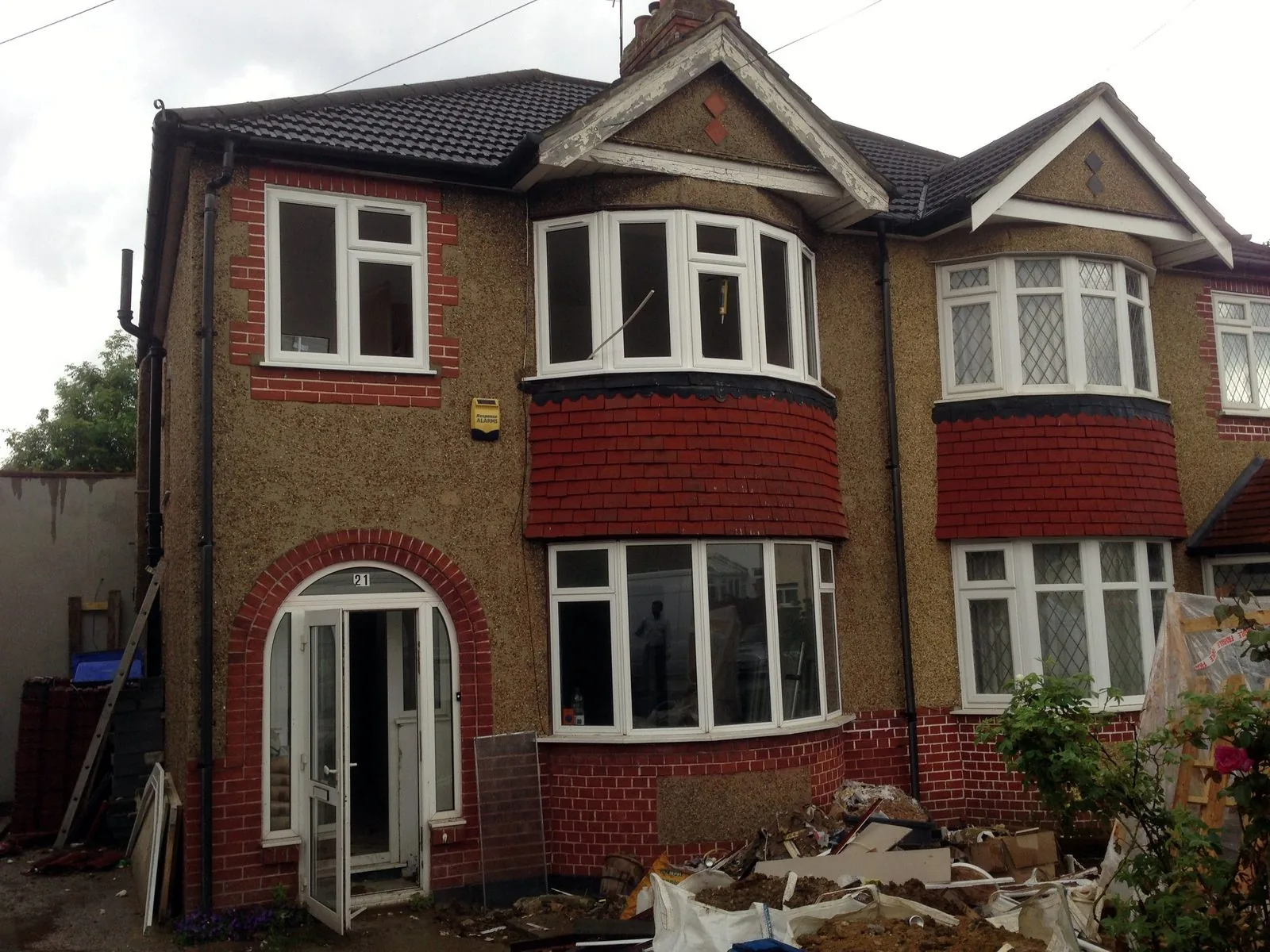
Standard uPVC
Five-chamber, steel reinforced, welded construction. The baseline specification and the right choice for most replacement projects.
Windows / Casement / uPVC
The workhorse of the British replacement market — and, specified properly, a far better product than its reputation suggests.
Introduction
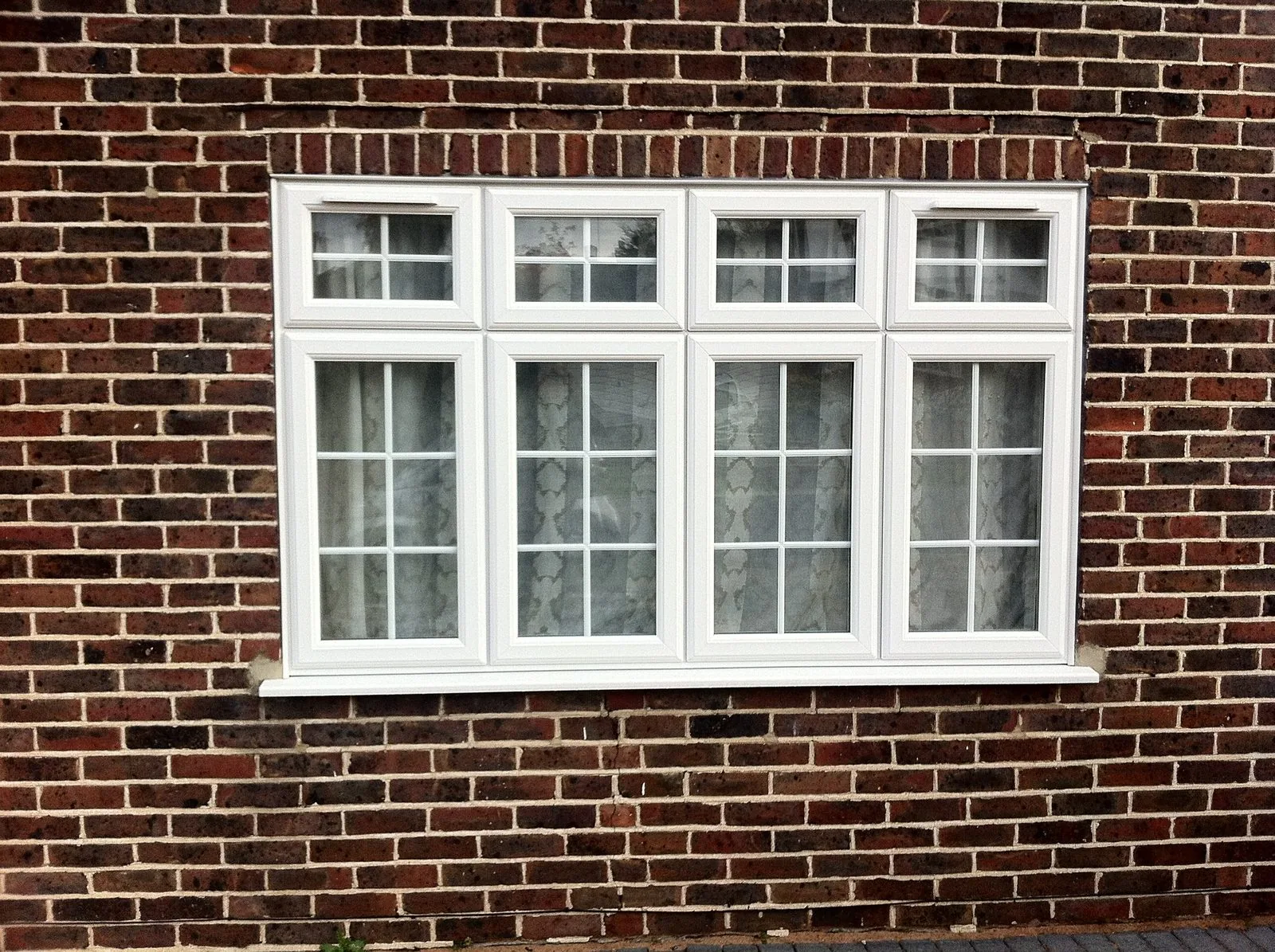
uPVC carries thirty years of reputational baggage from windows that yellowed, sagged and were sold hard. That product barely exists any more in the systems we install, and the distance between a well-engineered uPVC casement and a budget one is far greater than the distance between uPVC and aluminium.
What we look at on your behalf is the depth of the profile in millimetres, the number and arrangement of the internal chambers, whether reinforcement is galvanised steel or a thermally superior composite, the class of the gasket material, and the manufacturer behind the hardware. None of this appears in a showroom, and all of it decides how the window behaves in year fifteen.
This page is about the material specifically. For hinging configurations, glazing options and where casements belong architecturally, the parent casement windows page covers the ground in full.
Beautiful homes begin with better advice.
We would rather spend an hour explaining why something is not right for your property than sell it to you.
Who this suits
uPVC is the right answer when the budget needs to stretch across a whole house rather than a single elevation, when the openings are conventional in size, and when there is no planning constraint requiring another material. That describes the majority of the housing stock we work on across Greater London and the Home Counties.
It is particularly strong value in rear elevations, extensions and rental property, where thermal performance and durability matter more than the finest sightline. It is also the most forgiving material in coastal and exposed locations, since there is no coating to degrade.
We would not recommend it for a listed building, and we would think carefully before specifying it on a front elevation in a conservation area with an Article 4 direction in force.
Benefits
The polymer is inherently insulating, so you reach a low U-value without paying for engineered thermal breaks.
The colour runs through the profile or is bonded as a foil. Washing is the entire maintenance regime.
Fusion-welded corners create a single continuous frame with no mechanical joint to work loose or admit water.
Over twenty foils including woodgrains, plus dual-colour options that keep interiors light.
Features
Material options
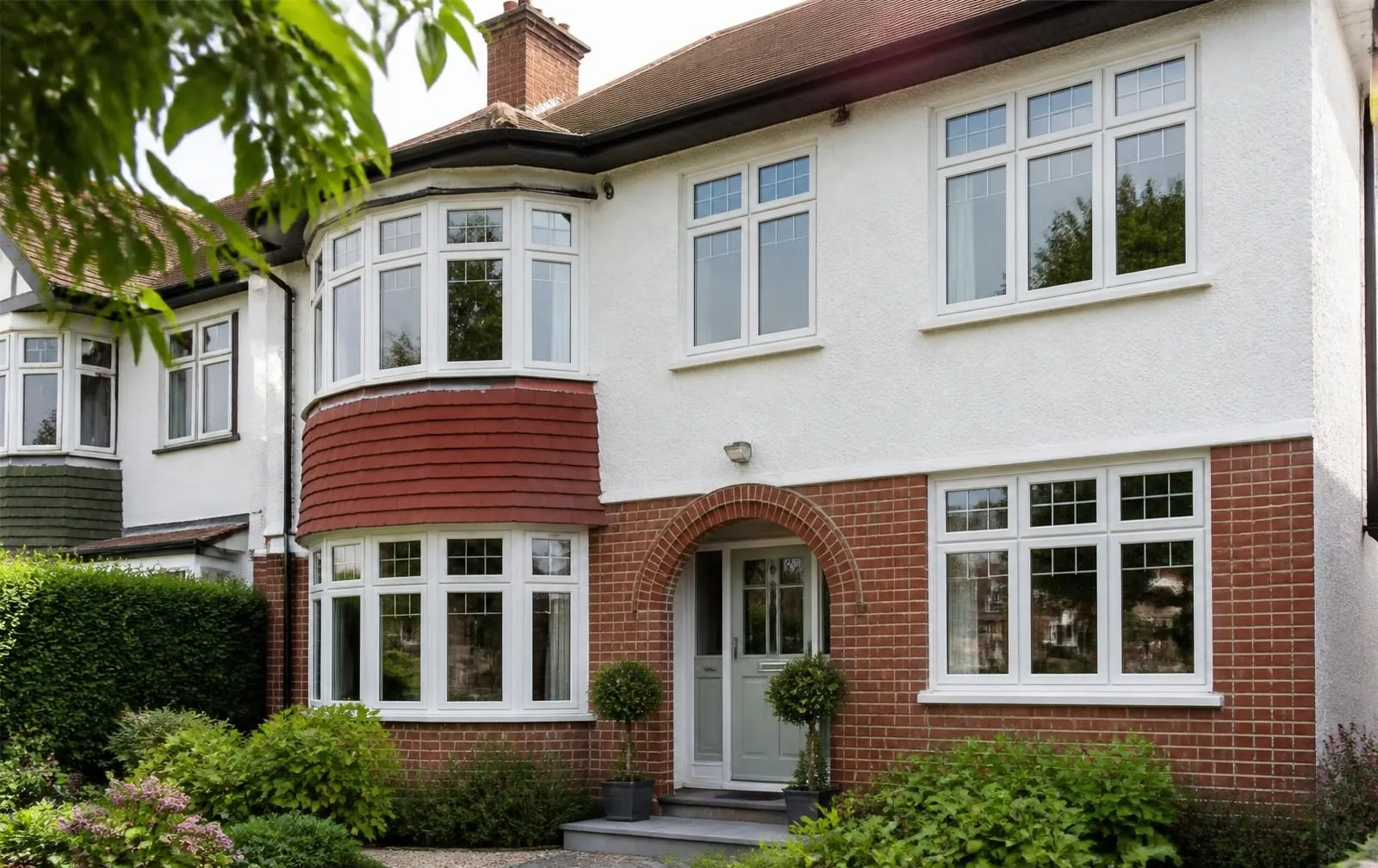
Five-chamber, steel reinforced, welded construction. The baseline specification and the right choice for most replacement projects.
Six chambers with composite reinforcement removing the cold bridge that steel introduces. Worth specifying alongside triple glazing.
Corners jointed rather than welded, eliminating the weld seam. Reserved for flush casement profiles where a timber appearance is the objective.
Colours & hardware
White
Still around half of everything we install. Uncontroversial, easiest to match to existing, and the most economical.
Anthracite grey
RAL 7016 externally, usually white internally. Reads as contemporary aluminium at a distance and suits rendered and grey-brick elevations.
Cream and Chartwell Green
Soft heritage tones that sit far better on older brickwork than brilliant white, particularly on cottages and rural properties.
Woodgrain foils
Rosewood, light oak, Irish oak and golden oak, deeply embossed so the grain catches light as timber does.
Painted timber effect
Matt finishes replicating modern painted joinery in off-white, dove grey, slate and sage.
Espagnolette locking
Mushroom cams engaging steel keeps, tested to PAS 24 as part of a complete hardware set rather than component by component.
Handles
Inline and cranked, key-locking, in white, chrome, brushed steel, black and anthracite to match the frame.
Friction stays
Grade 316 stainless steel to resist corrosion, sized by sash weight, with restricted and easy-clean variants.
Hinge protectors
Additional bolts on the hinge side of larger sashes, resisting attack where the mechanism does not reach.
Trickle vents
Colour-matched, closable, sized to meet the equivalent area of the window being replaced.
Glass options
4mm low-E inner pane, 20mm argon cavity, 4mm outer, warm-edge spacer. The standard specification.
44mm units in a 90mm profile, reaching 0.8 W/m²K where the frame is engineered for the weight.
6.4mm acoustic laminate outer against a 4mm inner for asymmetry, effective on busy roads.
A photocatalytic outer coating worth considering on upper floors and inaccessible elevations.
Full privacy range for bathrooms, en-suites and overlooked side elevations.
Applied external bars or internal spacer bars where a divided-light appearance is wanted.
Security
uPVC is often assumed to be the least secure material. In practice the polymer is irrelevant — the reinforcement inside it and the hardware bolted through it decide the outcome, and both are specification choices rather than material limitations.
Energy efficiency
uPVC delivers the lowest cost per unit of thermal improvement of any material we supply. The polymer conducts heat poorly, the chambers trap still air, and the welded frame leaks very little.
Noise reduction
The frame contributes little to acoustic performance; the glass and the seals do the work. uPVC's advantage is that a welded frame with dual gaskets has very few paths for airborne sound to exploit.
Maintenance
There is genuinely very little to do. The failure modes are worn gaskets, dry hinges and blocked drainage, and all three are prevented by twenty minutes of attention a year.
Frequently asked questions
For most suburban housing, yes. The material has improved considerably: six-chamber profiles, composite rather than steel reinforcement in some systems, and foiled finishes that no longer fade or peel. Where uPVC struggles is in very large openings, where its structural limits force chunky frames, and on period elevations where the frame depth is visibly wrong.
Five is the sensible baseline for a replacement window; six adds a marginal thermal gain that is usually only worth paying for if you are already specifying triple glazing. Chamber count matters less than the depth of the profile and the quality of the seals — a deep five-chamber frame outperforms a shallow six.
White uPVC produced in the last fifteen years is UV stabilised throughout, not just on the surface, and yellowing is now rare. Foiled colours carry ten-year guarantees against fading and delamination. Cheap imported profile is where problems still occur, which is why we specify BSI-approved systems only.
Yes. uPVC can be reprocessed up to ten times without meaningful loss of performance, and the systems we install include recycled material in the core of the profile with virgin material on the visible surfaces. Old frames removed during installation are taken away for reprocessing rather than landfill.
Almost always for one of three reasons: thinner wall sections in the profile, omitted reinforcement, or budget hardware. None are visible at the point of sale, and all of them show within a decade as dropped sashes, flexing frames and failed handles.
On a 1930s or later property, rarely. On a Victorian or Georgian elevation with original joinery, often yes — the frames are deeper and the sightlines heavier. Where planning policy does not prohibit it, a flush casement in a woodgrain foil is a far better compromise than a standard profile in white.
No, welding is stronger than a mechanical joint. The visible weld line at the corner is the giveaway that a frame is uPVC rather than timber, which is why mechanically jointed flush profiles exist for period-sensitive work.
Ten years on the profile and finish, ten years on the sealed glass units, and an insurance-backed guarantee covering the installation, alongside FENSA registration for building control.
Frame for frame, uPVC insulates better because the polymer itself is a poor conductor. Aluminium closes most of the gap with polyamide thermal breaks and wins back ground by allowing more glass and less frame in the same aperture. Our comparison guide works through the numbers.
Related articles
Related products
Begin the conversation
A consultation is a conversation about your property — its age, its orientation, its draughts and its planning constraints. You will receive a written specification you can understand and compare, and no follow-up pressure of any kind.
Systems & Profiles We Manufacture
We design and fabricate using premium window and door systems from the UK and Europe's leading manufacturers — so every installation is built on proven, fully warrantied profiles.