
Sliding patio doors look deceptively simple in a brochure photograph, but the specification decisions behind panel configuration, track and roller quality, and interlock design have a much bigger effect on how the door performs and feels years after installation than most quotations make clear.
This guide sets out the specific questions worth asking any supplier before comparing two patio door quotations, and when a lift-and-slide system is worth considering as an alternative to a standard slider.
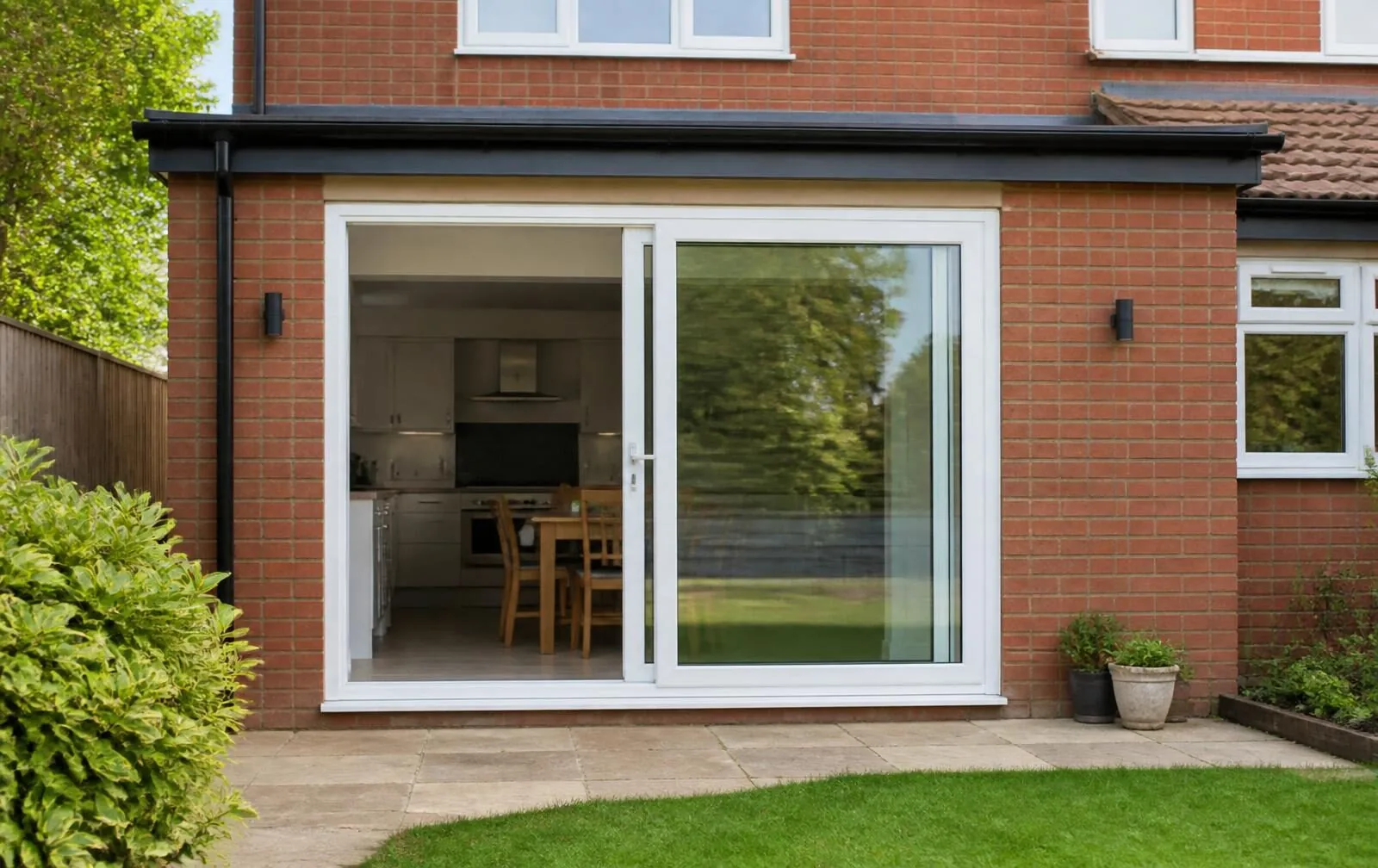
How to compare two patio door quotations fairly
Patio door quotations can look similar on paper while describing genuinely different products, because panel count, track quality and interlock design vary enormously between manufacturers at similar price points, and none of these differences are obvious from a single photograph or a headline U-value. The starting point for any fair comparison is asking exactly the same set of specification questions of every supplier, rather than comparing headline prices alone.
The variables that matter most in practice are the panel configuration and how much of the opening actually becomes usable glass, the roller and track specification, which determines how the door feels to operate years after installation rather than on day one, and the interlock design, which affects both weather performance and how much of the view is interrupted by frame.
Panel configurations and how much actually opens
A two-panel patio door, with one fixed pane and one sliding pane, is the simplest and generally the most weathertight configuration, since it has only one interlock and one running track, but it typically opens only around half the total width because the sliding panel has to travel alongside the fixed one rather than disappearing from view entirely.
Three and four-panel configurations suit wider openings and can be arranged so that two panels slide behind a single fixed pane, opening up to roughly two-thirds of the total width, though this comes with an additional interlock in the closed sightline and a track that needs to accommodate more panels moving independently. The right configuration depends on the opening width available and how much unobstructed opening genuinely matters against how much fixed glass and frame you are willing to accept in the closed position.
| Configuration | Typical proportion that opens | Best suited to |
|---|---|---|
| 2-panel (1 fixed, 1 sliding) | Around half the width | Narrow to moderate openings, simplest weather seal |
| 3-panel (2 sliding behind 1 fixed) | Up to two-thirds of the width | Wider openings wanting a larger usable gap |
| 4-panel (paired sliders) | Around half, split across two gaps | Very wide openings, or a central fixed section |
Tracks and rollers: the detail that determines how it feels in five years
The single most common complaint about ageing sliding doors — a panel that has become stiff, noisy or difficult to move — is almost always a roller and track quality issue rather than a design fault with sliding doors as a category. Budget systems often specify plastic or low load-rated rollers that wear unevenly within a few years of regular use, particularly on larger, heavier panels.
Better systems specify stainless steel ball-bearing rollers rated well above the actual panel weight, running in an aluminium track designed to resist the debris build-up that causes so many sliding doors to stick over time. It is worth asking any supplier directly for the roller specification and load rating relative to the panel weight being quoted, since this detail rarely appears unprompted on a standard sales brochure.
Interlocks, sightlines and weather sealing
The interlock is the vertical junction where two panels meet and seal against each other when the door is closed, and its design has a disproportionate effect on both the weather performance and the visual result. A well-engineered interlock uses multiple compression seals compressed by the multipoint lock, resisting wind-driven rain far better than a simple overlapping flange, while keeping the interlock width as slim as the structural requirement allows to minimise the amount of view lost to frame at that junction.
This is one of the areas where genuinely comparing two quotations requires asking for the interlock width in millimetres, since a difference of even 20 to 30mm at each junction becomes noticeable across a wide multi-panel door, particularly when the goal of the whole project is an uninterrupted view of the garden.
When to consider lift-and-slide instead of a standard slider
A standard slider keeps its rollers engaged with the track and seals at all times, using compression seals that press against the frame when the door is fully closed — a design that works well for panels up to a moderate weight but becomes progressively harder to operate smoothly as panel size and weight increase, particularly with large single panes of modern insulated glazing.
A lift-and-slide door, discussed in more depth in our lift-and-slide product guide, uses the handle to physically raise the panel a few millimetres clear of its seals before it can slide, then lowers it back into a fully sealed position once closed. This allows panels considerably heavier than a standard slider could manage — often 200kg or more per panel — to move smoothly with one hand, making it the preferred choice for very large openings or oversized single panes.
Our view
Our view
Compare patio door quotations on panel configuration, roller specification and interlock width before comparing headline price, since these details determine both the usable opening and how smoothly the door will operate in five or ten years, far more than the price alone will tell you.
For openings wider than around four metres, or where large single panes of modern glazing are specified, look seriously at a lift-and-slide system rather than pushing a standard slider beyond a sensible panel weight, since the smoother, more durable operation is worth the additional cost on a door of that scale.
Frequently asked questions
How many panels should a patio door have?+
It depends on the opening width and how much you want to open at once. A two-panel door with one fixed and one sliding pane suits narrow openings and is the simplest and most weathertight configuration; three and four-panel doors suit wider openings and can be specified so more than half the width opens, at the cost of a slightly more complex track and more interlocks in the sightline.
What is the difference between a standard slider and a lift-and-slide door?+
A standard slider runs on rollers that stay engaged with the track at all times, using compression seals that press against the frame when closed, which is fine for panels up to a moderate weight. A lift-and-slide door uses a handle mechanism to physically lift the heavy panel clear of its seals before sliding it, allowing much larger, heavier panels to move smoothly by hand while still sealing tightly when closed.
Why do some patio doors feel heavy or stiff to open after a few years?+
This is almost always a roller and track quality issue rather than a fundamental fault. Budget doors often use plastic or low-grade rollers that wear and lose their smooth action within a few years of regular use, while doors specified with stainless steel or high load-rated rollers on a properly maintained track continue to run smoothly for many years, provided the track is kept clear of debris.
How much of the opening can actually be glass on a sliding door?+
A well-configured two-panel slider with one fixed and one sliding pane typically opens roughly half the total width, since the sliding panel has to travel behind or alongside the fixed one. Three-panel configurations with two panels sliding behind a single fixed pane can open up to two-thirds of the width, which is worth discussing with a supplier if maximising the open aperture matters to you.
Are patio doors as secure as bi-fold or French doors?+
A well-specified patio door with a hooked multipoint lock engaging the full height of the sliding panel and a laminated inner pane can meet the same PAS 24 standard as any other door type. The historical reputation of sliding doors as a weaker security option relates to older anti-lift track designs and single-point latches, which modern systems have largely resolved.
What is an interlock and why does it matter?+
The interlock is where two panels meet and seal against each other, and its design determines both the weather performance and the sightline width at that junction. A well-engineered interlock uses compression seals and, on better systems, a slim profile that keeps the view relatively uninterrupted even where panels overlap.
Do patio doors come with a low threshold option?+
Most contemporary aluminium and many uPVC patio door systems now offer a low threshold as standard and a flush threshold as a specified upgrade, given how commonly level access is now requested; see our low threshold doors guide for the drainage detail involved in a flush specification.
Products discussed