Rooflight costs can vary from a few hundred pounds for a small stock flat rooflight to tens of thousands for a large bespoke aluminium lantern. The price depends on size, material, glazing, installation and the level of customisation. Understanding what you are paying for is the key to getting a rooflight that performs well without over-spending.
This guide breaks down the main cost drivers and explains how to compare quotes on a like-for-like basis.
What drives rooflight cost
Rooflight pricing depends on a chain of decisions, each of which adds or removes cost. The size is the most obvious factor, but the frame material, the glazing specification, the finish, the kerb or upstand, and the installation complexity all matter. A rooflight that looks similar in a catalogue can be twice the price once the details are compared.
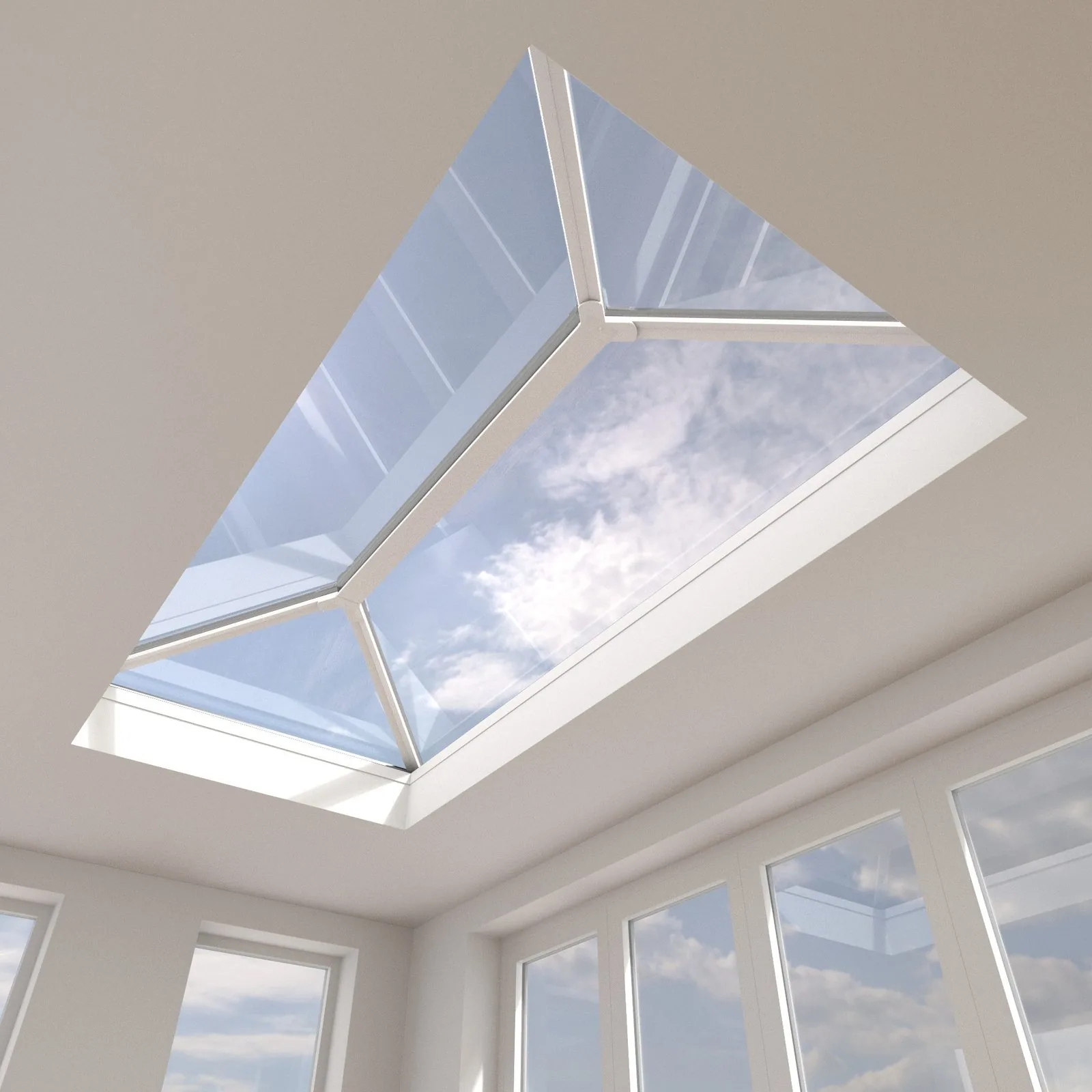
The main cost drivers are: the type of rooflight (flat, lantern, bespoke), the frame material (uPVC, aluminium, timber), the glazing (double, triple, solar control, self-cleaning, acoustic), the size and whether it is stock or custom, the kerb and weatherproofing detail, and the installation labour including any structural work.
Cost by type of rooflight
Flat rooflights are usually the most affordable option, with small stock units starting at a few hundred pounds and larger, frameless or premium units reaching several thousand. Roof lanterns are more expensive because they have more frame, more glass area, and more complex installation. Hipped rooflights sit between the two.
Opening rooflights cost more than fixed rooflights because they include hinges, motors, controls and rain sensors. Bespoke rooflights, including unusual shapes, custom colours and large spans, can command a significant premium over standard stock sizes.
Cost by frame material
uPVC rooflights are the cheapest and are suitable for small, standard installations. Aluminium rooflights are more expensive but offer slimmer sightlines, larger spans and a more premium finish. Timber rooflights are the most expensive and are usually reserved for heritage or conservation projects where the material is required by policy.
For most contemporary projects, aluminium is the best balance of cost, performance and appearance. The thermal breaks in modern aluminium rooflights mean the frame no longer suffers from the cold-bridging problems that aluminium had in the past.
Glazing specification and its cost impact
The glazing is where costs can escalate quickly, but it is also where performance is won. Standard double glazing with a low-E coating is the baseline and is cost-effective for most rooms. Triple glazing adds cost but improves thermal performance, particularly in exposed locations. Solar-control glass, self-cleaning coatings and acoustic laminates all add to the price but solve specific problems.
The key is to match the glazing to the room's needs. A south-facing kitchen with a large rooflight will benefit from solar control. A bedroom in a noisy area may need acoustic laminate. A north-facing room with a small rooflight may not need any special coatings at all. Over-specifying glazing is a common way to waste budget.
Installation and the extras that add up
The rooflight itself is only part of the cost. The kerb or upstand that the rooflight sits on must be built correctly, weatherproofed, and tied into the roof structure. The roof may need to be strengthened to support the weight. Internal finishing around the ceiling aperture, including plastering, lighting and blinds, is often additional.
Building control fees, scaffolding, and the removal of the old roof covering also add to the cost. A realistic quote should itemise all of these, not just the rooflight and a lump-sum fitting charge. If a quote seems low, ask exactly what is included.
How to compare quotes fairly
To compare rooflight quotes fairly, break each one into the same categories: product, kerb or upstand, structural work, installation, weatherproofing, internal finishing, and fees. Make sure each quote covers the same size, material and glazing specification. If one quote includes a basic double-glazed unit and another includes triple glazing with solar control, the difference is not just labour.
The cheapest quote is rarely the best value. A well-installed, properly specified standard rooflight will outperform and outlast a premium product fitted on a poor kerb with inadequate drainage. The installation detail is where the long-term value is created or lost.
Our view
Our view
For most homeowners, the best value is found in a well-specified aluminium flat rooflight or modest roof lantern with good double glazing and a properly built kerb. The biggest mistake is to spend heavily on a premium frame while under-spending on the installation, glazing or weatherproofing. A rooflight is only as good as the opening it sits in, so we always quote the whole job, not just the product.
Frequently asked questions
How much does a roof lantern cost in the UK?+
A standard small-to-medium flat rooflight typically costs £500 to £2,000 supply only, or £2,000 to £5,000 installed. A mid-sized aluminium roof lantern usually ranges from £3,000 to £8,000 installed. Large, bespoke or timber-effect roof lanterns can cost £10,000 to £20,000 or more.
Why do roof lantern prices vary so much?+
Prices vary because of size, frame material, glazing specification, finish, kerb or upstand construction, installation complexity, and whether the product is stock or bespoke. A large bespoke lantern with solar-control glass and a hidden-frame design will cost far more than a small off-the-shelf flat rooflight.
Are flat rooflights cheaper than roof lanterns?+
Yes, generally. Flat rooflights are simpler in construction and easier to install, so they tend to be cheaper than raised roof lanterns with frames and glazed sides. However, very large flat rooflights with premium frameless glass can still be expensive.
What is the cheapest rooflight option?+
Stock polycarbonate or basic double-glazed flat rooflights are the cheapest, but they usually offer poor thermal performance and limited lifespan. For a quality long-term solution, a double-glazed fixed rooflight with a low-E coating is the most cost-effective starting point.
Does installation cost more than the rooflight itself?+
Installation can be a significant part of the total cost, especially if the roof structure needs strengthening, the kerb needs to be built, or internal finishing is required. For a simple retrofit, installation might be 20 to 30 percent of the total. For complex projects, it can be 40 to 50 percent.
Are there hidden costs with roof lanterns?+
Common hidden costs include the kerb or upstand, structural alterations, internal finishing, electrics for opening mechanisms, building control fees, and scaffolding. Some quotes also exclude the rooflight flashing or the weatherproofing detail, which can add to the final bill.
Is a bigger roof lantern always more expensive?+
Yes, but not always proportionally. Larger rooflights require more material, stronger frames and more labour. However, the price per square metre often falls as the size increases, so a very large rooflight may be better value per unit of light than several small ones.
How can I get the best value from a rooflight budget?+
Choose the right type for the room, prioritise glazing performance over frame decoration, and make sure the kerb and installation are done properly. A modest rooflight with good glass and a well-built kerb will outperform an expensive lantern fitted poorly every time.
Products discussed