
Composite and aluminium are the two materials most commonly specified for premium entrance doors, and the choice between them is often presented as a straightforward upgrade decision rather than a genuine set of trade-offs.
This guide sets those trade-offs out plainly, covering security, thermal performance, appearance and cost for each material, so you can decide which suits your elevation rather than which is simply more expensive.
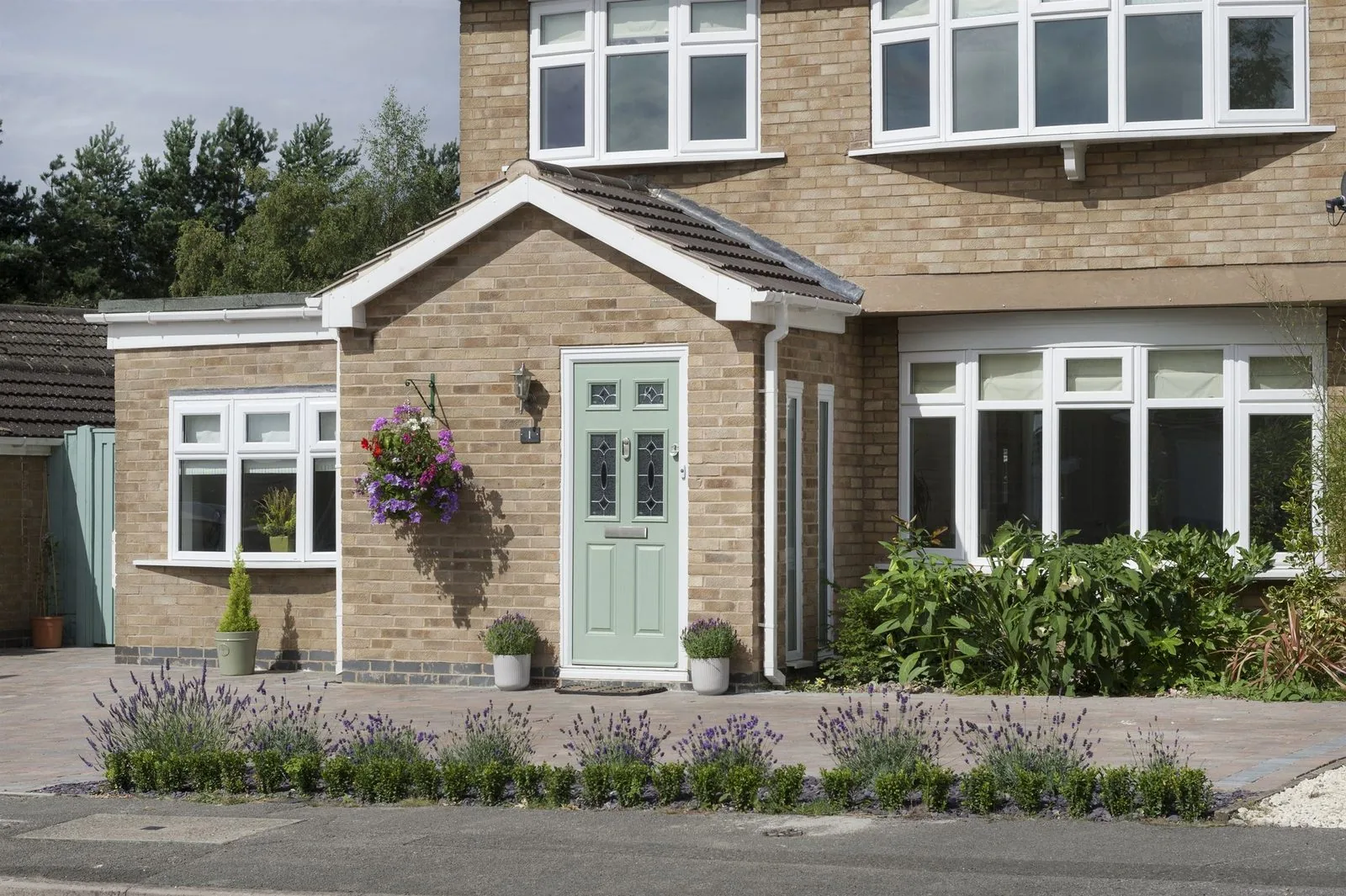
The core difference
Composite and aluminium doors solve the entrance-door problem in fundamentally different ways. A composite door is a solid slab — a glass-reinforced plastic skin bonded around an insulating foam core, usually with a timber sub-frame for rigidity — hung in a uPVC or composite outer frame. An aluminium door is a thermally broken metal frame around a much thinner infill panel, often with a substantial area of glass, built more like a window than a solid barrier.
That structural difference explains most of the trade-offs that follow. Composite's strength comes from the mass and continuity of its core; aluminium's comes from the strength of the extrusion and the quality of its locking hardware.
Security
Both materials can meet PAS 24 and be specified as part of a Secured by Design installation, so neither is inherently more secure on paper. In practice, a composite door's solid core makes it harder to breach through the slab itself, which matters most against opportunistic force. An aluminium door depends more heavily on a quality multipoint lock, reinforced meeting stiles and laminated glazing where glass is present, since the slab offers less resistance on its own.
For a family front door where the panel is mostly solid, composite is often the more forgiving specification for a given budget. For a glazed aluminium door, the security conversation shifts almost entirely to the cylinder, the lock and the glazing specification.
Thermal performance
A composite door's continuous foam core, typically 44 to 48mm thick, gives it a strong whole-door U-value with no metal cold bridge to manage, commonly around 1.0 to 1.4 W/m²K depending on glazing area. Aluminium doors rely on a polyamide thermal break within the frame to separate the internal and external faces, and modern systems perform well, but a door with a large glazed panel will have its overall U-value set largely by the glazing unit rather than the frame.
Where a composite door will usually beat a comparable aluminium door on a mostly solid design, a well-glazed aluminium door with triple glazing can match or exceed a highly glazed composite equivalent, since the glass performance dominates in both cases.
| Factor | Composite | Aluminium |
|---|---|---|
| Typical cost | Lower | Higher |
| Core construction | Solid insulated slab | Thermally broken frame + infill |
| Sightlines | Standard, moulded | Slim, flush, minimal |
| Colour range | Fixed factory range | Any RAL powder coat |
| Best suited to | Traditional and mixed elevations | Contemporary, full-glazed elevations |
| Typical lifespan | 25–35 years | 35–45 years |
Appearance and sightlines
Composite doors are moulded, which allows manufacturers to reproduce traditional panel designs — six-panel, cottage-style, stable configurations — with a level of surface detail that is difficult to achieve in aluminium. Aluminium's strength allows very slim, flush sightlines and large glazed apertures, which suits a flush contemporary slab far better and is why most fully glazed, minimal-frame front doors are specified in aluminium rather than composite.
If the design brief calls for a period-style panelled door, composite is almost always the more natural fit. If the brief calls for a flush, glazed, architectural entrance to match aluminium windows elsewhere on the house, aluminium is the better starting point.
Cost and maintenance
Composite doors are typically the more affordable of the two for an equivalent-quality specification, reflecting a simpler manufacturing process and a fixed range of finishes rather than bespoke powder coating. Both materials are low maintenance in daily use, needing only occasional cleaning and periodic hardware attention, though a scratched composite skin cannot be re-coated in the way an aluminium frame occasionally can be resprayed.
Our view
Our view
For a traditional or mixed-style elevation with a mostly solid front door, composite delivers the strongest value and thermal performance without a meaningful compromise. We would reach for aluminium specifically where the brief calls for a flush, heavily glazed, contemporary entrance, or where the door needs to match aluminium windows already specified elsewhere on the house.
As with windows, the right material follows from the elevation and the opening, which is why we frequently specify composite front doors alongside aluminium rear doors on the same project.
Frequently asked questions
Which is more secure, composite or aluminium?+
Both can be specified to PAS 24 and Secured by Design standards, so the difference comes down to construction quality rather than the material itself. A composite door's solid core resists forced entry through the slab, while a well-made aluminium door relies on its multipoint lock and reinforced stiles, since the slab itself is thinner.
Is a composite door warmer than aluminium?+
Generally yes for a solid entrance door, because the composite core is a continuous insulating foam with no cold bridge running through the slab. Aluminium doors close much of that gap with a thermally broken frame, and where the door includes a large glazed area the glazing unit's performance matters as much as the frame material.
Why would I choose aluminium over composite for a front door?+
Aluminium suits contemporary elevations where a flush, minimal slab with slim sightlines and full-height glazing is part of the design brief. Composite is more commonly chosen where a moulded panel design, a wider colour range at a lower price point, or a more traditional profile is wanted.
Does composite come in as wide a colour range as aluminium?+
Composite doors are typically supplied in a fixed factory colour range, usually 15 to 25 options depending on manufacturer. Aluminium can be powder coated in almost any RAL colour, which gives more flexibility for matching a specific render or brick tone.
Which lasts longer, composite or aluminium?+
Both comfortably exceed 25 to 35 years with normal use. Aluminium's powder-coated finish and dimensionally stable frame tend to show slightly less long-term movement, while composite's GRP skin is highly resistant to scratching and impact damage on the slab face.
Is aluminium more expensive than composite?+
Yes, typically. A comparable aluminium entrance door usually costs more than a composite equivalent, reflecting the cost of extruded, thermally broken frame sections and factory glazing, though the gap narrows on bespoke or oversized composite doors.
Can I get a composite door with the same flush, minimal look as aluminium?+
Contemporary composite ranges now offer flush slabs, concealed hinges and slim vision panels that closely approximate the aluminium look, though the frame itself will still read as slightly deeper than a true aluminium system when viewed closely.