
Adding a rooflight or roof lantern to a flat roof can be one of the most effective ways to bring daylight into an extension. But before choosing a product, it is important to understand the planning position. Many rooflights can be installed under permitted development, but the rules are not always straightforward, and certain property types and designs will need formal consent.
This guide explains the permitted development limits, the situations where consent is required, and the separate but important question of Building Regulations compliance.
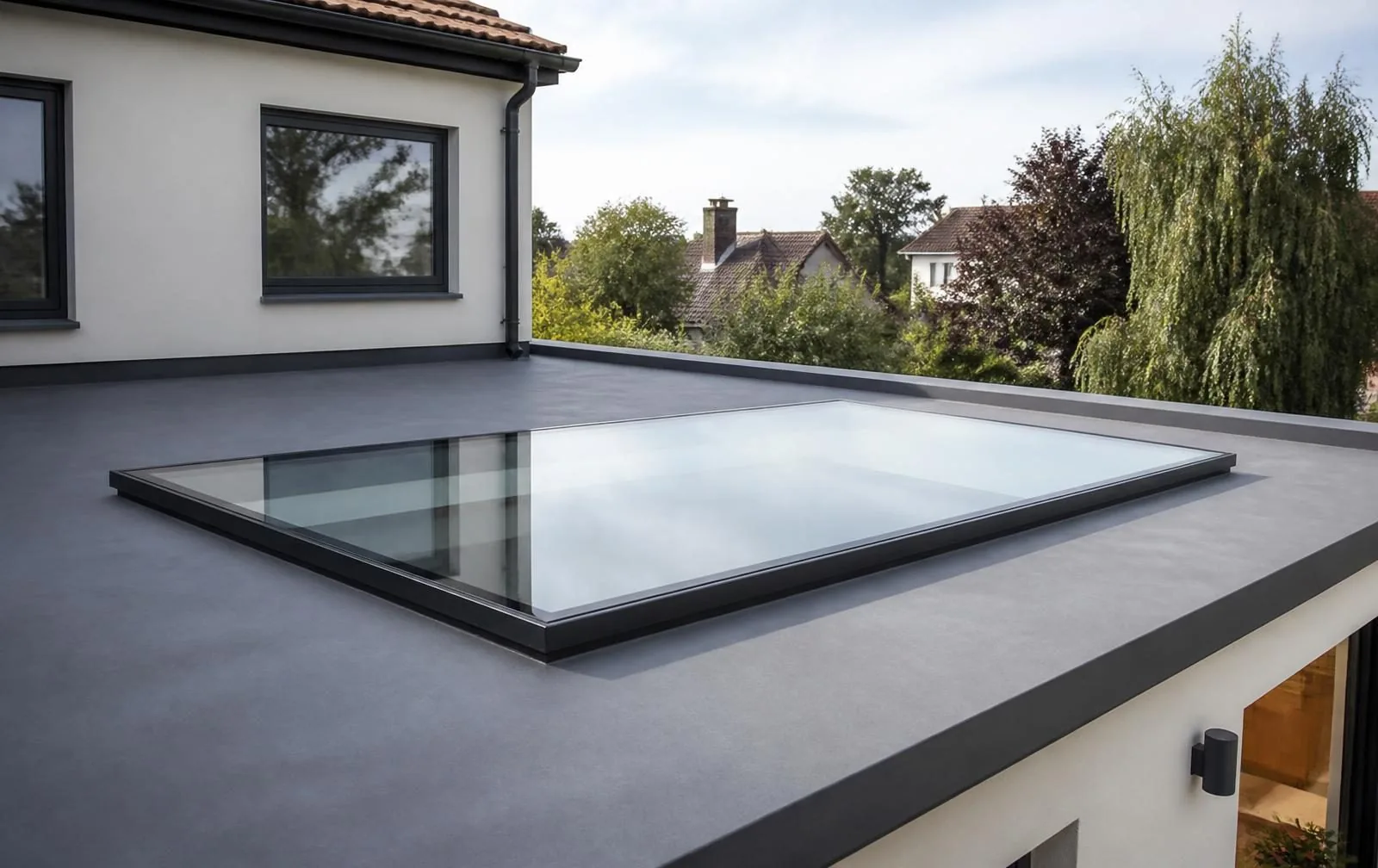
Permitted development for rooflights
Rooflights on flat roofs often fall within permitted development rights, which means no formal planning application is needed. However, the relevant rules are specific. A rooflight should not project more than 150mm beyond the plane of the existing roof slope, and the overall roof alteration must not exceed the limits set out for the underlying extension or building.
Because roof lanterns are raised structures with glazed sides, they can sit in a grey area. Some local authorities treat a modest roof lantern as a rooflight and allow it under permitted development; others take the view that the raised structure projects beyond the roof plane and requires planning permission. The safest approach is to check with the local planning authority before ordering, especially on a visible or sensitive site.
When consent is definitely needed
Consent is required for rooflights on listed buildings, properties in conservation areas with Article 4 directions, and new-build estates where the developer imposed planning restrictions. Flats and maisonettes also have different rights from houses and may need permission for alterations that a house could carry out under permitted development.
Listed building consent is the strictest. Any alteration to the roof of a listed building, however small or hidden, is likely to require consent. The design will need to be justified in terms of preserving the building's character and any special architectural or historic interest. In some cases, a rooflight that is hidden from external view may be more acceptable.
Conservation areas and design sensitivity
In conservation areas, the design of a rooflight is often more important than its size. A prominent, modern roof lantern on the roof of a Victorian terrace can be refused even if it is technically within permitted development limits. A low-profile flat rooflight in a dark finish, or an internal rooflight, may be more acceptable because it has less visual impact on the street and the skyline.
The best approach is to assume the rooflight will be visible and to design accordingly. Slim frames, dark colours, and careful placement away from the front elevation all help. Pre-application advice from the local planning authority can save significant time and money if there is any doubt.
Building Regulations: a separate requirement
Planning permission and Building Regulations are separate. Even if no planning permission is needed, a rooflight installation must comply with Building Regulations. The relevant areas are structural safety, thermal performance, fire safety, and ventilation.
The roof structure must be checked to ensure it can support the rooflight and any associated loads. The glazing must meet energy efficiency requirements, and the installation must be weatherproof. A building control officer or approved inspector will need to sign off the work, either through a full application or a competent person scheme.
How we help with the permission process
During our survey and consultation, we assess the property against permitted development rules and check for any designations or restrictions. If the rooflight is on a sensitive site or if its design is borderline, we can help prepare the information needed for a pre-application or planning submission, including drawings, specifications and design statements.
We do not recommend cutting corners on permission. A rooflight that has been installed without the necessary consent can be difficult to rectify retrospectively, and the cost of removal or alteration is far higher than the cost of checking the position in advance.
Our view
Our view
If your property is not listed or in a designated area, a modest flat rooflight will often be permitted development. Roof lanterns and large or prominent rooflights are more likely to need approval, especially on visible elevations. The safest route is to confirm the position with the local planning authority before finalising the design, and to make sure the installation is signed off under Building Regulations regardless of whether planning is needed.
Frequently asked questions
Do I need planning permission for a roof lantern?+
Often no. Rooflights and roof lanterns on flat roofs often fall within permitted development rights, provided they do not project significantly above the roof plane and the overall extension remains within permitted development limits. However, listed buildings, conservation areas and Article 4 directions may require consent.
Can a roof lantern project above the roof?+
Under permitted development, any alteration to a roof should not project more than 150mm beyond the plane of the existing roof slope. Roof lanterns are raised structures, so they may exceed this limit and require planning permission depending on interpretation and local policy.
Do rooflights need Building Regulations approval?+
Yes, if they form part of a new extension or an alteration to an existing roof. Building Regulations cover structural safety, thermal performance, fire safety and ventilation. The installer or building control officer must sign off the work.
Can I install a rooflight on a listed building?+
Any alteration to a listed building, including the roof, normally requires listed building consent. The bar for approval is high, and the design will need to be sensitive to the building's character. In some cases, internal or reversible rooflights may be more approvable than external roof lanterns.
Are there restrictions in conservation areas?+
Yes. Conservation area policy aims to preserve or enhance character and appearance. Rooflights that are highly visible, oversized or modern in design may be refused or restricted. Lower-profile flat rooflights are often more acceptable than prominent roof lanterns.
What is an Article 4 direction?+
An Article 4 direction removes some or all permitted development rights in a particular area. If your property is affected, you may need planning permission for a rooflight that would otherwise be permitted. Your local planning authority can confirm whether an Article 4 direction applies.
Can I add a rooflight to an existing flat roof extension?+
Usually yes, if the roof structure can support it and the rooflight does not breach permitted development limits. You will also need Building Regulations approval for the structural and thermal work.
What about rooflights on party walls?+
A rooflight is unlikely to trigger the Party Wall Act by itself unless structural work involves the party wall or excavation near a neighbour's foundations. However, it is good practice to inform neighbours and to address any concerns about overlooking or light loss early.
Products discussed