
Smart locks have moved from a novelty into a mainstream specification choice on new front and back doors, but the marketing around them tends to blur two separate questions: how convenient the lock is to operate, and how secure it actually is against forced entry. These are answered by different parts of the specification, and it is worth understanding both before choosing between a keypad, a fob system or an app-controlled gearbox.
This guide sets out how smart locks actually work mechanically, where the security testing still applies exactly as it would to a manual lock, and the practical differences between keypad, fob and app-based systems that matter more once the door is in daily use than they do in a showroom.
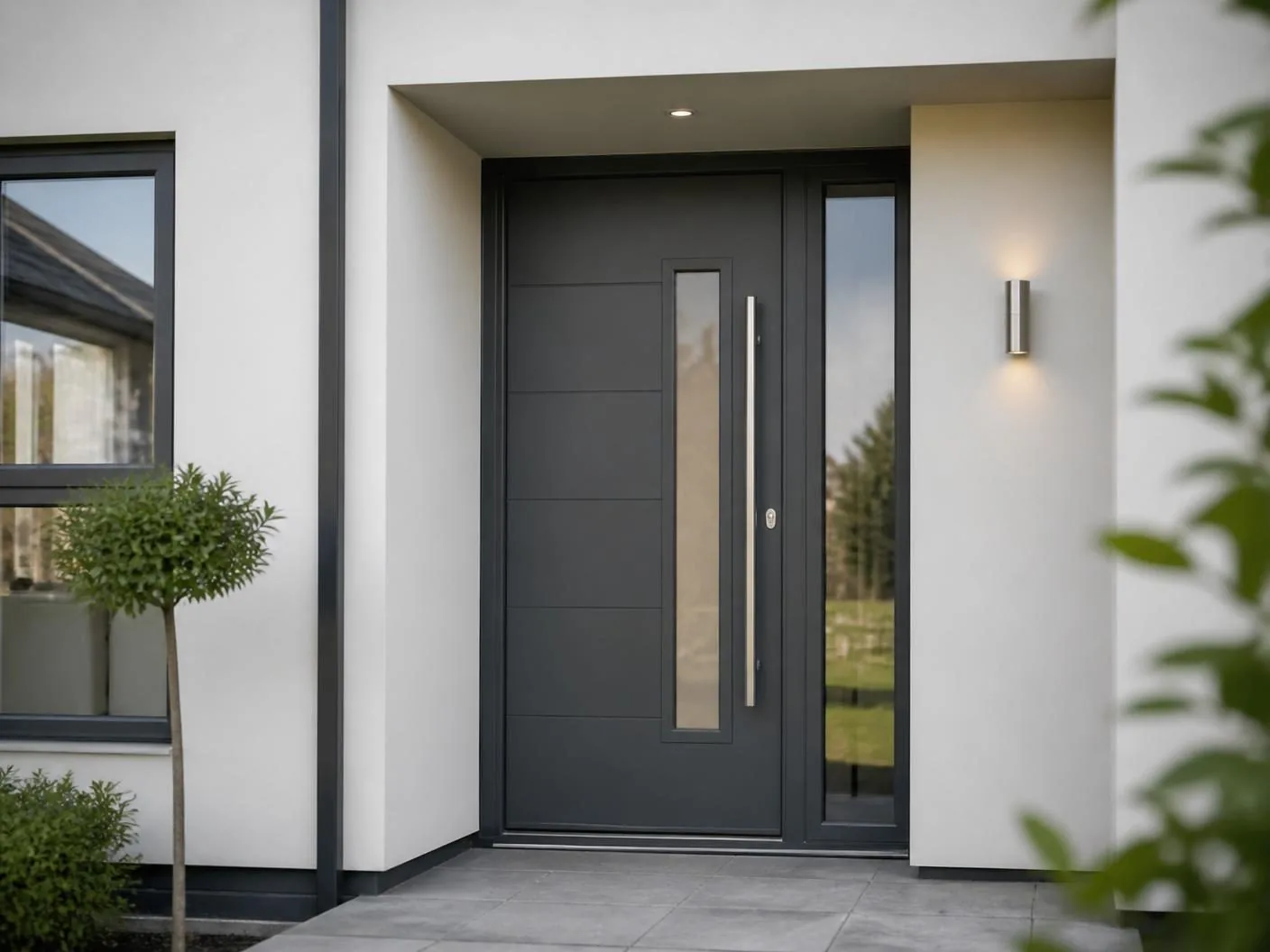
What a smart lock actually is
A smart lock for a UK front or back door is, in almost every case, a motorised version of the multipoint locking gearbox already fitted inside a composite, timber or uPVC door, paired with an electronic means of triggering it — a keypad, a phone app, a fob or a fingerprint reader. The mechanical part of the story, the hooks and shootbolts that actually resist the door being forced, is unchanged from a standard mechanical multipoint lock.
This distinction matters because it separates two different questions that are often conflated in marketing: how the lock is operated, which is where the smart features sit, and how much force it takes to defeat the lock, which is a mechanical and certification question entirely independent of whether a motor or a hand turns the gearbox.
How smart locks differ from a standard multipoint
In a conventional door, turning the key or lifting the handle drives the gearbox, throwing hooks and shootbolts into keeps around the frame. A motorised gearbox does the same physical job, but the trigger is electronic — a code entered on a keypad, a tap of a fob, or a command sent from a phone app over Bluetooth or wifi. Most systems retain a conventional cylinder as a mechanical override, so the door can still be opened with a physical key if the electronics fail entirely.
The practical differences homeowners actually notice are around convenience rather than security: no more fumbling for keys with shopping in both hands, the ability to issue and revoke access codes for family, cleaners or short-term guests without changing a cylinder, and a log of who opened the door and when, which some households value and others find unnecessary.
Security standards still apply, unchanged
The introduction of electronics does not exempt a door from the security standards that would apply to any entrance door. A smart lock intended for a front or back door should still be part of a multipoint system tested to PAS 24 as a complete assembly, with a cylinder — where one is retained — rated to TS007, and the certification should cover the specific electronic gearbox variant, not just the manual version of the same product line.
It is worth asking any supplier directly whether the smart variant of a lock has been tested under the same PAS 24 assembly as the manual version, since motorising a gearbox can, in a poorly engineered product, change its resistance to forced entry. Reputable manufacturers test the electronic and mechanical variants separately and will provide the certificate on request.
| Feature | What it changes | What it does not change |
|---|---|---|
| Keypad or app entry | How the lock is triggered | The mechanical hooks and shootbolts doing the resisting |
| Motorised gearbox | Removes the need to turn a handle manually | PAS 24 assembly testing requirements, which still apply |
| Access log | Records who opened the door and when | The underlying physical security of the frame and glazing |
| Mechanical override | Provides a fallback if electronics fail | The insurance requirement for a certified locking standard |
Keypads, fobs and app control compared
Keypad entry suits households that want to remove keys from the equation entirely — useful for children walking home from school, or for properties with regular cleaner or dog-walker access, since codes can be issued individually and revoked without re-keying the cylinder. The trade-off is that a keypad worn on frequently used numbers can, in principle, narrow down a code, which is why scrambled keypad layouts and lockout periods after failed attempts are worth insisting on.
Fobs and cards behave much like a contactless key, useful where a household wants speed without a code to remember, but they can be lost or lent out in the same way a physical key can. App control, usually via Bluetooth or a wifi bridge, is the most feature-rich option, allowing remote unlocking, guest access windows and integration with a wider smart home or video doorbell system, at the cost of depending on a phone battery and a functioning app.
Battery life, retrofitting and everyday reliability
Battery life on a well-specified smart lock is typically measured in months rather than days, with most systems providing an early warning through the app well before the batteries are exhausted, and a backup method — a 9V terminal contact on the outside of some keypads, or simply the mechanical key override — to get in if a battery does run flat unexpectedly. This is a genuine practical consideration worth discussing with a supplier rather than assuming.
Retrofitting a motorised gearbox into an existing door is possible on some standard European door profiles, but it is not universal, and results are noticeably better when the electronic lock is specified at the point of ordering a new composite, timber or aluminium door rather than added afterwards. If you are already planning a door replacement, this is the point at which to raise smart lock options with your supplier.
Our view
Our view
A smart lock is a genuine convenience upgrade, not a security downgrade, provided the electronic gearbox variant has been tested to the same PAS 24 standard as its manual equivalent and a mechanical override is retained. We would not recommend a smart lock that cannot show that certification, regardless of how well reviewed the app is.
For households with regular changing access needs — cleaners, dog walkers, family members coming and going at different times — the practical case is strong. For a household that simply wants a reliable, secure front door and has no particular need for remote access or code management, a well-specified manual multipoint remains a perfectly sound choice.
Frequently asked questions
Do smart locks weaken door security?+
Not if specified correctly. A motorised multipoint lock still engages the same hooks, cams and shootbolts as a mechanical one; the motor simply turns the gearbox that a handle would otherwise turn. The security position depends on the cylinder and gearbox being PAS 24 tested, exactly as it would with a manual lock, not on whether the mechanism is electronic.
Will my insurer accept a smart lock as the main door security?+
Most insurers accept a smart lock provided it retains a mechanical override and the multipoint mechanism meets the same standards they would ask of a manual lock, typically a five-point locking system with a cylinder rated to TS007 or equivalent. It is worth confirming with your insurer directly and keeping the certification paperwork rather than assuming.
What happens to a smart lock if the power goes out or the app fails?+
A properly specified smart lock retains a physical key override and a mechanical fallback, and most run on internal batteries rather than mains power, so a home power cut does not lock you out. Battery life is typically several months to a year depending on use, with low-battery warnings sent to the app well in advance.
Can a smart lock be added to an existing composite or timber door?+
In many cases yes, provided the door and multipoint gearbox are a compatible standard European profile, but retrofitting is not guaranteed on every door and the result is rarely as clean as specifying the lock at the point of ordering a new door. We generally recommend specifying the electronic gearbox as part of the door order rather than retrofitting afterwards.
Do smart locks need a hub or constant wifi connection?+
It depends on the system. Some operate purely via Bluetooth to a phone at close range with no hub required; others use a wifi bridge for remote access and integration with a wider smart home system. A dropped internet connection typically only affects remote features, not the physical locking and unlocking at the door itself.
Are keypad codes as secure as a physical key?+
A well-specified keypad, with a scrambled or randomised keypad layout to prevent code-tracing from worn buttons and a lockout after repeated failed attempts, is a reasonable substitute for a key in most domestic settings. It removes the specific risk of a lost or copied key, at the cost of a new risk around shared or observed codes, which is worth managing through unique per-user codes rather than one shared code.
Do smart locks suit rental or multi-occupancy properties?+
Often, yes, and this is one of the strongest practical cases for them. Time-limited codes for cleaners, contractors or short-term tenants can be issued and revoked remotely without re-cutting keys or changing cylinders, which is a genuine operational advantage over mechanical locks in any property with regular access changes.