
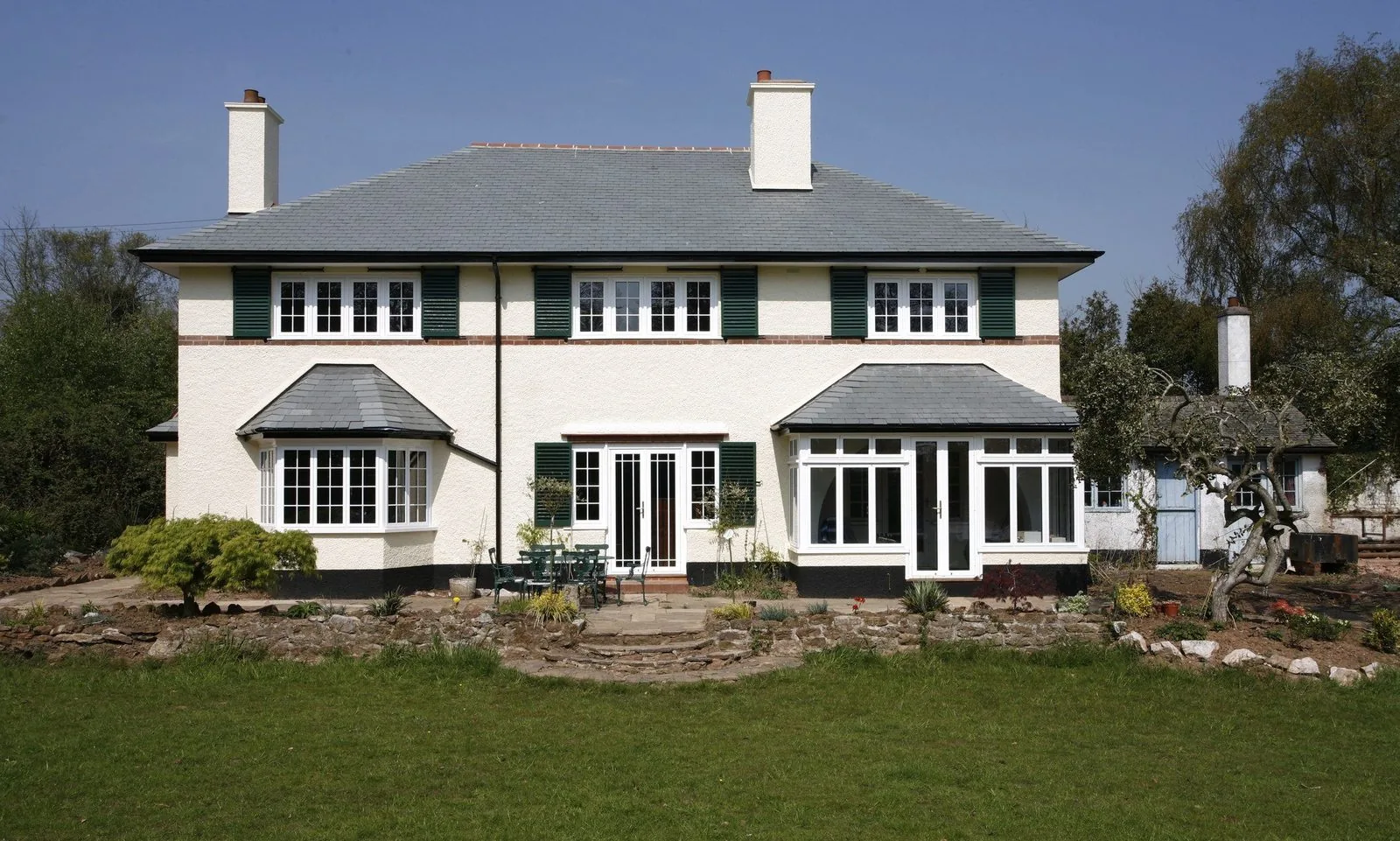
Standard thermally broken aluminium
Two extrusions with a polyamide break, powder coated. The core specification and the right starting point for most contemporary work.
Windows / Casement / Aluminium
Slim, strong and precisely engineered — the choice when the design intent is glass, and the frame should disappear.
Introduction
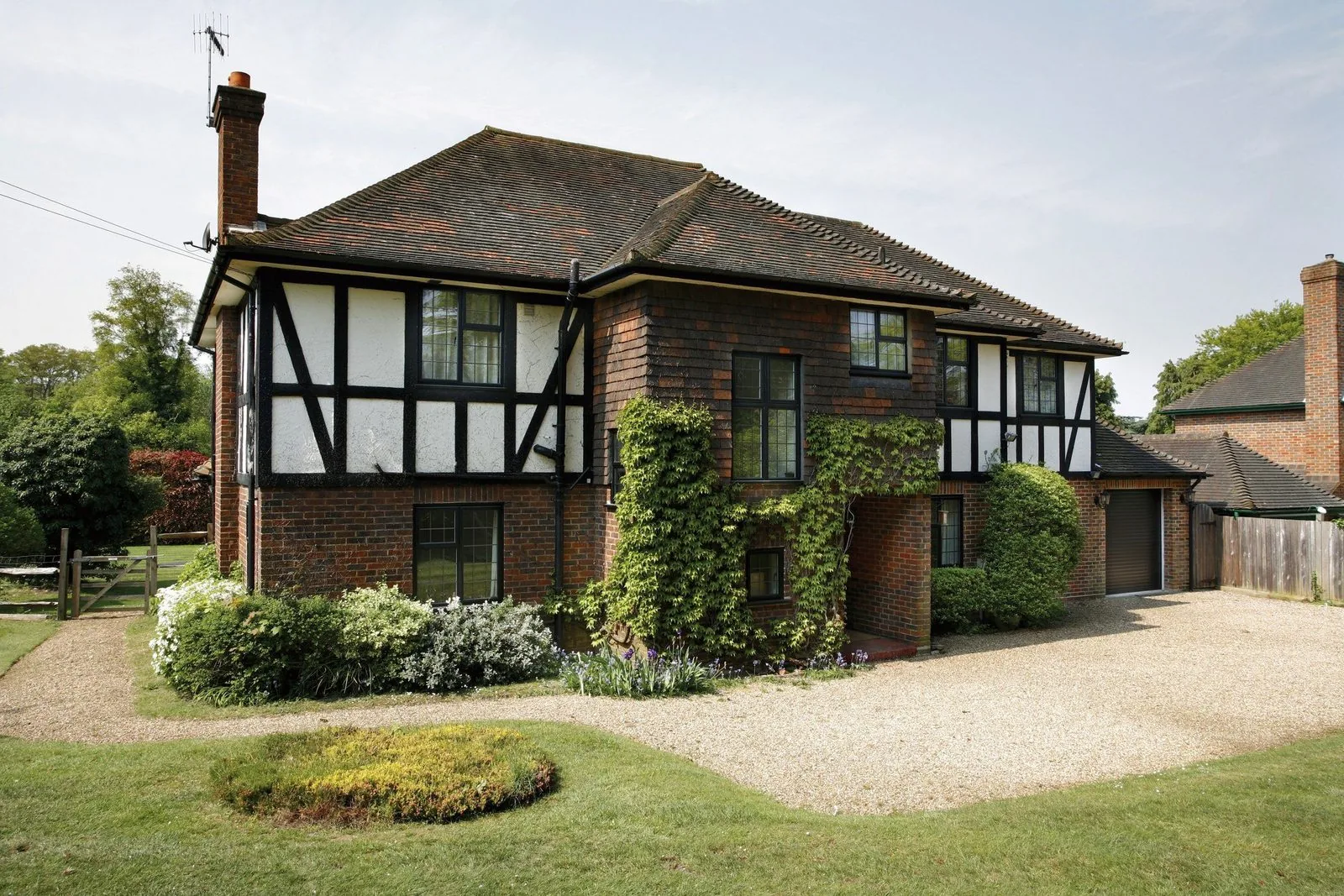
The reason to specify aluminium is visible from across the garden: less frame, more glass, and a crispness of line that uPVC cannot reproduce because the polymer is not strong enough to be that thin. Everything else — the thermal performance, the colour range, the hardware — is a consequence of that structural starting point.
Contemporary aluminium systems are two extrusions bonded either side of a polyamide thermal break, which is what allows a highly conductive metal to perform as a well-insulated window. The quality of that break, and the depth of the section around it, is what separates a good aluminium window from a merely expensive one.
We are not going to tell you aluminium is always better. On modest openings the visual gain is small and the cost difference is not. Where it earns its money is on large apertures, contemporary extensions and any elevation where the frame currently dominates the view.
Beautiful homes begin with better advice.
We would rather spend an hour explaining why something is not right for your property than sell it to you.
Who this suits
Aluminium belongs on large openings, on contemporary architecture, and on projects where the windows are part of the design rather than a component of the building fabric. Rear extensions with substantial glazing are the most common application we see across London.
It also suits owners who want a specific colour matched precisely to existing elements — powder coating gives access to the full RAL palette, including textured and matt finishes that uPVC foils cannot match.
Where we would recommend against it: small openings on modest budgets, and whole-house replacements where the money would deliver more comfort spent on better glazing in uPVC frames.
Benefits
The narrowest sightlines available in a casement, converting frame area into daylight on every elevation.
Structural strength allows opening sashes and fixed lights well beyond the practical limits of polymer frames.
Matt, satin, textured and metallic powder coatings, with dual colour and bespoke matching available.
The coating does not need refinishing and the metal does not degrade, so ownership is close to maintenance-free.
Features
Material options
Two extrusions with a polyamide break, powder coated. The core specification and the right starting point for most contemporary work.
Narrower sections with a squared profile replicating Crittall-style steel. Correct for Modernist and industrial-influenced elevations.
Deeper sections with a wider thermal break and foam-filled chambers, engineered for triple glazing and Passivhaus-adjacent targets.
Colours & hardware
Anthracite grey RAL 7016
The dominant contemporary finish, available in matt, satin and textured. Suits render, grey brick and timber cladding.
Jet and matt black
Sharper and more graphic than anthracite. Excellent with white render and pale brick; unforgiving of poor installation detail.
Off-whites and greys
RAL 9010, 9016 and 7035 for elevations where the frame should recede rather than assert itself.
Heritage tones
Sage, olive, slate and deep bronze for period-adjacent properties and rural settings.
Dual colour
Any RAL externally with a different internal finish, chosen to work with your interior rather than your brickwork.
Handles
Cast and machined handles in matching or contrasting finishes, including lever, cranked and flush-fitting designs.
Concealed hinges
Hidden within the rebate on premium systems, leaving an uninterrupted line when the window is closed.
Heavy-duty friction stays
Rated for the substantially greater sash weights aluminium permits, in stainless steel.
Multi-point locking
Espagnolette gearing with steel keeps, tested to PAS 24 as a complete set.
Restrictors
Integrated within the stay rather than surface mounted, preserving the clean detail.
Glass options
28mm argon-filled units with low-E coating and warm-edge spacer as the standard specification.
44mm units carried comfortably by the frame, reaching whole-window figures around 0.9 W/m²K.
Particularly relevant here, since aluminium is chosen for large south and west facing apertures where overheating is a real risk.
Asymmetric units against urban road noise, with no penalty to the sightline.
Large-format glass beyond the reach of uPVC frames, subject to structural and handling calculation.
Removes the faint green cast of standard float, worth specifying on large panes where colour accuracy matters.
Security
Aluminium is the most physically resistant frame material we supply. The metal cannot be levered or deformed in the way a poorly reinforced polymer frame can, which raises the baseline before any hardware is considered.
Energy efficiency
Aluminium reaches modern efficiency standards through engineering rather than through the material itself. The polyamide break, the chamber design around it and the glazing specification determine the result.
Noise reduction
Aluminium's density is a small acoustic advantage, but as with every window the glass does the work. The relevant benefit is that aluminium can carry heavier acoustic units without needing a heavier frame.
Maintenance
Powder-coated aluminium is the closest thing to a fit-and-forget window. There is no refinishing cycle and no swelling or shrinking with the seasons.
Frequently asked questions
Aluminium is structurally far stronger than uPVC, so the same load is carried by a much thinner section. A typical aluminium casement shows around 55 to 70mm of frame where uPVC shows 100 to 120mm. Over a whole elevation that difference converts directly into daylight.
Untreated aluminium is an excellent conductor, which is exactly why every modern system incorporates a polyamide thermal break — an insulating strip that separates the inner and outer halves of the frame. Contemporary thermally broken systems reach whole-window U-values comparable to good uPVC.
Considerably larger than uPVC. Opening sashes of 1.5m by 2m are routine, and fixed lights can be larger still, limited by glass weight and manual handling rather than by the frame.
Modern polyester powder coatings are applied electrostatically and oven cured, forming a bond rather than a surface film. Qualicoat approved finishes carry guarantees of 25 years or more, with marine-grade specifications available for coastal exposure.
Yes. Because the frame is already two halves separated by the thermal break, dual colour is straightforward. Anthracite externally with a soft white or grey internally is the most requested combination.
It depends entirely on the aperture. On a small bathroom window the price difference buys you almost nothing visible. On a large rear elevation, where frame area is the difference between a wall of glass and a grid, it is money well spent. We will tell you honestly which of the two your project is.
In steel-look form, yes — our heritage range replicates the slim profiles of Crittall-style steel windows, which is often the correct answer for 1930s Modernist and Art Deco houses. Standard contemporary aluminium is better suited to extensions and modern elevations.
Aluminium is infinitely recyclable with no loss of properties, and recycling requires around five percent of the energy of primary production. The embodied carbon of the initial extrusion is higher than uPVC; over a 40-year service life and full recovery at end of life, the picture is closer than it first appears.
Not on a properly thermally broken system used in a normally ventilated home. Condensation on the internal frame face usually indicates either an unbroken frame, a failed break, or a humidity problem the window is merely revealing.
Related articles
Related products
Begin the conversation
A consultation is a conversation about your property — its age, its orientation, its draughts and its planning constraints. You will receive a written specification you can understand and compare, and no follow-up pressure of any kind.
Systems & Profiles We Manufacture
We design and fabricate using premium window and door systems from the UK and Europe's leading manufacturers — so every installation is built on proven, fully warrantied profiles.