
Doors / Composite
Composite Doors
The most specified front door in the country, and the one where the gap between the best and the worst example on the market is widest. Understanding what is actually inside the slab is the whole of the buying decision.
What a composite door actually is
A sandwich of three materials, not a single product with a marketing name.
Every genuine composite door starts with the same principle: a rigid outer skin, usually GRP (glass reinforced plastic), moulded under heat and pressure so that woodgrain, panel mouldings and bevel detail are reproduced in fine relief. Two skins are bonded to a solid insulating core, and the whole assembly is built around a timber sub-frame that carries the hinges, the multi-point lock and the letterplate. It is this sub-frame, more than the skin, that gives a composite door its rigidity and its ability to hold a heavy lock case without flexing.
What varies hugely between manufacturers is the specification of each of those three elements. A GRP skin can be 2mm or 3mm thick, and the difference shows in how the door feels when you close it. A core can be solid timber, a high-density composite laminate board, or a low-density polyurethane foam, and the difference shows in the door's weight, its thermal performance and its resistance to impact damage. A sub-frame can be a genuine hardwood or a lower grade softwood, and the difference shows in how well the door holds its shape around the lock keeps after a decade of daily use.
None of this is visible in a showroom or a brochure photograph, which is exactly why composite doors have such a wide reputation range — genuinely excellent in the right specification, and genuinely disappointing in the wrong one, at what can be a similar retail price.
Beautiful homes begin with better advice.
We would rather explain what is inside the door than let a laminated photograph do the selling for us.
Style, glazing and colour options
The panel pattern, the glazing and the colour are three separate decisions.
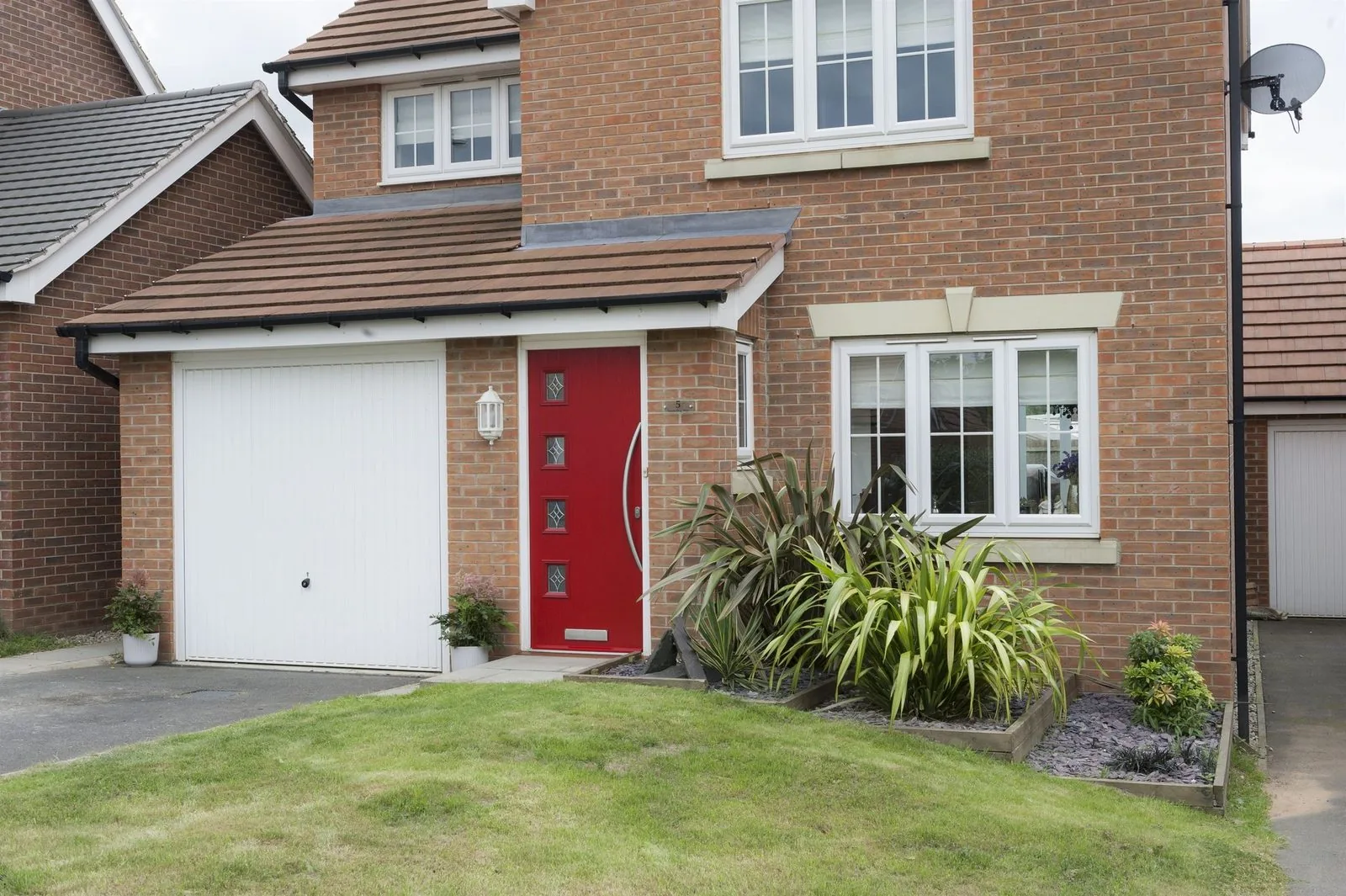
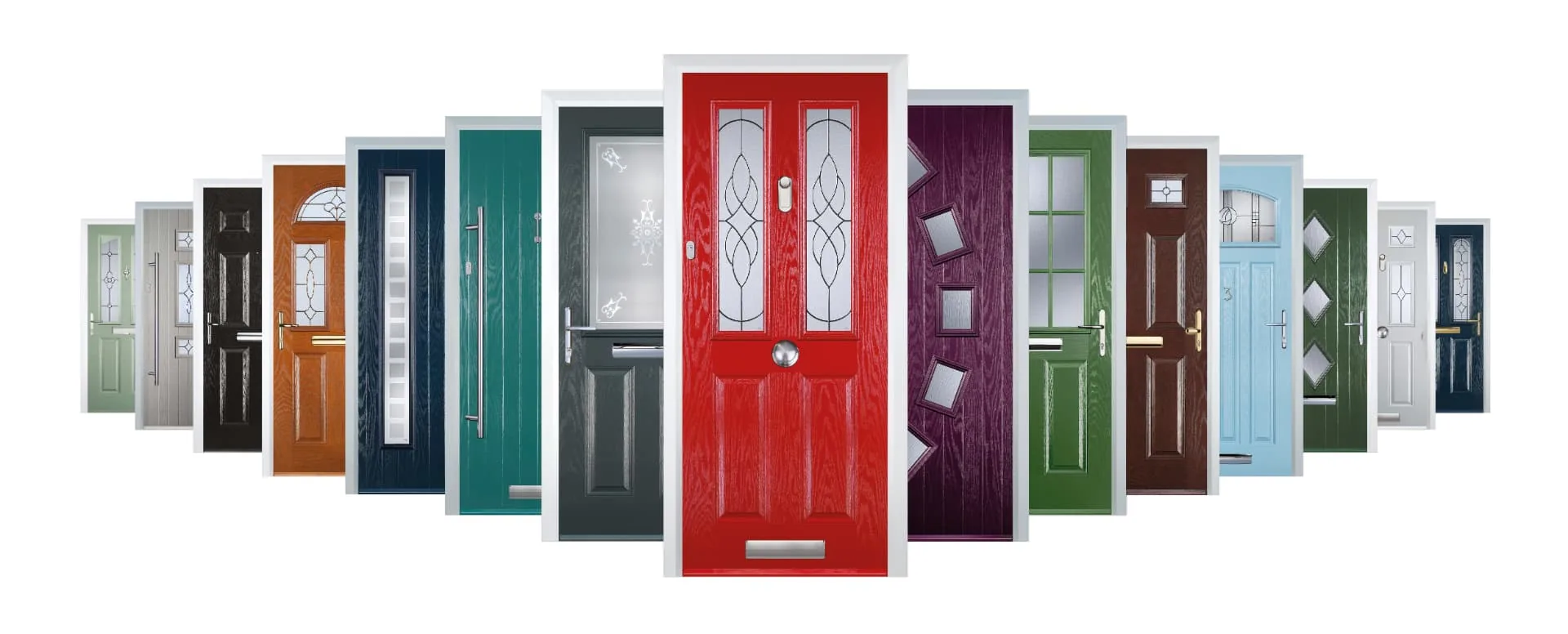
Every door below is a genuine composite doorset. Use them to see how panel proportions, vision panel shapes, decorative glass and colour behave together on real British elevations — and how differently the same slab reads on a cottage, a terrace and a new build.
3 Panel 1 Square with twin sidelights
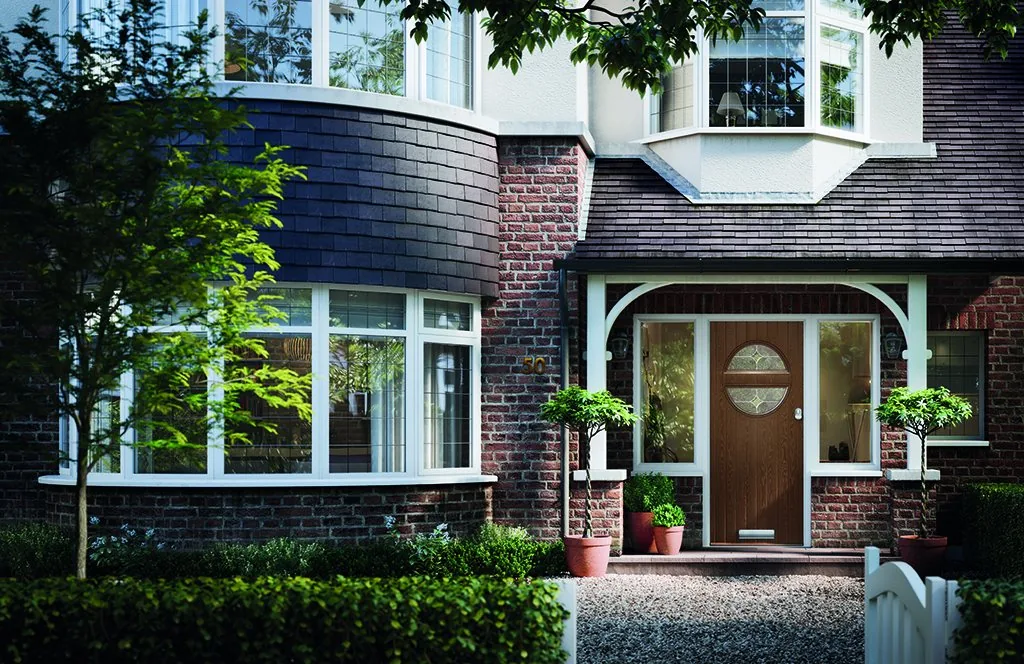
Golden Oak woodgrain
A round decorative light set in a planked slab, flanked by full-height glazed sidelights — a natural pairing for a 1930s semi with bay windows and a tiled porch.
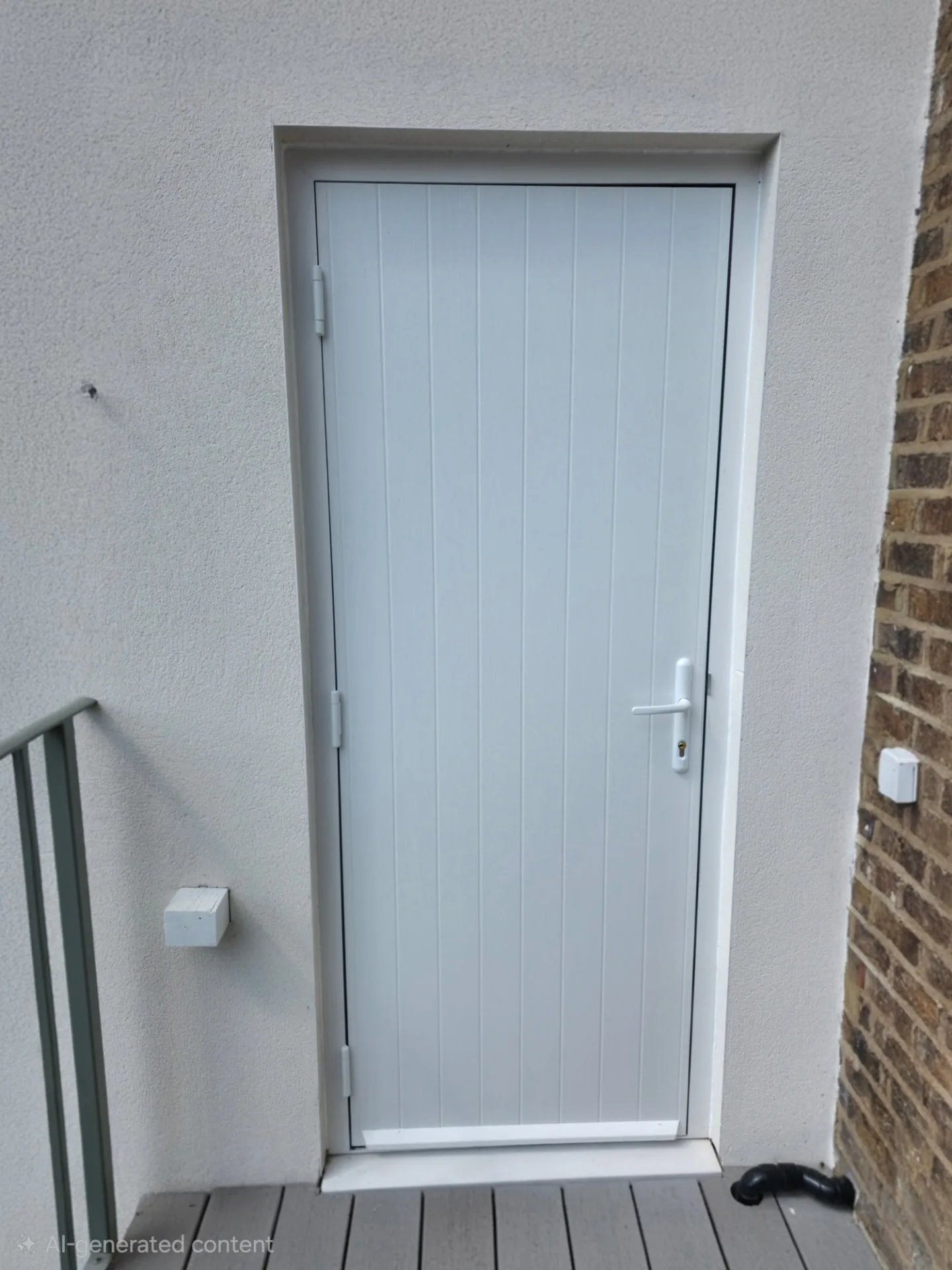
Planked cottage slab, unglazed
White
A solid planked composite side door with white lever furniture. No glazing at all is the right answer where privacy or security matters more than borrowed light.
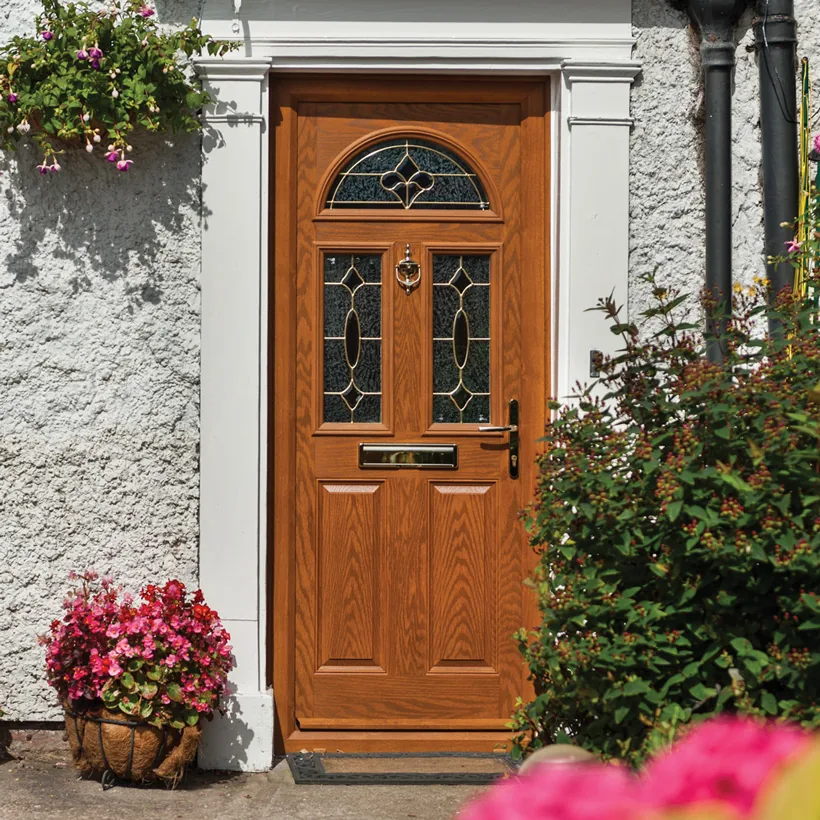
2 Panel 2 Square 1 Arch
Golden Oak woodgrain
An arched fanlight over two square vision panels, with leaded decorative glass and brass furniture — the classic choice for a rendered period frontage.
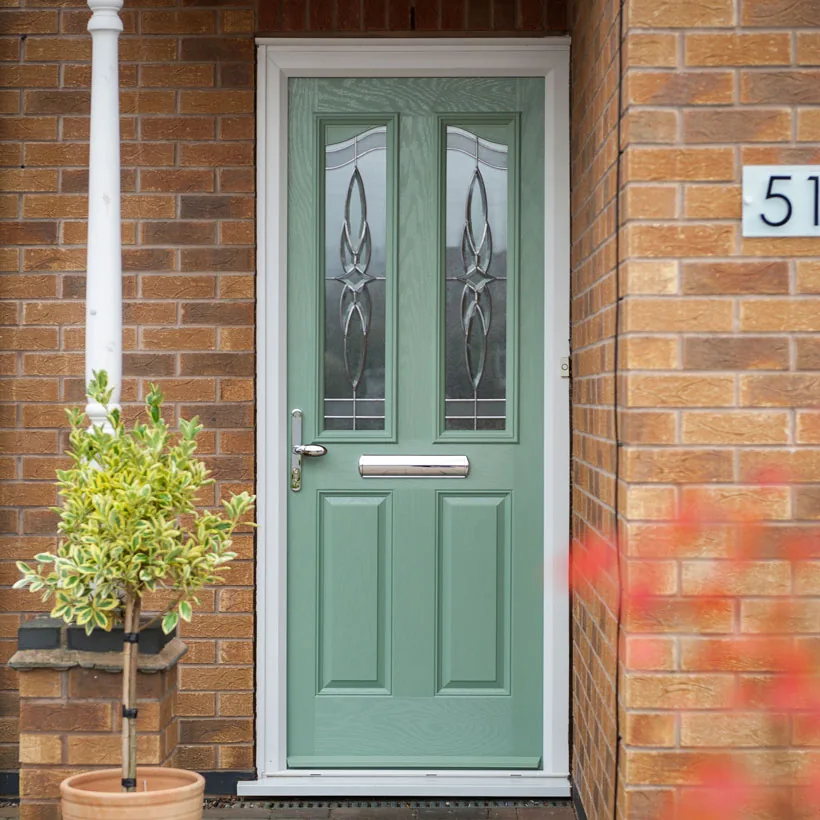
2 Panel 2 Angle
Chartwell Green
Shaped-head glazing panels with obscured decorative glass, chrome lever and letterplate. Chartwell Green remains the most requested heritage colour in the range.
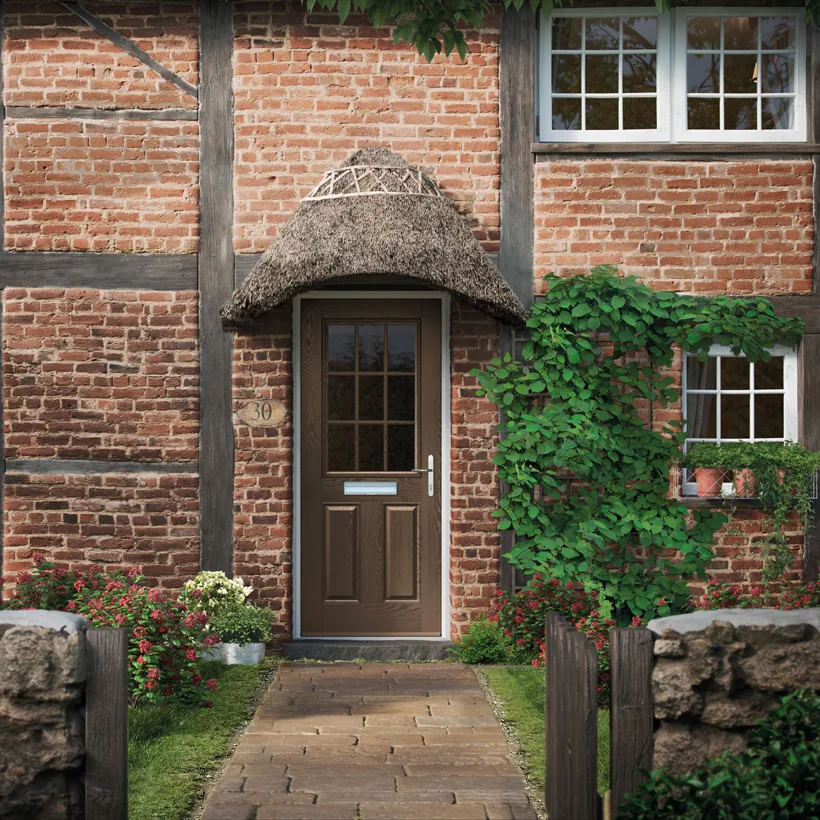
2 Panel 1 Grill
Rosewood / dark oak woodgrain
A Georgian-style glazing grill over two raised lower panels, suited to cottages, timber-framed and conservation properties.
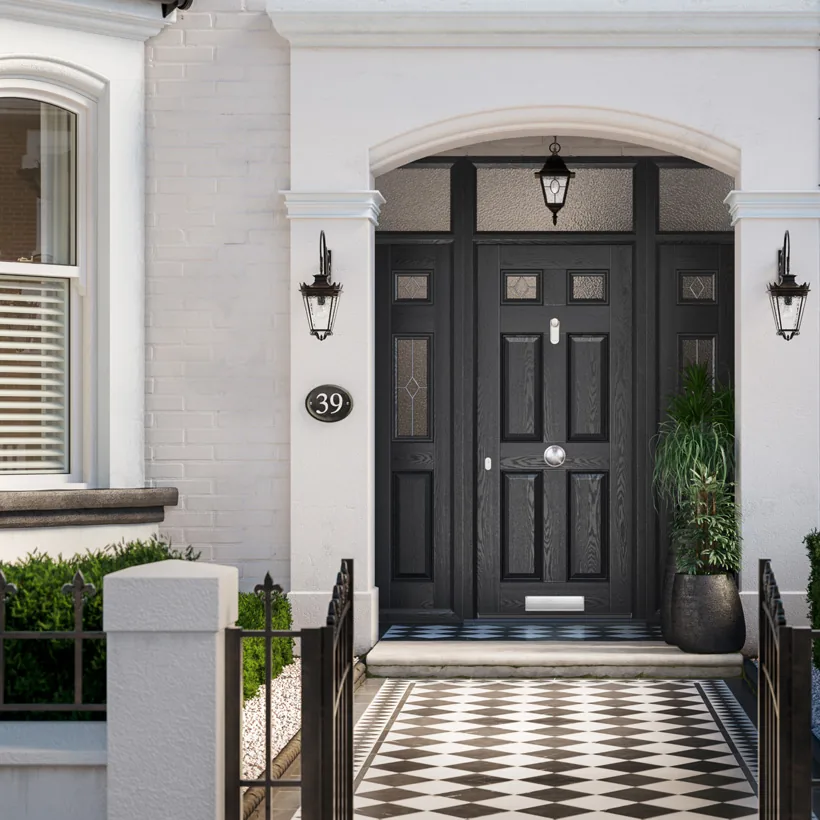
4 Panel 2 Square with sidelights and toplight
Black woodgrain
The full doorset arrangement — door, two glazed sidelights and a toplight above — for wide openings on stucco-fronted London townhouses.
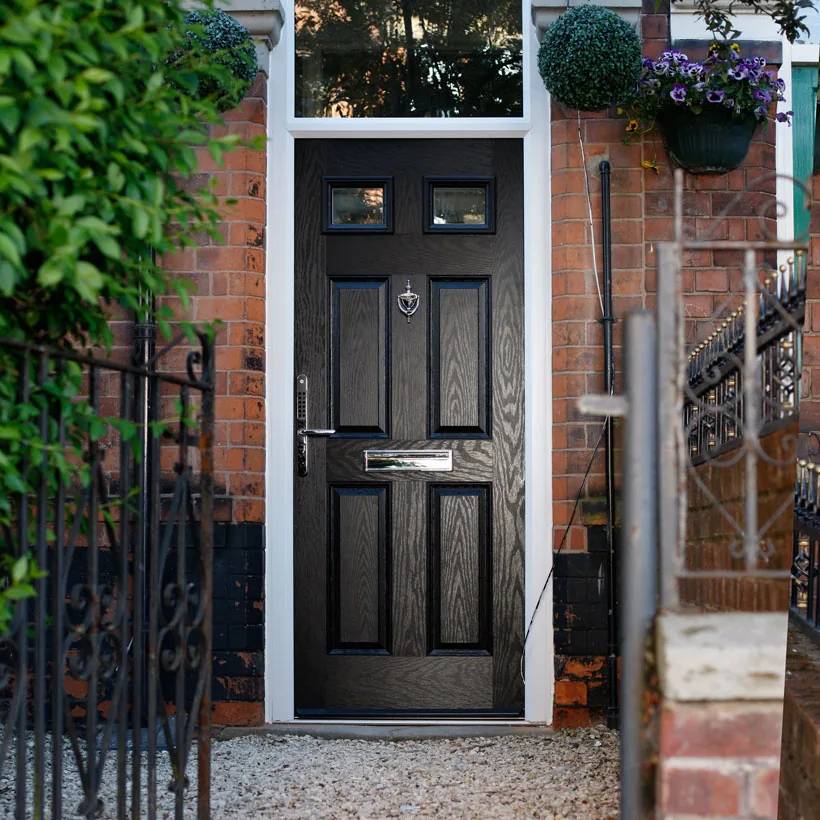
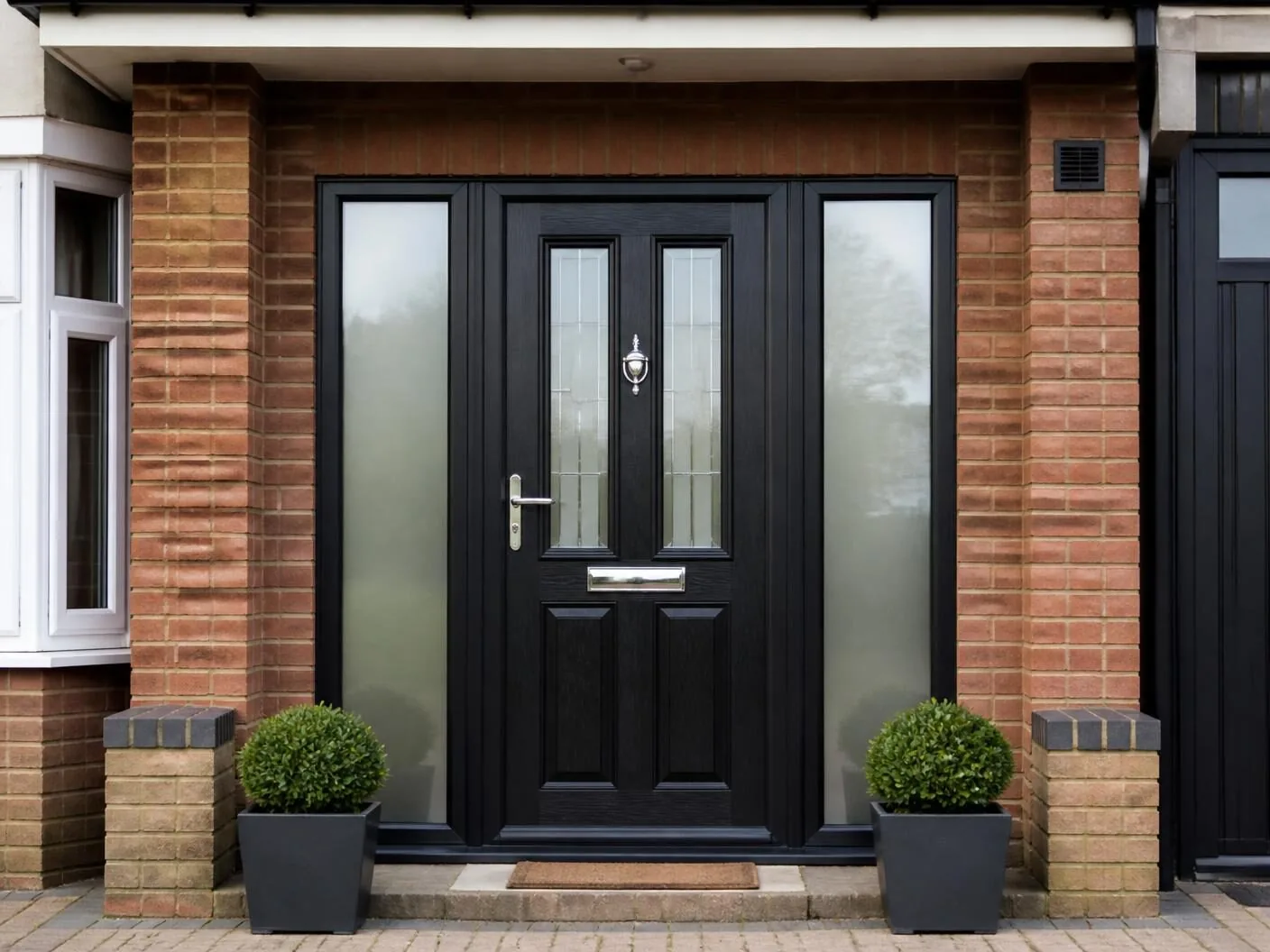
4 Panel 2 Square
Black woodgrain
Traditional four-panel proportions with two square lights, urn knocker and smart lock. A natural fit for Victorian and Edwardian terraces.
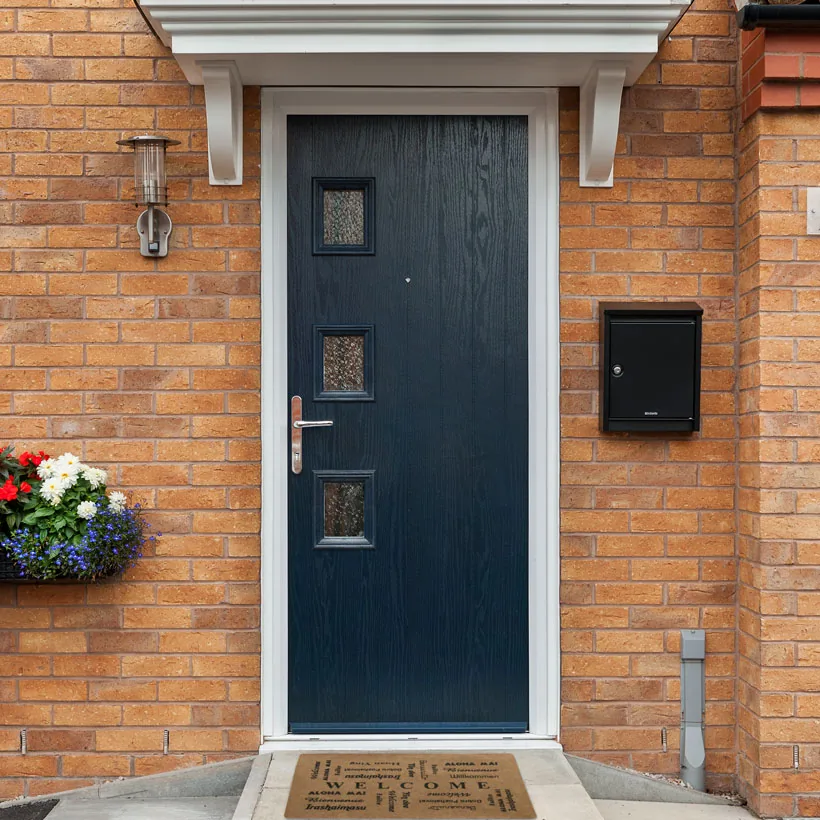
3 Square
Blue woodgrain
Three stacked square lights with obscure glazing — a transitional style that reads well on both modern estates and updated semis.
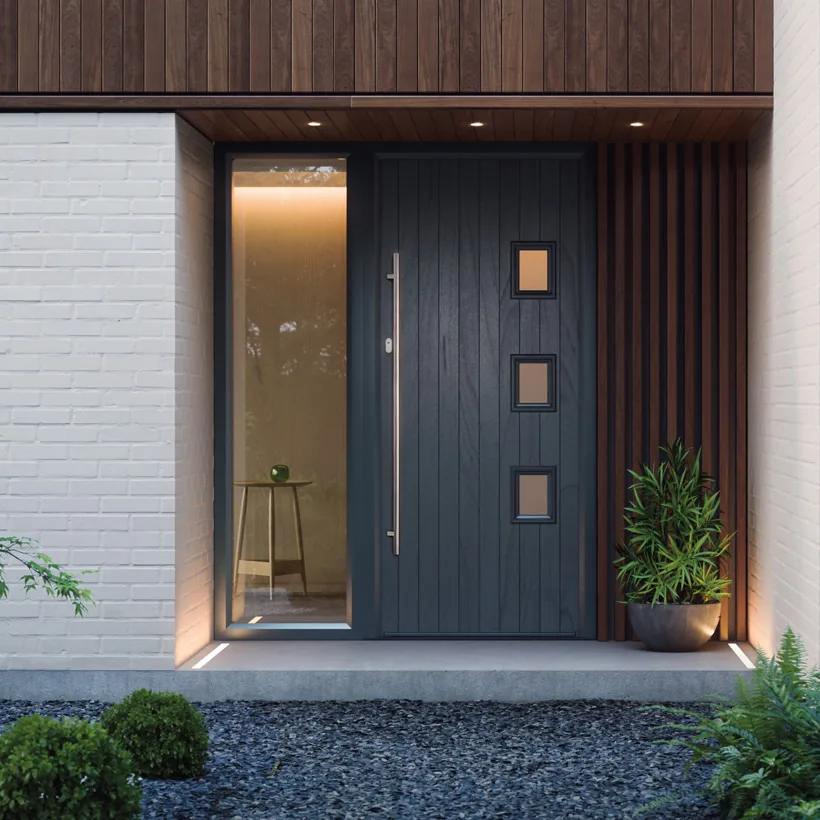
4 Square with full-height sidelight
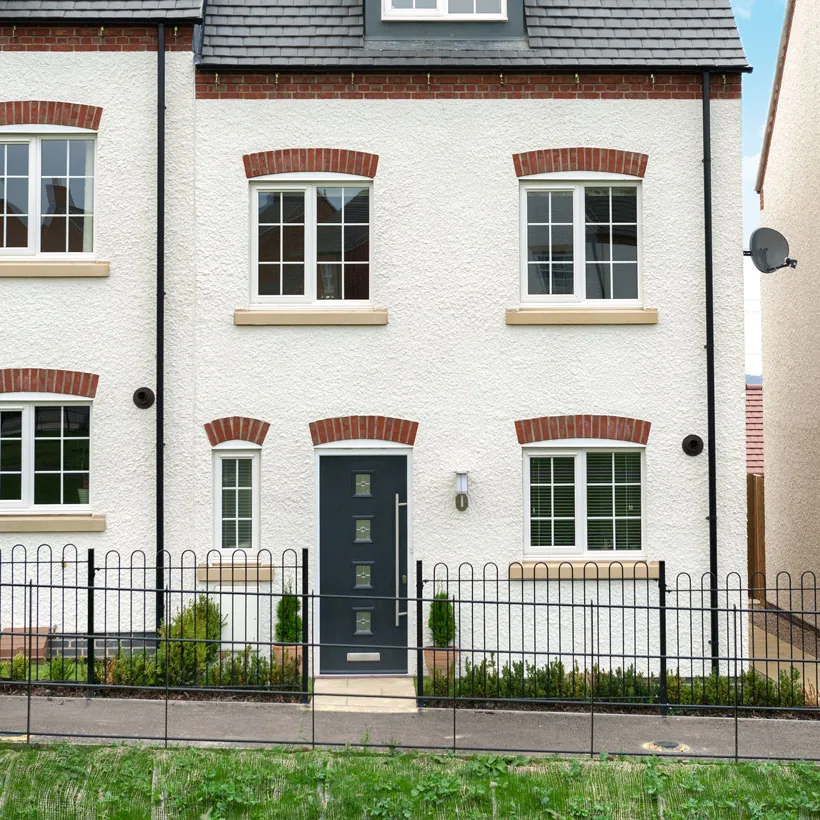
Anthracite Grey
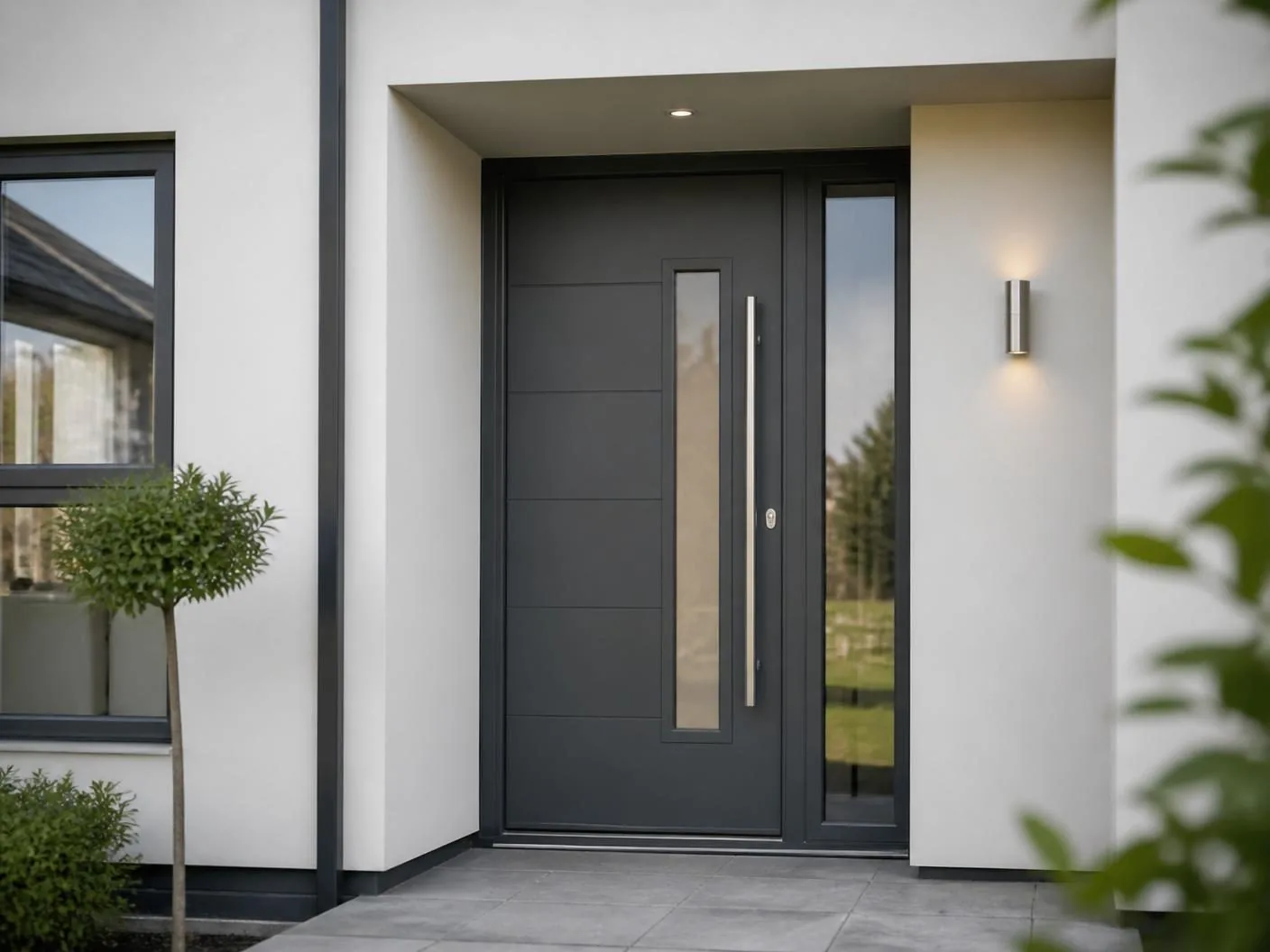
A contemporary grooved slab, three offset squares and a stainless bar handle, paired with a full-height glazed sidelight for a bright hallway.
4 Square
Anthracite Grey
The same contemporary slab shown in situ on a rendered new-build elevation, with a long bar handle and matching grey window furniture.
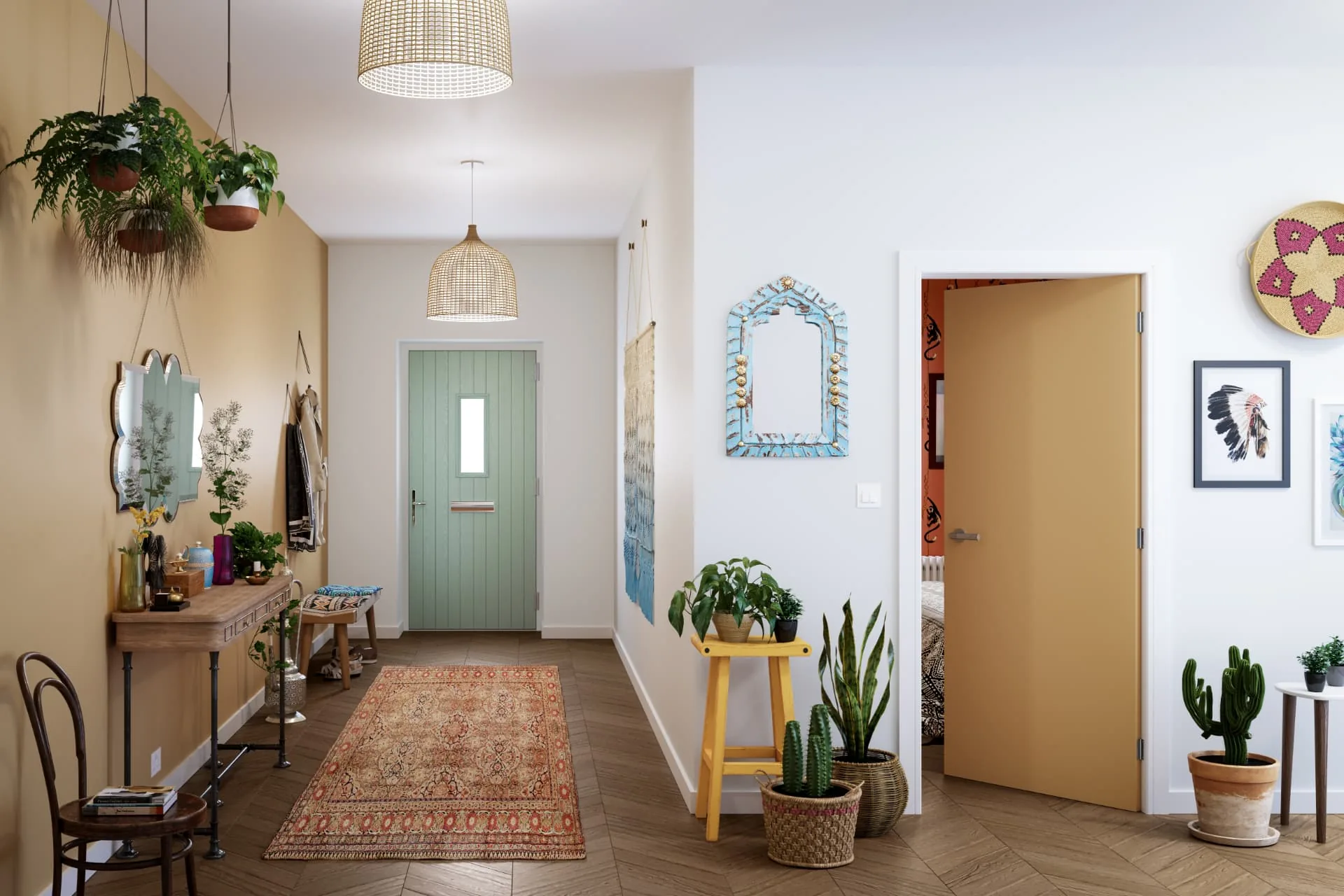
Cottage planked, single light
Sage / Chartwell Green
A planked cottage-style door seen from inside — the view you actually live with, and the reason interior colour matching matters.
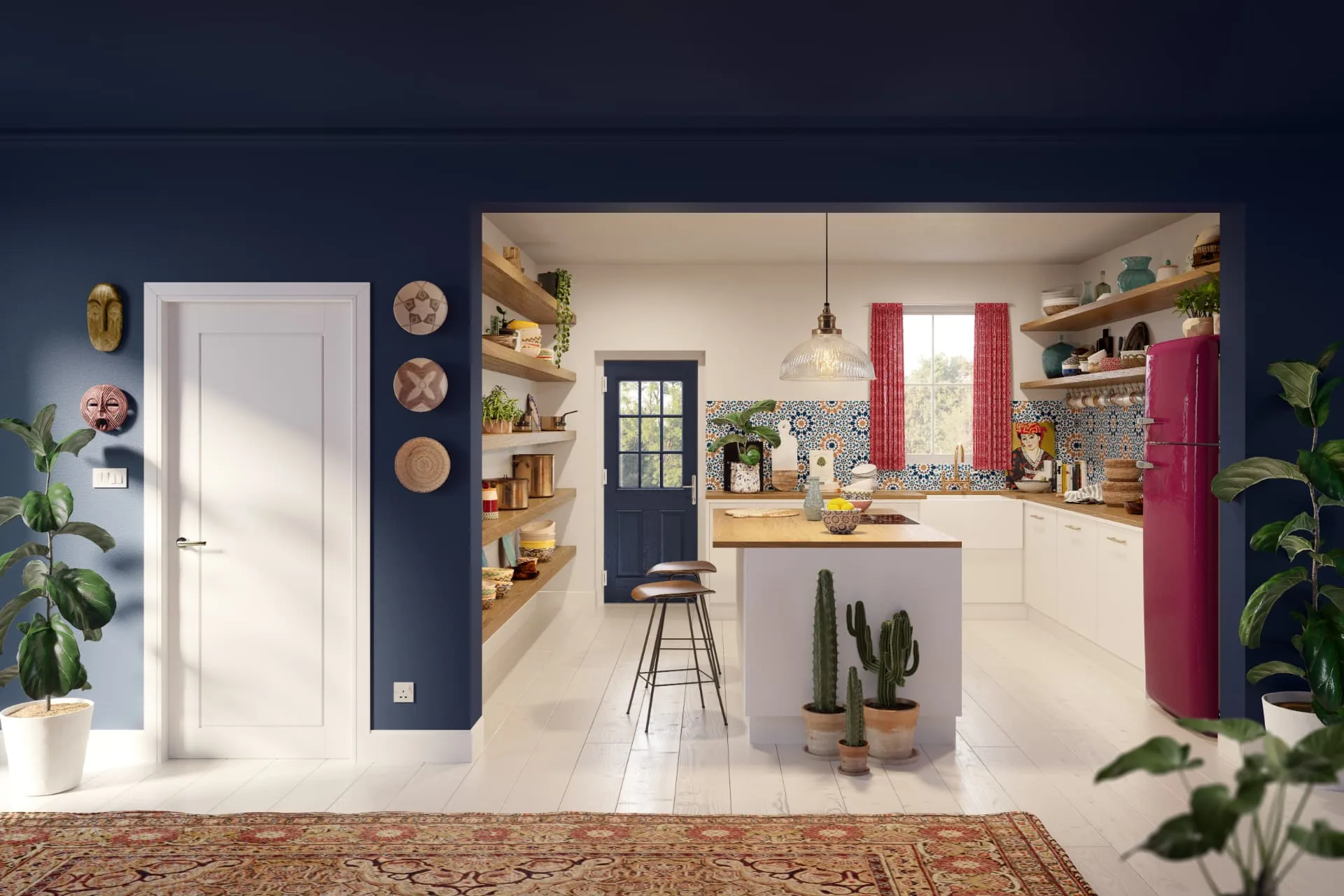
Half-glazed cottage back door
Navy Blue
A glazed rear door with Georgian bars bringing daylight into a kitchen — composite construction is not only for front elevations.
This is a selection rather than the full range — panel patterns, glazing designs and colours are added regularly. If you have seen a door you like elsewhere, bring us a photograph and we will tell you honestly whether it is a specification worth having.
Brochure Downloads
Download the full composite and fire door brochures.
Composite Door Collection
Browse the complete range of styles, colours, glazing options and hardware in the official DSI Composite Door Collection brochure.
- ✓ Full style and design range
- ✓ Colour and finish options
- ✓ Glazing, hardware and security details
PDF · 14.1 MB
Fire Door Main Brochure
Explore certified fire door options, FD30 and FD60 ratings, smoke seals, glazing and ironmongery specifications for safe, compliant residential entrances.
- ✓ FD30 and FD60 fire rated doorsets
- ✓ Smoke seals and intumescent strips
- ✓ Certification and building regulation guidance
PDF · 11.4 MB
Solid timber versus foam cores
The core decides the weight, the warmth and the way the door ages.
Solid timber and laminated timber cores
A core built from solid timber staves or a dense laminated timber board gives a door real mass — closing one feels closer to closing a traditional oak door than a hollow panel. That mass carries thermal benefit too, since dense timber resists heat transfer well and holds the shape of the door around the lock and hinges for decades. The trade-off is weight, which places more demand on hinges and frame fixings, and cost, since dense timber cores are the more expensive option to manufacture.
Rigid polyurethane foam cores
A foam core is lighter, cheaper to produce and, because trapped gas insulates well, can achieve a genuinely low U-value. The quality question is density: a high-density foam core bonded well to both skins performs honestly and lasts. A low-density foam core in a thin skin is the specification behind most of the delamination and impact-dent complaints in the market, because there is simply not enough substance behind the surface to resist a knock or hold a hinge screw over time.
Laminated versus foiled colour
The colour is applied to the skin, not mixed through it — and how it is applied matters.
A composite door's colour is a surface finish over the moulded GRP skin, applied by one of two broadly different processes. A laminated finish bonds a solid, pigmented film to the skin under heat and pressure before the woodgrain texture is embossed through it, which tends to produce the most durable and colour-stable result because the pigment sits within a robust protective layer. A foiled finish, more common on the value end of the market, applies a thinner decorative layer that can be more prone to fading or lifting at the edges over time, particularly on doors that face full sun for most of the day.
Quality manufacturers now offer both single and dual-colour doors — a different finish outside to inside — and a genuinely wide RAL and heritage colour range on the laminated route, so colour choice is rarely a reason to accept a lower specification elsewhere in the door.
- Ask what finish process is used, not just what colour is offered
- Request the manufacturer's fade and colour-stability guarantee in writing
- South and west facing doors deserve the more durable laminated route
- Dual colour lets you match the street outside and your hallway inside
Why quality varies so much in the UK market
The same word describes very different doors.
Composite doors are sold by manufacturers, fabricators and installers at every point on the price spectrum, and the word "composite" carries no protected meaning or minimum specification in the way a certification mark does. That is why we always ask for the manufacturer's name, the tested doorset certificate and the guarantee terms before we recommend one over another, rather than relying on how the door looks in a sample book.
Our role is to filter that variance on your behalf: we supply doorsets from manufacturers whose skin thickness, core density, sub-frame timber and hardware we have verified, and whose PAS 24 test certificates cover the exact configuration you are ordering, not a generic reference door.
Explore the range
Five ways to specify a composite front door.
Contemporary Composite Doors
Flush or lightly grooved slabs, stainless furniture and slim vision panels for modern elevations.
Explore →Traditional Composite Doors
Six-panel and four-panel patterns with decorative glass for Victorian and Edwardian terraces.
Explore →Cottage Style Composite Doors
Ledged, braced and planked appearances suited to rural and character properties.
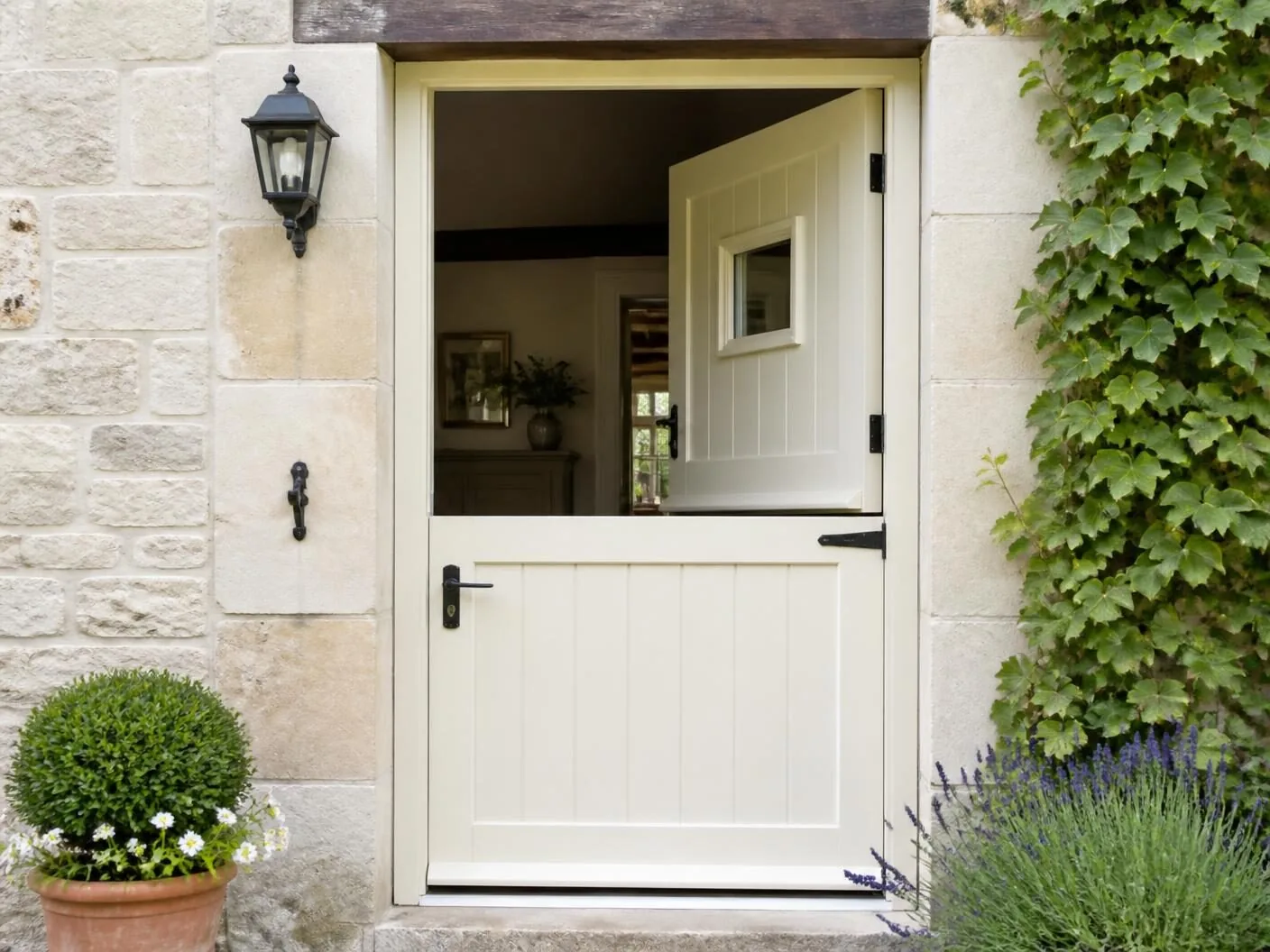
Explore →Stable Composite Doors
Independently opening top and bottom leaves for ventilation, light and containment.
Explore →Composite Door Colours
How colour is achieved, how it weathers, and which finishes are worth paying for.
Explore →Frequently asked questions
The questions homeowners ask us most.
What actually makes a door 'composite'?+
A composite door is a manufactured sandwich rather than a single material: a rigid GRP (glass reinforced plastic) skin bonded to both faces of an insulating core, with a timber sub-frame carrying the hinges and lock. The word describes the construction method, not a single product, which is exactly why quality varies so much between manufacturers.
Is every composite door the same underneath the skin?+
No. Core material, core density, skin thickness, sub-frame timber and the bonding process all differ between manufacturers, and none of it is visible once the door is fitted. Two doors that look identical in a brochure photograph can differ by a significant margin in weight, rigidity and long-term stability.
Why do composite doors cost more than uPVC panel doors?+
The GRP skin is moulded under heat and pressure to reproduce genuine woodgrain and moulding detail, the core is a dedicated insulation material rather than a hollow or foam-filled panel, and the door is built around a timber sub-frame strong enough to carry a multi-point lock and heavy furniture. Manufacturing a slab this way costs more than extruding a hollow panel, and it should.
How long does a genuine composite door last?+
A well-specified composite door from an established manufacturer typically performs well for 25 to 35 years with no more than an annual clean and occasional hardware lubrication. Budget imports with thin skins and low-density cores can show delamination, warping or hinge sag within five to eight years.
Do composite doors warp or bow like timber?+
Considerably less than solid timber, because the GRP skin is dimensionally far more stable than wood and is bonded under controlled factory conditions rather than left to move with ambient humidity on site. Some movement is still possible in cheaper doors with thin or poorly bonded skins, particularly on south-facing openings.
Can a composite door be repainted a different colour?+
Not straightforwardly, and this is one of the reasons colour choice deserves proper thought before ordering. GRP does not take conventional paint well without specialist preparation, so most homeowners live with the colour they specified. Foiled finishes are even less suited to repainting than laminated colour.
How is a composite door different from a solid timber front door?+
Timber offers a genuinely traditional material and can be refinished indefinitely, but it needs redecoration on a cycle and will move seasonally. A composite door is engineered to resist that movement and needs no redecoration at all, at the cost of being a manufactured product rather than a natural one. Our timber front doors page sets out the comparison in full.
Will a composite door meet current security requirements?+
The better manufacturers test complete doorsets to PAS 24:2022 and offer Secured by Design accredited configurations as standard. This is a specification decision, not a given — always ask for the test certificate for the exact doorset, not just the slab, since locks, hinges and frame all form part of the tested assembly.
Begin the conversation
Talk it through before you commit to anything.
A consultation is a chance to see the actual doorset, weigh the slab, and read the test certificate for yourself, rather than choose from a colour swatch alone.