
Doors / Back Doors
Back Doors
The hardest working door in the house, used more often and watched less closely than the one at the front — and the one most often under-specified on security and drainage.
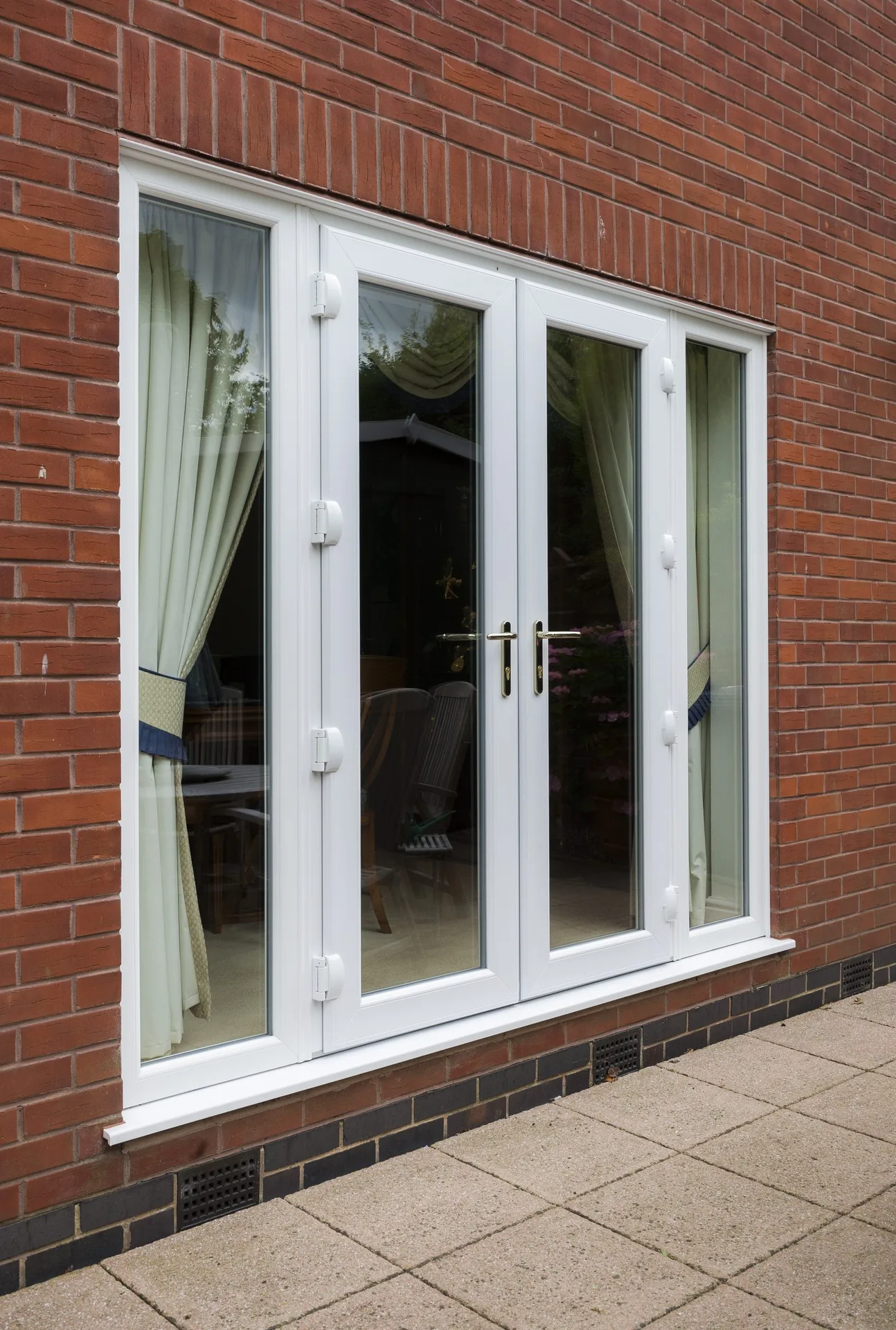
Why the back door deserves more thought
It is used more, watched less, and exposed to worse weather.
A front door is chosen for how it looks from the pavement. A back door is chosen, far too often, on whatever was left over once the budget for the front had been spent. That is the wrong way round. The back door is opened and closed several times a day by the household, is the route most burglars actually use, and typically takes the worst of the weather because it faces an open garden rather than a sheltered street.
Home Office figures have shown consistently that rear access — through a back door, side return door or single-glazed utility door — accounts for a disproportionate share of domestic burglaries compared with front entrances. The reason is straightforward: privacy. A person working on a lock at the back of a house is rarely seen by anyone, whereas the same work on a front door is visible to the street and to neighbours opposite.
We treat the back door as a security specification first and a style choice second, without making it feel like a fortress. Reinforced cores, tested cylinders, laminated glass where it matters and correctly detailed drainage are not upgrades on this page — they are the baseline, because that is what the way people actually use a back door demands.
Beautiful homes begin with better advice.
We would rather talk you through cylinder ratings and drainage detail than a colour chart, because that is what actually decides whether this door still works properly in ten years.
The four options
Choose by material and by opening, not by picture alone.
uPVC Back Doors
Reinforced multi-chambered frames, midrails and practical glazing options.
Explore →Aluminium Back Doors
Narrow-sightline rear doors for utility rooms, side returns and garden studios.
Explore →Half Glazed Back Doors
Light into the kitchen without giving up a secure, solid lower panel.
Explore →Rear Entrance Doors
Side returns, boot rooms and alleyway access — the security thinking that changes.
Explore →What we check before quoting
Four things that decide whether a back door works.
Cylinder and hardware standards
TS007 3-star cylinders or 1-star with 2-star hardware, multipoint locking with hook bolts, and hinge-side security bolts on any leaf over a metre wide. This is the specification insurers expect at the rear of the property, not an optional extra.
Drainage and threshold detailing
Weep holes that stay clear, a cill that falls away from the house, and a threshold matched to the external ground level. A back door usually sits closer to a patio or garden than a front door sits to a porch, and it shows within a season if the drainage was an afterthought.
Side return and alleyway access
A door opening onto an enclosed side return or shared alleyway is worked on unobserved, which is why we raise the specification on cylinders and glazing rather than treat it the same as a door opening onto an overlooked garden.
Durability under daily use
Hinges, cams and gaskets on a back door see several times the cycles of a front door. We specify grade 316 stainless hinges and reinforced frames accordingly, so the door still closes cleanly after years of daily traffic.
Frequently asked questions
The questions homeowners ask us most.
Why does a back door need to be more secure than a front door?+
A front door faces the street, where an intruder is visible to passers-by and to the household itself. A back door usually faces a garden, side return or alleyway that offers cover and privacy to anyone working on the lock unobserved. Insurers and the police both treat rear access as the higher-risk opening, which is why we specify cylinder and hardware standards at the back that many homeowners assume only apply at the front.
What lock standard should a back door have?+
We specify TS007 3-star rated cylinders, or a 1-star cylinder paired with 2-star hardware, as the minimum for any rear door. This combination resists snapping, bumping and drilling, the three attack methods most commonly used on cylinder locks. A multipoint mechanism with hook bolts, rather than a simple hook-and-cam, gives a second layer of resistance if the cylinder is defeated.
Do I need laminated glass in a back door?+
If the door or an adjacent panel is within reach of a door handle, letterbox or window catch, yes. Laminated glass holds together when struck rather than shattering into a clear opening, which removes the simplest method of gaining access — breaking a pane and reaching through. It also has a useful secondary benefit of reducing noise transfer from a garden or neighbouring property.
How does drainage affect a back door's lifespan?+
Back doors sit at the lowest point of many gardens and patios and take direct rainfall off an unobstructed roofline more often than a sheltered front porch. A threshold without functioning weep holes and a correctly falling cill will hold water against the frame, which shortens gasket life and can lead to internal damp at the base of the opening. We check drainage detailing at survey stage, not as an afterthought.
Can I have a cat flap or pet door fitted?+
Yes, though it needs specifying before manufacture rather than cut in afterwards. A factory-fitted pet door is glazed or panelled around correctly and does not compromise the structural reinforcement of the leaf. Retrofitting one into an existing composite or uPVC slab after installation can void the guarantee and weaken the door.
Is a half glazed door as secure as a solid one?+
It can be, provided the glazed section uses laminated glass and internal beading, and the solid lower section retains full reinforcement. The trade-off is not security so much as thermal performance — a full glass upper section will always lose slightly more heat than a fully insulated panel, though modern low-E units narrow that gap considerably.
What is a side return and why does it change the specification?+
A side return is the narrow passage running down the side of a terraced or semi-detached house, usually gated at the front and leading to a back door or utility door. Because it is enclosed, overlooked by no one, and often has a low boundary gate, doors opening into it are typically specified with a higher cylinder rating, hinge-side security bolts and, where budget allows, monitored smart locking.
How long does a back door installation take?+
A single back door is usually fitted in half a day once the survey and manufacture are complete, with manufacture lead times of two to four weeks depending on material and glazing. We make good the internal reveal and test the locking and drainage before we leave.
Begin the conversation
Talk through your rear access before you commit to anything.
A consultation is a conversation about how the back of your house is actually used — the side return, the drainage fall, who needs level access to the garden, and what the insurer expects. You will receive a written specification you can understand and compare.