
Introduction
The front door is the most scrutinised element of a house from the pavement, and also the one most exposed to weather, daily use and attempted forced entry. It is not surprising that the choice between a composite door and a timber door generates more genuine debate than almost any other decision in this guide — both materials have real strengths, and the marketing around each tends to flatten the comparison rather than clarify it.
Composite doors are a relatively recent product, developed to solve specific problems with early uPVC and timber doors: warping, fading, cracking and poor thermal performance. Timber doors are as old as building itself, and modern engineered timber addresses many of the same failings that gave solid timber a reputation for high maintenance. Both categories, in other words, have moved on considerably from the products people remember from twenty years ago.
This guide sets out how each door is actually constructed, then compares them on the measures that matter in practice: thermal performance, security, weather resistance, appearance, maintenance and total cost across a realistic twenty-year ownership period. The right answer is rarely obvious in the abstract and depends heavily on the specific property and street.
Quick summary
The short version
- A composite door is a GRP or fibreglass skin bonded over a solid timber, engineered timber, or high-density foam core, with a steel or aluminium reinforced frame.
- Modern engineered timber doors use laminated, moisture-stabilised cores rather than solid single-piece timber, which greatly reduces warping compared with older timber doors.
- Composite doors need no repainting and resist fading; timber doors need recoating roughly every three to five years to maintain their finish and guarantee.
- Both materials can achieve strong PAS 24 security ratings when specified with a suitable multi-point lock and reinforced frame — the door construction alone does not decide security.
- Foam-core composite doors are lighter and cheaper but perform noticeably worse thermally and acoustically than timber-core composite or genuine engineered timber.
- Over twenty years, timber typically costs more in upkeep but can be refinished indefinitely; composite costs less to maintain but is replaced rather than restored at end of life.
Why this matters
A front door is opened and closed several times a day, sits exposed to full weather on at least one face, and is the single component of the house most likely to be tested by an intruder. Getting the construction right matters more here than almost anywhere else in the specification, because a door that performs badly is inconvenient in a way a badly specified window rarely is.
The core of a door, quite literally, determines nearly everything else about how it behaves. Two doors that look identical from the street — same colour, same glazing, same hardware — can differ enormously in weight, insulation, sound reduction and long-term stability depending on what is inside the slab. This is the detail that rarely appears on a showroom price list but decides how the door performs in year eight, not year one.
It also has real bearing on kerb appeal and resale. A front door is one of the first things a viewer notices, and a door that has faded unevenly, warped at the bottom rail, or lost its lock rebate over time undermines the presentation of the whole house. Choosing the right construction the first time avoids a visible problem appearing exactly when you would rather it did not.
Expert advice
How a composite door is actually constructed
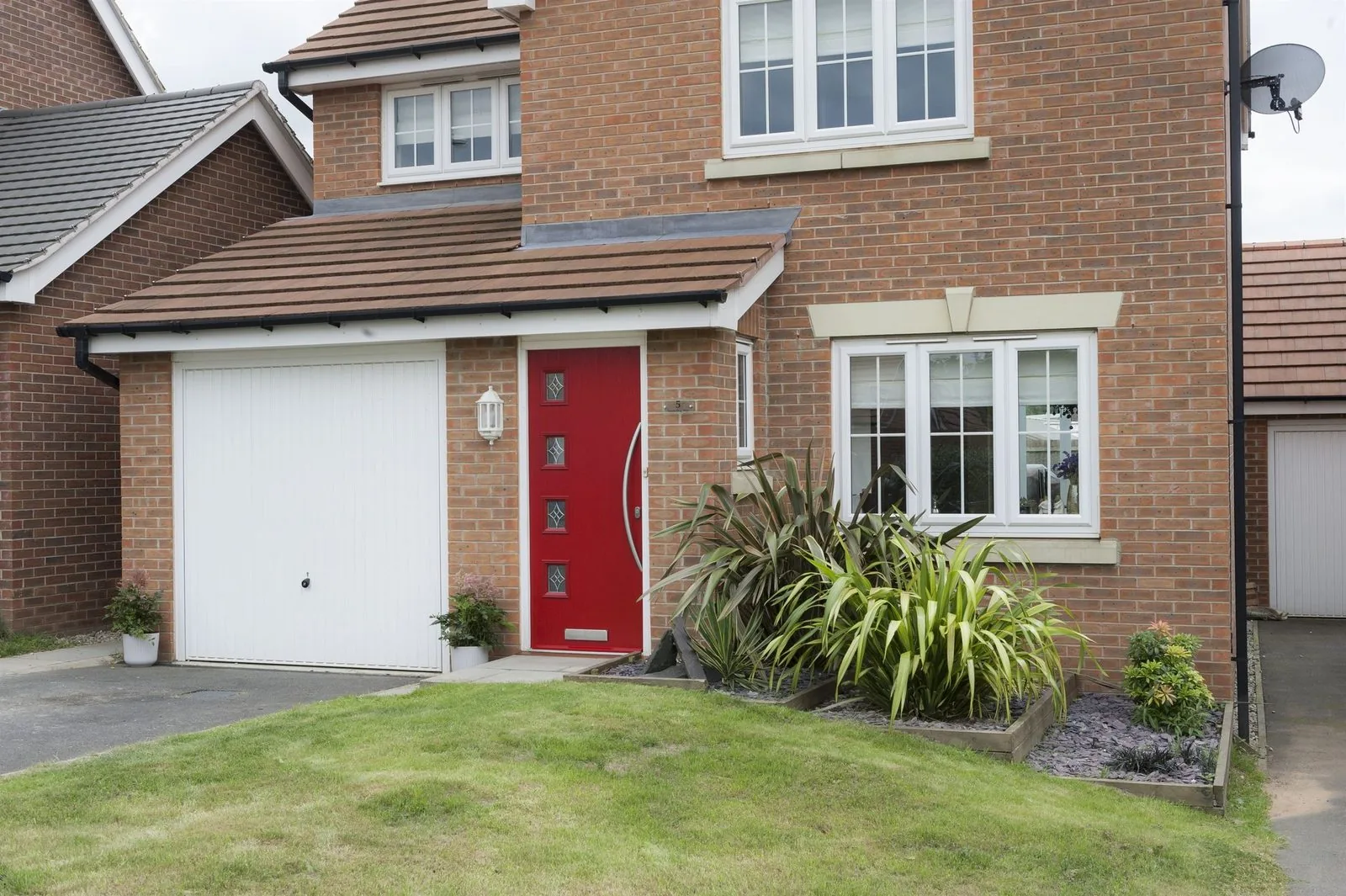
A composite door is built in layers rather than carved or machined from a single material, which is precisely what gives it stability that solid timber struggles to match. The outer and inner faces are typically GRP — glass-reinforced plastic, sometimes called fibreglass — moulded to replicate a panelled timber profile, complete with woodgrain texture and raised mouldings.
Between those two skins sits the core, and this is where composite doors diverge most in quality. The better specifications use a solid timber or laminated timber core, sometimes combined with a rigid foam infill around the edges. Cheaper composite doors use a high-density foam core throughout, which reduces weight and cost but also reduces thermal mass, acoustic performance and the reassuring solidity a door should have when closed.
Around the perimeter, a steel or aluminium reinforced frame is bonded into the slab to take the weight of the hinges and to resist the leverage an intruder would apply at the lock and hinge side. This frame, not the GRP skin, is what a security rating is largely testing. The glazing, where fitted, sits in a factory-sealed unit rather than being puttied in, which removes one of the traditional weak points of a timber door with a fitted glazed panel.
Because the whole assembly is factory-bonded under controlled conditions, a composite door does not move seasonally the way solid timber can. It does not expand in humid weather or shrink in a dry winter, which is the single biggest practical advantage the product holds over older timber doors, and the reason it became so widely specified over the last fifteen years.
How a modern engineered timber door differs from the old solid kind
The reputation solid timber doors have for warping, sticking and swelling largely comes from doors made from a single piece, or a small number of large pieces, of natural timber. Wood is hygroscopic — it absorbs and releases moisture with the seasons — and a single large panel of timber will move unevenly as it does so, which is what produces the sticking door or the gap at the top rail that every older house seems to have somewhere.
Engineered timber addresses this directly. Rather than one solid piece, the core is built from several smaller sections of timber laminated together with the grain running in alternating or opposing directions. This cancels out most of the movement that a single piece of timber would otherwise exhibit, producing a door that is dimensionally far more stable while still being genuine solid wood throughout, not a veneer over a different material.
Quality hardwood species — European oak, Accoya, Sapele and similar — are used for the visible faces and mouldings, chosen for durability and a fine, tight grain that finishes well. The joinery itself, mortise and tenon or dowel-jointed depending on the maker, is a genuine structural joint rather than a bonded lamination, which is part of what allows a well-made timber door to be repaired rather than replaced when damage occurs.
The finish is the other half of the specification. Factory-applied microporous paint or stain systems, applied and cured under controlled conditions before the door leaves the joinery, last considerably longer than a door finished on site, and this is worth confirming specifically when comparing timber door quotations, because it varies significantly between suppliers.
Thermal and security performance compared
Both door types can meet current Building Regulations thermal requirements, and both can be specified to a strong security standard, so the honest comparison is about consistency and margin rather than a hard winner. A timber-core or foam-and-timber composite door typically achieves a U-value in a similar range to a well-built engineered timber door, both comfortably inside the 1.4 W/m²K backstop for replacement doors in England.
Where composite tends to have an edge is consistency across the whole slab, because the factory-bonded construction and multi-point locking mechanism are matched as a system by the manufacturer, whereas a timber door's thermal and security performance depends more on the specific joinery, weatherstripping and lock the individual maker fits, which varies more between suppliers.
On security, PAS 24 and Secured by Design accreditation are available for both materials, and the door construction alone is not what a certifying test primarily measures — it tests the whole assembly, including the frame, hinges, lock and glazing method, under simulated attack. A cheaply specified composite door with a basic cylinder lock can perform worse than a well-specified timber door with a British Standard multi-point lock, so ask for the certificate rather than assuming the material decides the outcome.
Acoustic performance tends to favour whichever door has the greater mass and the more solid core. A timber-core composite or a solid engineered timber door will reduce external noise noticeably better than a foam-core composite, which is worth raising specifically if the property faces a busy road.
| Measure | Composite (timber-core) | Composite (foam-core) | Engineered timber |
|---|---|---|---|
| Typical U-value | 1.0–1.3 W/m²K | 1.2–1.4 W/m²K | 1.0–1.4 W/m²K |
| Dimensional stability | Very high | Very high | High, if properly laminated |
| Acoustic performance | Good | Moderate | Good to very good |
| Repairability | Low — replace damaged slab | Low — replace damaged slab | High — joinery can be repaired |
| Refinishing | Not required or possible | Not required or possible | Recoat every 3–5 years |
Maintenance and lifespan realities
This is where the two materials genuinely diverge, and where a fair comparison has to look beyond the first year. A composite door needs almost no maintenance beyond an occasional wipe down with mild soapy water and periodic lubrication of the hinges and lock. The colour is through the GRP skin, not a surface coating, so there is no repainting cycle and no risk of the finish peeling or chalking in UV exposure the way some painted surfaces do.
A timber door, even a well-engineered modern one, requires an ongoing finish maintenance routine. Depending on the paint or stain system, exposure and orientation, recoating is typically needed every three to five years on a south or west-facing elevation, sooner on a door that gets full sun. Skipping this is what eventually leads to the moisture ingress and edge swelling that gives timber its high-maintenance reputation, and it is avoidable with a modest, predictable routine.
Lifespan runs in the opposite direction to maintenance burden. A composite door, once its slab reaches the end of its serviceable life — typically twenty to thirty years, sometimes cut short by UV fading on darker colours or seal failure around the glazing — is replaced rather than restored, because the GRP skin and foam or timber core are not designed to be stripped back and refinished. A well-maintained timber door, by contrast, can be sanded back, re-jointed where needed and refinished more or less indefinitely, which is why so many genuinely old timber doors are still in daily use on period properties.
The practical conclusion is that composite suits homeowners who want a fit-and-forget door and are comfortable replacing it in two to three decades. Timber suits homeowners willing to maintain a routine in exchange for a door that can, in principle, last far longer and be repaired rather than replaced when it is damaged.
Conservation areas, period properties and cost over 20 years
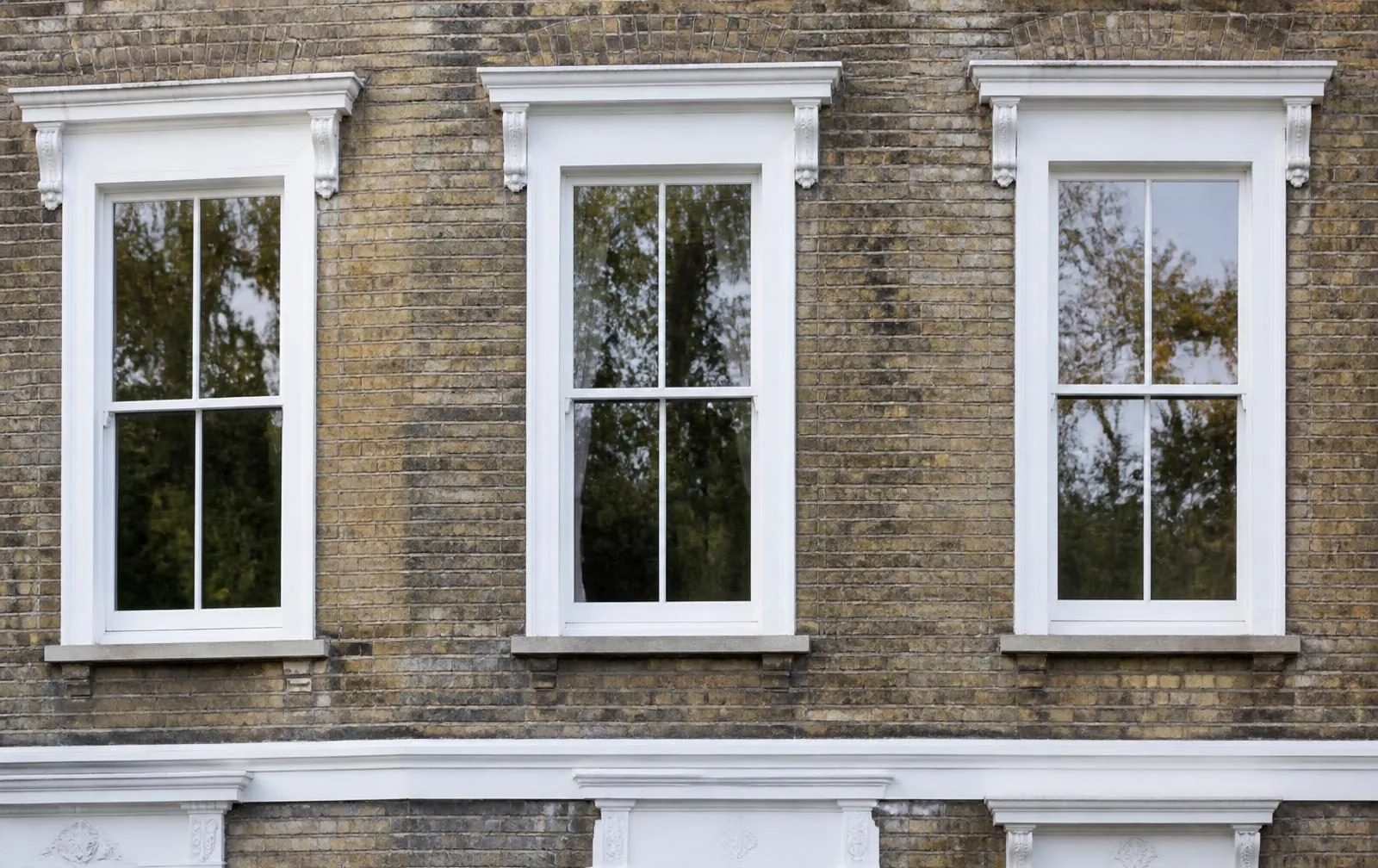
In a conservation area or on a listed building, the deciding factor is often not performance but appearance and authenticity. Conservation officers generally accept composite doors for standard, unlisted properties within a conservation area, provided the style, colour and glazing pattern respect the streetscape. On a listed building, or where a conservation officer specifically requires matching joinery detail, timber is usually the only accepted material, because GRP mouldings, however convincing at a glance, do not replicate the depth and shadow line of genuine machined timber under close inspection.
For a period property that is not listed but where the front elevation is a defining feature — a Georgian or Victorian terrace with a six-panel door and fanlight, for instance — the choice is more about taste and budget than regulation. A well-specified composite door in an accurate panel profile reads correctly from the street for most viewers; a timber door reads correctly to a trained eye as well as a casual one, at a higher price and with the maintenance commitment already described.
Cost over a twenty-year ownership period needs to include both purchase and upkeep, not purchase price alone. A quality composite door typically costs somewhat more upfront than a basic timber door but requires no recoating, which over two decades can close or reverse the initial price gap depending on how often the timber door needs attention and whether that work is done professionally or by the homeowner.
Where timber pulls ahead financially is at the point of failure. A composite door with a damaged slab is replaced in full; a timber door with localised damage — a split rail, a failed joint — can often be repaired by a joiner for a fraction of full replacement cost, extending its service life considerably beyond the point a composite door of the same age would need replacing outright.
Common mistakes
Assuming all composite doors are built the same way
Ask specifically whether the core is solid timber, laminated timber, or foam. The difference in thermal, acoustic and long-term performance is significant, and it rarely shows up in the price alone.
Choosing timber for a period property without checking the actual planning constraint
Check whether the property is listed, in a conservation area, or under an Article 4 direction before assuming timber is required. Many conservation areas accept a well-specified composite door for standard replacement.
Comparing purchase price without factoring in maintenance cost
Ask a timber door supplier for the realistic recoating interval and cost, and weigh that against composite's higher upfront price and negligible upkeep, over a twenty-year horizon.
Assuming the door material alone determines security rating
Ask for the PAS 24 or Secured by Design test certificate for the whole assembly — frame, lock and glazing method — rather than assuming a composite slab is automatically more secure than timber.
Choosing a dark colour without checking the manufacturer's fade and heat guidance
Darker composite colours absorb more solar heat and can be more prone to visible fading and, in some cases, minor bowing on strong south-facing elevations. Ask the manufacturer which colours carry any exposure caveats.
Frequently asked questions
Is a composite door actually as strong as timber?+
A well-made composite door with a solid timber or engineered timber core, a GRP or fibreglass skin and a steel or aluminium reinforced frame is comparable to, and in most tested respects stronger than, a timber door of equivalent price. The GRP skin resists impact, moisture and warping far better than a thin timber veneer, though a genuinely thick solid hardwood door remains formidable in its own right.
Do composite doors ever need painting?+
No. The colour is baked into the GRP skin, so there is nothing to repaint over the life of the door. This is one of the clearest maintenance advantages composite holds over timber, which needs recoating every few years regardless of how well it was finished originally.
Can a timber door be as thermally efficient as composite?+
Yes, provided it is a modern engineered timber door rather than a reclaimed or poorly specified reproduction. Engineered timber cores are dimensionally stable and can be built to similar thickness and insulation values as a composite slab. The gap in practice tends to come from weatherstripping and glazing specification rather than the timber itself.
Will a composite door be accepted in a conservation area?+
Often yes for standard replacement, but not always for a listed building or where a conservation officer requires a matching timber profile with visible joinery detail. We check the specific constraint on your property before recommending either material, because the answer genuinely varies street by street.
How long does a composite door actually last before it needs replacing?+
Reputable composite doors carry guarantees of ten years or more on the slab and typically remain serviceable for twenty to thirty years, with hardware replacement along the way. A well-maintained timber door, by contrast, can outlast several composite doors if it is properly cared for, though it demands ongoing attention to get there.
Which is better for a period property's front elevation?+
It depends on how much the original joinery detail matters to the elevation. Where fine mouldings, a raised-and-fielded panel profile or a specific historic proportion are central to the property's character, timber usually reproduces them more convincingly. Where the priority is a tidy, low-maintenance door that reads correctly from the street, a well-specified composite is often the better decision.
Related products