Introduction
Noise is one of the most common reasons homeowners contact us, and one of the areas where the intuitive answer — more glass, more panes, more distance from the road — is not always the right one. Acoustic performance follows its own physics, distinct from thermal performance, and a specification optimised for one does not automatically deliver the other.
This article works through how sound reduction is actually measured, what changes a standard sealed unit into an acoustic one, and why some of the most effective acoustic solutions are less obvious than simply adding another pane of glass. It also addresses a question we hear often from residents near arterial roads, railway lines and flight paths: why does the same product sometimes perform very differently in practice than the certificate suggests.
As with every specification decision, the right answer depends on your specific noise source, your window openings, and how much noise reduction you actually need — a busy urban high street and a distant motorway hum are different problems requiring different solutions.
Quick summary
The short version
- Rw is the standard laboratory-measured sound reduction rating for glazing; higher numbers mean more noise blocked.
- Acoustic laminated interlayers are the single most effective upgrade for sound, more so than adding cavity depth alone.
- Asymmetric pane thicknesses — using two different glass thicknesses either side of the cavity — meaningfully improve sound reduction over matched panes.
- Standard triple glazing, optimised for thermal performance, is not automatically the quietest option; a well-specified acoustic double glazed unit can outperform it.
- Secondary glazing, using a wide independent air gap, is generally the most effective acoustic solution available, particularly for period properties.
- Trickle vents and other small openings can undermine an otherwise excellent acoustic specification if not upgraded alongside the glass.
Why this matters
Noise is measured on a logarithmic decibel scale, which means the numbers behave unintuitively. A reduction of 10 dB is perceived by the human ear as roughly half as loud, not a modest ten per cent improvement. This is why the difference between an Rw of 30 and an Rw of 40 is a genuinely transformative change in a room's character, not the incremental step the numbers might suggest at a glance.
Chronic noise exposure at home has well-documented effects on sleep quality, concentration and stress, which is why acoustic glazing is not a cosmetic upgrade for many of our clients but a genuine quality-of-life intervention. Getting the specification right the first time matters more here than in almost any other glazing decision, because retrofitting a second attempt at the same openings is expensive and disruptive.
It also matters because acoustic performance is one of the areas of glazing specification most prone to being oversimplified by suppliers. 'Triple glazing will sort the noise' is a common but often incorrect assurance, and a homeowner who spends a substantial sum on that basis and finds only a modest improvement is understandably frustrated. Understanding the real variables in advance avoids that outcome.
- Standard double glazing: typically 28–32 dB Rw
- Acoustic double glazing with laminated interlayer and asymmetric panes: typically 38–44 dB Rw
- Standard triple glazing: typically 32–36 dB Rw, thermally excellent but not acoustically optimised
- Secondary glazing with a 100mm+ air gap: can exceed 45 dB Rw against low-frequency traffic and aircraft noise
Expert advice
Decibels, perception and the Rw rating
Sound pressure is measured in decibels, but the scale is logarithmic rather than linear, which is the source of most confusion when comparing products. Each increase of roughly 10 dB corresponds to a doubling of perceived loudness, so a window rated at 40 dB Rw is not marginally better than one rated at 30 — it is roughly halving the noise a person actually experiences in the room.
The Rw figure itself, sound reduction index weighted, is derived from laboratory testing across a range of frequencies and condensed into a single comparable number under the relevant British and European standard. It is a useful way to compare products but has a known limitation: it is weighted towards mid and high frequencies typical of speech, and can understate performance against the low-frequency rumble typical of heavy traffic, trains and aircraft, which is precisely the noise many homeowners are trying to solve.
For that reason, where low-frequency noise is the dominant problem, it is worth asking for the Rw plus a spectrum adaptation term, denoted Ctr, which adjusts the rating specifically for that kind of noise source. A product with an impressive headline Rw but a poor Ctr adjustment may underperform against traffic noise despite testing well overall.
What actually improves acoustic performance in a sealed unit
Four variables determine how well a sealed unit performs acoustically, and understanding their relative importance avoids paying for the wrong upgrade. The most effective single change is an acoustic laminated interlayer: a specially formulated plastic layer bonded within a laminated pane that damps the vibration of the glass as sound waves strike it, converting sound energy into a small amount of heat rather than allowing it to pass through and re-radiate on the other side.
The second most effective variable is asymmetry — using two different glass thicknesses on either side of the cavity, for example 6.4mm laminated glass paired with 4mm float glass, rather than two matched panes. Matched panes resonate at the same frequency and can actually transmit certain frequencies more readily; mismatched thicknesses disrupt that resonance and improve performance across a wider frequency range.
Cavity width matters, but less than either of the above, and here thermal and acoustic optimisation genuinely diverge. The thermal optimum for a gas-filled cavity is around 16mm; the acoustic optimum is considerably wider, generally 20mm or more, with performance continuing to improve well beyond where thermal gains have plateaued. This is one of the few places in glazing specification where a compromise has to be made explicitly, because the same unit cannot be optimised fully for both at once.
Gas fill has a smaller effect on acoustic performance than on thermal performance, and is not usually the variable worth prioritising if noise is the primary concern. If a homeowner has a fixed budget, the interlayer and pane asymmetry deliver considerably more acoustic benefit than upgrading gas fill or chasing maximum cavity width alone.
| Variable | Acoustic impact | Thermal impact |
|---|---|---|
| Acoustic PVB interlayer | Large — the single most effective upgrade | Neutral |
| Asymmetric pane thickness | Moderate to large, especially across frequency range | Neutral |
| Cavity width | Moderate, optimum around 20mm+ | Optimum around 16mm — diverges from acoustic optimum |
| Gas fill (argon) | Small | Significant |
Why triple glazing is not automatically quieter
This is the most persistent misunderstanding in the acoustic conversation. Triple glazing is engineered principally for thermal performance, which favours two evenly sized cavities and matched pane thicknesses to optimise low-emissivity coatings and gas fill across both gaps. That configuration, with matched panes and comparatively narrow cavities, is not the configuration that best resists sound transmission.
In practice, a well-specified acoustic double glazed unit — laminated interlayer, asymmetric panes, a generous single cavity — will frequently outperform a standard triple glazed unit against traffic noise, despite having one fewer pane of glass. Acoustic triple glazing does exist, combining asymmetric construction with an acoustic interlayer across three panes, but it is a specialist and more expensive product, not the default triple glazed specification most suppliers quote.
The practical lesson for homeowners choosing between the two on acoustic grounds is to ask specifically for the Rw rating of the exact configuration being quoted, rather than assuming that triple glazing outperforms double glazing simply because it has an extra pane. If thermal performance and acoustic performance both matter, be explicit that you need both, because the two specifications do not automatically coincide.
Secondary glazing as the strongest acoustic solution
For genuinely severe noise problems — a property directly on a busy arterial road, close to a railway line, or under a flight path — secondary glazing is usually the single most effective option available, and it is also the option that allows a period property to retain its original windows, which matters considerably in a conservation area or listed building.
The reason secondary glazing performs so well is the width of the air gap it creates. A sealed unit cavity is constrained to a few centimetres by manufacturing and thermal considerations; a secondary glazing installation can create an air gap of 100mm or more between the original window and the new internal pane. That wide, deep cavity is one of the single most powerful variables in acoustic performance, considerably outperforming what any sealed replacement unit can achieve within the depth of a standard frame.
Secondary glazing also avoids disturbing the external appearance of the property entirely, which is frequently a decisive factor for listed buildings and conservation area properties where full replacement would not be approved. We often recommend it specifically for this combination of acoustic performance and heritage sensitivity, rather than as a lesser alternative to full replacement.
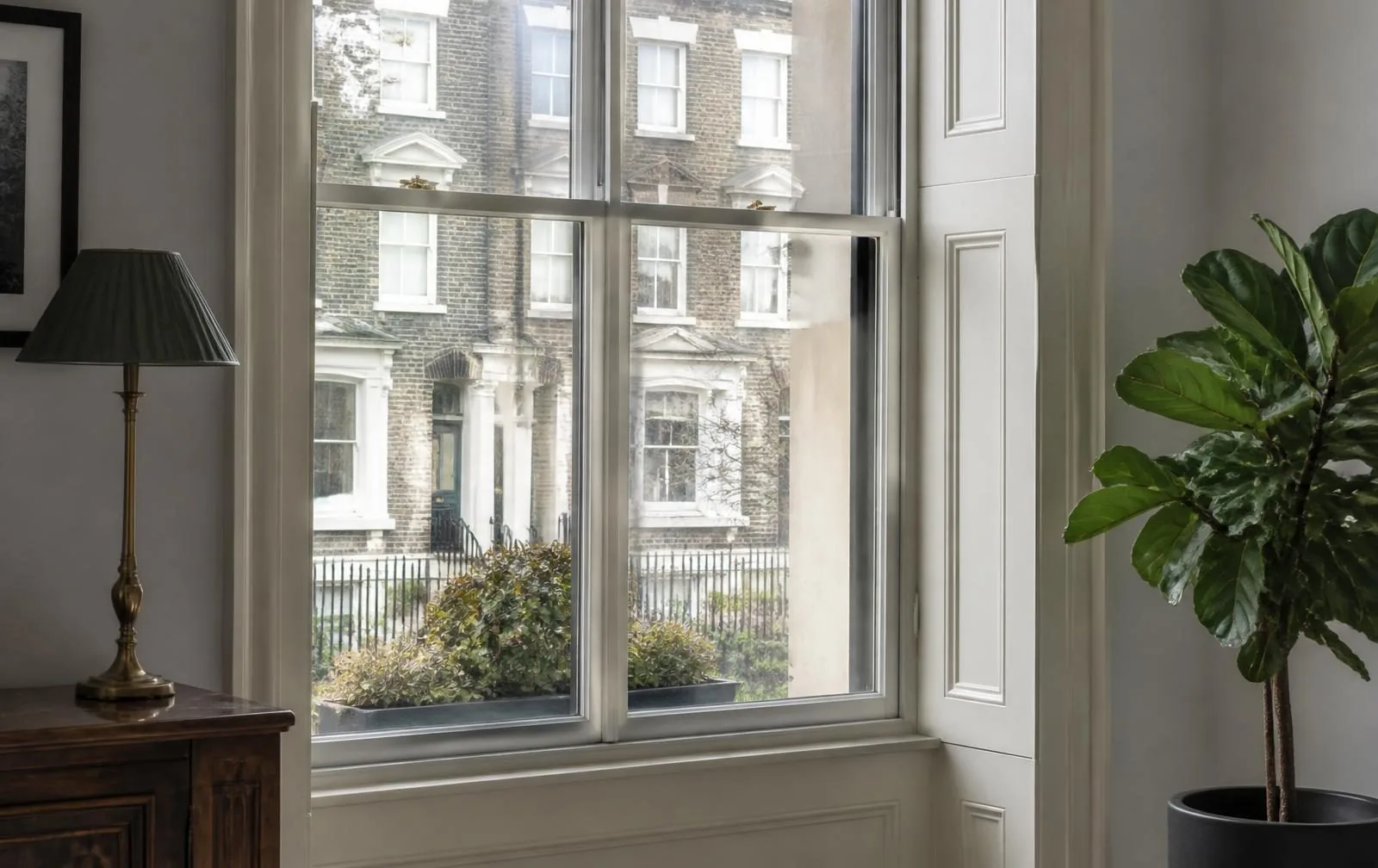
Trickle vents, flanking noise and the whole opening
An excellent acoustic glass specification can be substantially undermined by details that have nothing to do with the glass itself. Trickle vents, required by Building Regulations for background ventilation in many installations, are a small opening directly through the frame, and a standard vent can leak a surprising proportion of external noise through what is otherwise a well-sealed window.
Acoustic-rated trickle vents, which use internal baffles to attenuate sound while still permitting airflow, address this directly and should be specified as standard alongside any acoustic glazing project where ventilation is required. Omitting this detail is one of the most common reasons a homeowner is disappointed by the real-world performance of an otherwise well-specified acoustic window.
Flanking noise — sound that bypasses the window entirely by travelling through the surrounding wall, roof or an adjacent uninsulated door — also deserves consideration on a genuinely noise-sensitive project. A superb acoustic window set into a wall with poor mass, or beside a standard letterbox or cat flap, will still allow noise into the room by another route, and a full assessment should look at the whole opening and its surroundings, not the glass in isolation.
Common mistakes
Assuming triple glazing will automatically solve a noise problem
Ask for the specific Rw rating of the quoted configuration. A well-specified acoustic double glazed unit often outperforms standard triple glazing against traffic and aircraft noise.
Comparing Rw ratings without checking the Ctr adjustment for low-frequency noise
For traffic, rail or aircraft noise, ask for the Rw plus Ctr figure specifically, as the headline Rw alone can overstate real-world performance.
Fitting standard trickle vents alongside an acoustic glazing upgrade
Specify acoustic-rated trickle vents wherever ventilation is required by regulations, or the vent can undo much of the benefit of the glass.
Overlooking secondary glazing for a listed or period property
Consider secondary glazing early for severe noise problems on heritage properties — it often outperforms sealed unit replacement and preserves the original windows.
Ignoring flanking noise paths around the window opening
Look at the whole opening, including letterboxes, air bricks and adjoining doors, when specifying for a genuinely noisy location.
Frequently asked questions
What does an Rw rating actually mean?+
Rw, expressed in decibels, is a single-number sound reduction rating measured in a laboratory. A higher number means more noise is blocked. Standard double glazing typically achieves 28–32 dB Rw, while acoustic laminated glazing can reach 38–44 dB Rw or higher in demanding specifications.
Is triple glazing automatically quieter than double glazing?+
No, and this surprises most homeowners. Standard triple glazing is optimised for thermal performance using evenly spaced panes, which is not the ideal configuration for sound. A well-specified acoustic double glazed unit with asymmetric panes and a laminated interlayer frequently outperforms standard triple glazing against low-frequency traffic and aircraft noise.
What is an acoustic PVB interlayer?+
It is a specially formulated plastic interlayer bonded between two layers of laminated glass, designed to dampen sound vibration passing through the pane. It is the single most effective single measure for improving acoustic performance in a sealed unit, more effective than simply adding cavity depth or extra panes.
Will new windows solve my traffic noise problem completely?+
They will usually reduce it substantially but rarely eliminate it, because noise also travels through walls, roofs, letterboxes and trickle vents. We are honest about this before specifying: acoustic glazing is highly effective but is one part of a whole-building approach to noise.
Do trickle vents undermine acoustic glazing?+
Yes, significantly, if fitted with a standard vent. A window with excellent acoustic glass but a basic trickle vent can leak a surprising amount of noise through that single small opening. Acoustic-rated trickle vents exist and should be specified alongside acoustic glass wherever ventilation is required by regulations.
Is secondary glazing better than acoustic double glazing for noise?+
For pure noise reduction against severe external noise, yes, generally. Secondary glazing creates a much wider air gap between two independent panes than any sealed unit can achieve, and that wide gap is one of the most effective variables in acoustic performance. It is our first recommendation for period properties facing serious road or rail noise where the original windows must be retained.