Introduction
Aluminium has become the material of choice for homeowners who want slim frames, large glazed areas and a finish that resists fading, warping and rot far better than most alternatives. What is less well understood is that the colour and surface you see is almost never the raw metal — it is a coating, either powder-applied paint or an electrochemically formed anodised layer, and it is that coating, not the aluminium underneath, that determines how the window looks in five, ten or twenty years.
This distinction matters because the advice for cleaning aluminium is not simply 'wipe it down.' The wrong product can dull a powder coating within a handful of applications, and certain cleaning chemicals will permanently mark an anodised finish in a single use. None of this is dramatic or difficult to avoid once you know what causes it, but it does mean reading the label on whatever is under your kitchen sink before reaching for it.
This guide covers what the two common finishes actually are, what damages them, how often to clean depending on your location, and what to do if the finish is already showing early signs of wear.
Quick summary
The short version
- Aluminium's colour and surface are a coating — powder-coated paint or anodised finish — not the raw metal. Protect the coating, not just the metal.
- Use warm water and a pH-neutral detergent only. Avoid abrasive pads, solvents, alkaline cleaners and anything containing ammonia or bleach.
- Coastal properties should clean every four to six weeks; urban and suburban properties every eight to twelve weeks is generally sufficient.
- Filiform corrosion — thread-like lines under the coating — signals a breach in the finish and is worth having checked, particularly near the coast.
- Small chips can be touched up with manufacturer-matched paint to seal exposed aluminium before corrosion sets in.
- Many aluminium warranties specify a minimum cleaning schedule as a genuine warranty condition, not just good practice.
Why this matters
Aluminium itself is a remarkably stable metal — it does not rust, and left entirely untreated it forms a thin natural oxide layer that resists further corrosion reasonably well. The problem is that raw aluminium is not the aesthetic homeowners choose it for. The anthracite greys, matt blacks, bronzes and heritage tones that define contemporary aluminium windows all come from an applied finish, and it is that finish that is doing the cosmetic and, in the case of anodising, part of the protective work.
A powder coating is essentially a baked-on paint layer, typically 60 to 120 microns thick, applied electrostatically and cured at high temperature to form a hard, durable surface. It is genuinely tough — good powder coatings carry warranties of fifteen to twenty five years against fading and flaking under normal conditions — but 'normal conditions' assumes the finish is cleaned with appropriate products and not subjected to abrasion, solvents or aggressive chemicals.
Anodising works differently: it is an electrochemical process that thickens and hardens the natural oxide layer on the aluminium surface itself, so in one sense it is more integral to the metal than a paint coating is. It produces a harder, more scratch-resistant surface than powder coating in most cases, but it is more vulnerable to certain alkaline and acidic chemicals, which can etch or stain it visibly and permanently in a way that cannot be touched up the way a paint chip can.
- Good powder coatings are warranted for 15–25 years against fading, provided care instructions are followed
- Coastal salt air is the single biggest accelerant of finish degradation on both powder-coated and anodised aluminium
- Marine-grade powder coatings exist specifically for properties within a few miles of the coast
Expert advice
The correct cleaning method for both finishes
For both powder-coated and anodised aluminium, the safe and effective method is the same: warm water, a soft cloth or sponge, and a small amount of pH-neutral detergent such as diluted washing-up liquid. Work methodically across the frame, rinse thoroughly with clean water to remove any detergent residue, and dry with a soft cloth rather than leaving it to air dry, which can leave mineral spots from hard water.
For ingrained dirt in corners, sightlines and around hardware, a soft-bristled brush — an old washing-up brush or a dedicated detailing brush — will lift debris without scratching the surface, provided you avoid anything with stiff nylon bristles or, worse, a scouring pad. Never use a green scouring pad, wire wool, or any abrasive intended for kitchen or bathroom cleaning; these are designed to remove ingrained grime from hard ceramic surfaces and will visibly scratch a coated aluminium finish within seconds.
Rinse hardware — handles, hinges and locking points — with the same gentle approach, but avoid soaking mechanisms in water. A damp cloth is sufficient to clean visible grime, and any lubrication should follow once the hardware is dry, not while it is wet.
If a specific manufacturer cleaning product has been supplied or recommended with your windows, use that in preference to a generic household detergent, since some system manufacturers formulate a cleaner specifically matched to their coating chemistry and this is usually named in the guarantee documentation as the approved method.
What actually damages the finish, and why
The three categories of product that cause the most damage are abrasives, solvents and alkaline or acidic cleaners, and each damages the finish in a different way. Abrasive pads, cream cleansers containing fine grit, and stiff brushes physically scratch the coating's surface. On a powder coating this creates dull patches where light no longer reflects evenly; on anodised aluminium it can expose the underlying metal in fine lines that then become entry points for corrosion.
Solvent-based cleaners — including many multi-surface sprays, some glass cleaners, nail varnish remover, and white spirit — can soften or dull a powder coating and, on some anodised finishes, cause a visible haze or discolouration. These products are formulated to break down grease and paint on other surfaces, and a factory-applied coating on your window frame is exactly the kind of surface they are designed to attack.
Alkaline cleaners — many oven cleaners, some heavy-duty degreasers and certain concentrated multipurpose cleaners — are particularly damaging to anodised finishes, which can etch or discolour on contact with a high-pH product within minutes. Acidic descalers used to clean surrounding glass or masonry should also be kept away from aluminium frames, since accidental splashes can leave a permanent stain.
Beyond cleaning products, the other common source of damage is simple abrasion from contact with masonry, scaffolding or garden tools during other work around the house. If building or gardening work is happening nearby, mask or cover the frames rather than assuming they will be fine, since a single scrape from a ladder or a dropped tool can chip a coating that has otherwise lasted a decade without a mark.
| Product category | Effect on powder coating | Effect on anodised finish |
|---|---|---|
| Abrasive pads and gritty cream cleaners | Dull, scratched patches | Exposed metal along scratch lines |
| Solvent-based sprays and white spirit | Softened, dulled surface over repeated use | Haze or discolouration |
| Alkaline cleaners (oven cleaner, strong degreaser) | Can strip gloss and colour | Etching, staining, often irreversible |
| Acidic descalers | Localised staining | Localised staining, sometimes permanent |
Cleaning frequency: coastal, urban and everywhere in between
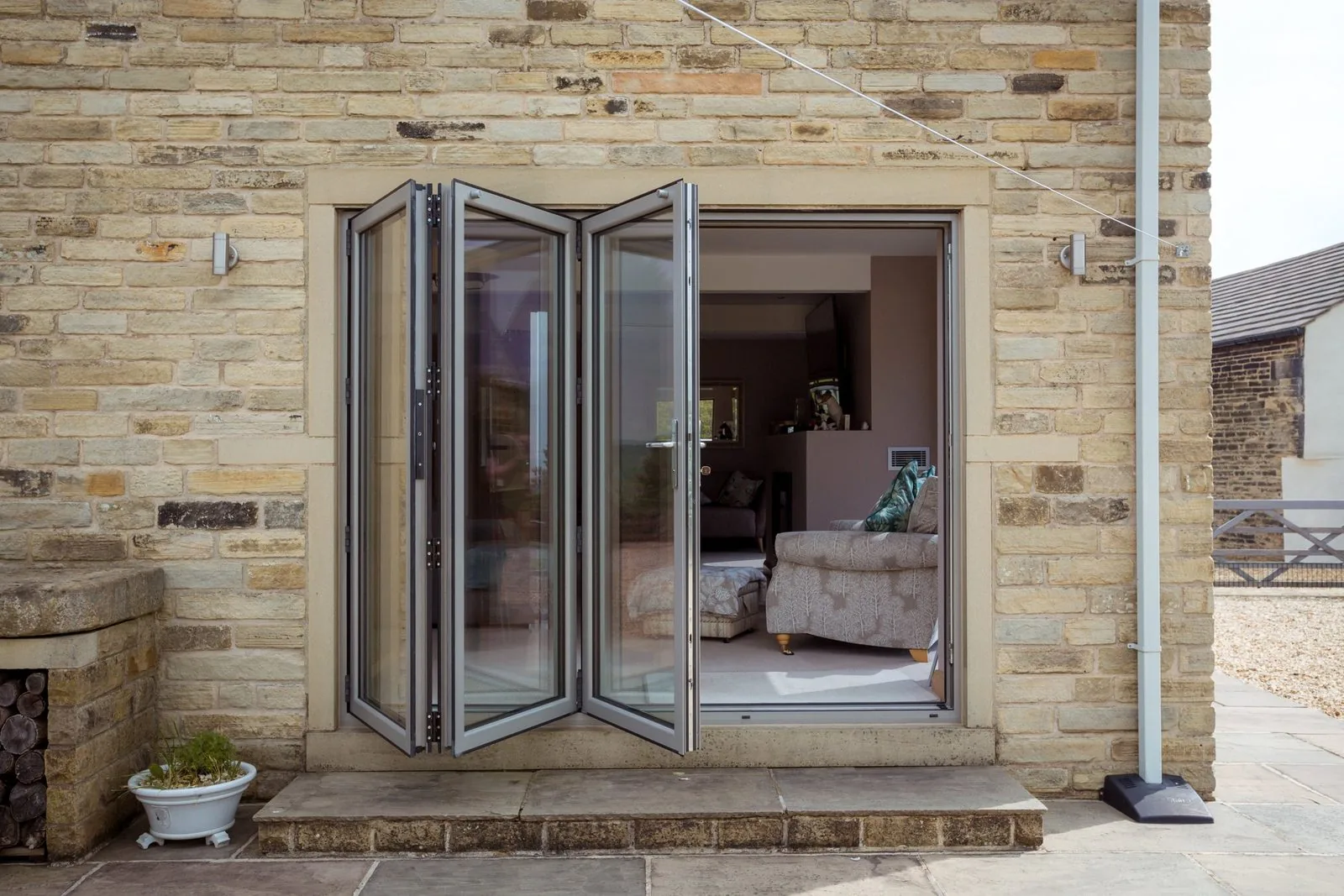
How often you need to clean depends heavily on what your frames are exposed to. Coastal properties, broadly those within a few miles of the sea, are exposed to salt-laden air that accelerates the breakdown of most protective finishes considerably faster than an equivalent inland property. Salt deposits are also mildly corrosive in their own right if left to accumulate, which is why coastal cleaning schedules are shorter — typically every four to six weeks — rather than a seasonal task.
Urban properties, particularly those near busy roads, face a different challenge: airborne pollution, traffic grime and diesel particulates settle on frames and, left long enough, can etch into a coating in the same way they stain rendered façades. Every eight to twelve weeks is generally sufficient here, more often for ground-floor windows directly facing a busy street.
Suburban and rural properties away from significant pollution or salt exposure can generally clean quarterly without any measurable impact on the finish, though it is worth a quick visual check between cleans simply to catch any bird droppings, tree sap or garden chemical splashes before they have time to sit on the surface.
Marine-grade coatings exist specifically for coastal specification and offer meaningfully better resistance to salt-driven corrosion, but they are not a substitute for the cleaning schedule — they extend the safety margin, they do not remove the need for regular care, and most manufacturers make the same cleaning frequency a condition of the marine-grade warranty as the standard one.
Filiform corrosion and repairing minor chips
Filiform corrosion is a specific and recognisable form of damage that appears under powder-coated finishes, particularly in humid or coastal conditions. It shows as fine, thread-like filaments running just beneath the surface of the coating, usually radiating from a point where the coating has been breached — a scratch, a cut edge at a joint, or a fixing hole. It occurs when moisture penetrates that breach and begins to corrode the aluminium underneath, lifting the coating slightly along the path of the corrosion as it spreads.
In its early stages filiform corrosion is cosmetic rather than structural, since aluminium corrodes slowly and the coating is only lifted slightly. Left for years, particularly at a coastal property, it can spread and eventually compromise the coating's protective function over a wider area. If you notice it, the sensible response is to have the frame assessed rather than to treat it as purely aesthetic, since the underlying cause — a coating breach — is worth identifying and addressing.
Small chips and scratches that have not yet developed filiform corrosion can be touched up using a manufacturer-matched touch-up paint, sold in small pots or pens by most aluminium system suppliers and matched to standard RAL colour references. Clean the area gently, allow it to dry fully, and apply a small amount of paint precisely to the damaged area only — the goal is to seal the exposed aluminium against moisture, not to achieve an invisible repair, since a slight difference in sheen at very close range is a reasonable trade-off against ongoing corrosion risk.
Larger areas of coating damage, or any damage on anodised finishes, are harder to touch up convincingly and are better assessed by a professional, who can advise whether a localised repair is realistic or whether the affected component should be considered for the longer term.
Why the guarantee cares how often you clean
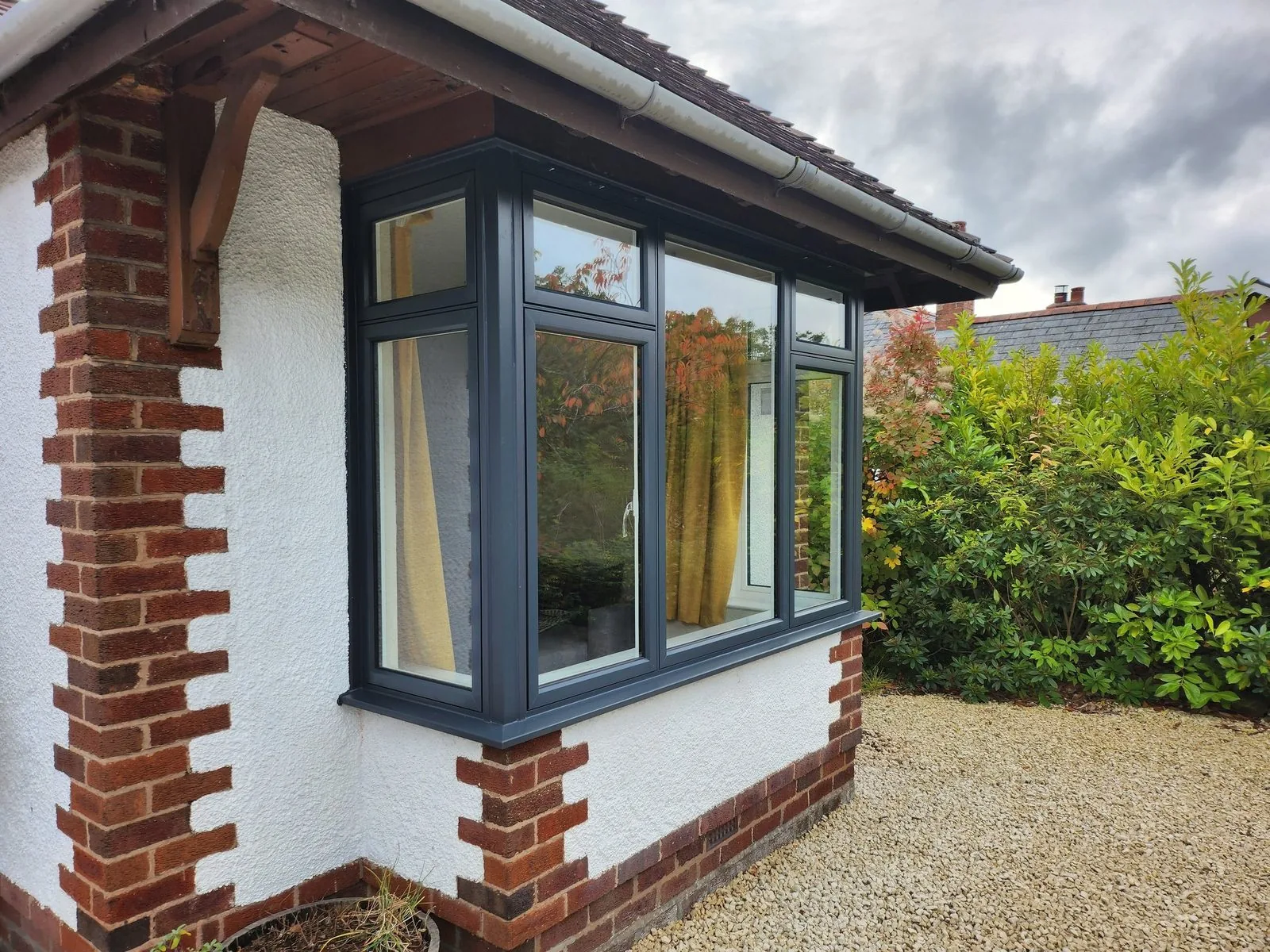
It surprises many homeowners that a window guarantee can specify a cleaning frequency as a formal condition, but it follows logically from what is actually being warranted. When a manufacturer offers a fifteen or twenty five year guarantee against fading, chalking or flaking on a powder coating, they are guaranteeing the performance of a coating exposed to normal environmental conditions and cleaned as directed. Salt, pollution and grime left to accumulate accelerate degradation in ways the manufacturer has not tested for and will not warrant against.
This is worth checking specifically in your paperwork if you are in a coastal or heavily polluted location, since the required frequency in those environments is often more demanding than the general guidance given to an average inland property, and a claim made after years of neglect is unlikely to succeed regardless of how the coating has actually failed.
Keeping a simple record — even an approximate note of when frames were last cleaned — is sensible for the same reason it is sensible for uPVC and composite products: it costs nothing and it is the difference between a straightforward warranty conversation and a disputed one, should the finish ever fail prematurely through no fault of your own.
Common mistakes
Using a scouring pad or cream cleanser to remove ingrained dirt
Use a soft brush and pH-neutral detergent instead. Abrasives leave permanent dull scratches on both powder-coated and anodised finishes.
Reaching for a general household solvent spray or white spirit
Stick to warm water and mild detergent, or a manufacturer-approved cleaner. Solvents dull and soften coatings that took years to look right.
Cleaning coastal properties on the same schedule as inland properties
Increase frequency to every four to six weeks near the coast, where salt-laden air accelerates finish degradation considerably.
Ignoring early filiform corrosion as purely cosmetic
Have it assessed. It signals a breach in the coating that will spread further if left, particularly in humid or coastal conditions.
Leaving nearby building or garden work unprotected around aluminium frames
Mask or cover frames during any adjacent building, rendering or gardening work — a single scrape can chip a decade-old finish.
Frequently asked questions
Can I use household glass cleaner on aluminium frames?+
Standard household glass spray is fine on the glass itself but should be kept off the frame where possible, since many contain ammonia or alcohol that can dull a powder-coated or anodised finish over repeated use. Clean the frame separately with warm water and a pH-neutral detergent.
How do I know if my aluminium is powder-coated or anodised?+
Powder coating is a painted finish available in almost any colour, including the greys, blacks and heritage tones common on modern aluminium windows, and it has a slightly textured, matt-to-satin feel. Anodising is an electrochemical finish, usually in natural aluminium, bronze or black tones, with a harder, glassier surface. Your fitting documents or supplier will confirm which you have.
What is filiform corrosion and should I worry about it?+
Filiform corrosion appears as fine, thread-like lines under a powder-coated finish, usually starting at a scratch, cut edge or fixing point where moisture has got beneath the coating. It is largely cosmetic in early stages but indicates the coating has been breached somewhere. If you see it, have it inspected rather than ignored, particularly in coastal locations.
Do I need special products for a coastal property?+
You need the same products but a higher frequency. Salt-laden air accelerates the breakdown of any protective finish, so coastal properties should clean every four to six weeks rather than quarterly, and marine-grade coatings, where specified, should still follow the manufacturer's cleaning schedule to remain valid under warranty.
Can chips or scratches in the coating be repaired?+
Small chips can be touched up using a manufacturer-matched touch-up paint, applied sparingly to the affected area only. This will not be entirely invisible but will seal the exposed aluminium against corrosion, which is the more important outcome. Larger areas of damage are better assessed by a professional.
Will cleaning my frames regularly really affect my guarantee?+
Yes, on many products. Aluminium window guarantees, particularly those covering the coating finish for fifteen years or more, commonly specify a minimum cleaning frequency as a condition of the warranty remaining valid, precisely because the finish is what is being guaranteed.
Related products