Introduction
A conservatory works harder than almost any other room in the house. It is glazed on three or four sides and overhead, which means it experiences the full range of weather the roof, walls and windows each deal with separately, but concentrated into one lightweight structure. That is precisely why a modest annual maintenance routine pays for itself many times over — small issues in a conservatory rarely stay small for long.
Most of what goes wrong with an older conservatory falls into a handful of predictable categories: a blocked gutter or valley that eventually overflows into the room, a perished gasket that lets in a draught or a trickle of water, a base or dwarf wall that has picked up damp from ground level creeping upward over the years, or a roof material that has simply reached the end of its practical life.
None of these require particularly specialist knowledge to check for, and most can be caught early with a look around the structure twice a year. This guide sets out what to look at, in what order, and — for the small number of issues that genuinely warrant it — when a more significant piece of work such as a warm-roof conversion is worth considering.
Quick summary
The short version
- Check the roof, gutters and valleys at least once a year, with a brief follow-up after winter storms.
- Box gutters and valleys block faster than eaves gutters and need more frequent attention.
- Glazing bar gaskets and end caps perish gradually with UV exposure — check annually for gaps or shrinkage.
- Polycarbonate roofs age faster than glass and may need replacement well before the frame does.
- Damp at the base or dwarf wall is usually a ground-level or seal issue, not a structural one.
- A warm-roof conversion is a significant upgrade worth considering where comfort, not just maintenance, is the real complaint.
Why this matters
A conservatory has considerably more external surface area, joint length and drainage path than an equivalent-sized room built into the main structure of the house. Every one of those joints and drainage paths is a potential point of failure, and because the room is often an addition rather than part of the original build, problems here can go unnoticed longer — nobody is checking on it in the way they might check the main roof after a storm.
The consequences of neglect are also more visible, more quickly, than elsewhere in the house. A blocked valley gutter that overflows during heavy rain does not quietly seep into a cavity wall; it drips directly into the room, often onto furniture, within the hour. This immediacy is actually an advantage for maintenance purposes: conservatories tend to announce problems clearly, provided someone is paying attention when they do.
The other reason this matters is that a conservatory in poor repair gets used less. A room with a draughty roof vent, a patch of damp on the dwarf wall or a roof that overheats every summer afternoon quietly drops out of daily use, and a room that stops being used stops being maintained, which accelerates the decline. Keeping the basics right protects both the fabric and the habit of using the room.
- More external joints and drainage paths than an equivalent room in the main house
- Problems tend to show themselves quickly and visibly, which makes early catching straightforward
- A conservatory that becomes uncomfortable is used less, and maintenance lapses follow
- Most failures are gradual — gaskets, seals and drainage degrade over years, not overnight
Expert advice
The annual roof and gutter routine
The single most valuable maintenance task for any conservatory is a proper look at the roof and its drainage once a year, ideally in early autumn before the bulk of leaf fall and again briefly checked after any significant winter storm. From ground level or a stable ladder, look along the eaves gutter for standing debris, check that downpipes are running freely, and look up at the roof surface itself for any obviously displaced or lifted glazing bar cappings.
Gutters on a conservatory roof are usually a smaller profile than the gutters on the main house, sized to match the lighter aesthetic of the structure, which also means they hold less debris before they overflow. A gutter that would cope with a season's leaf fall on the main roof can back up on a conservatory in a fraction of the time, so the clearing interval genuinely does need to be shorter.
Beyond visual inspection, run a hose along the roof on a dry day occasionally and watch where the water goes. This is the simplest way to spot a blockage or a misaligned fall before it becomes a leak, because it shows you exactly where water pools rather than running away, which is far more informative than looking at a dry roof and guessing.
Box gutters and valley leaks
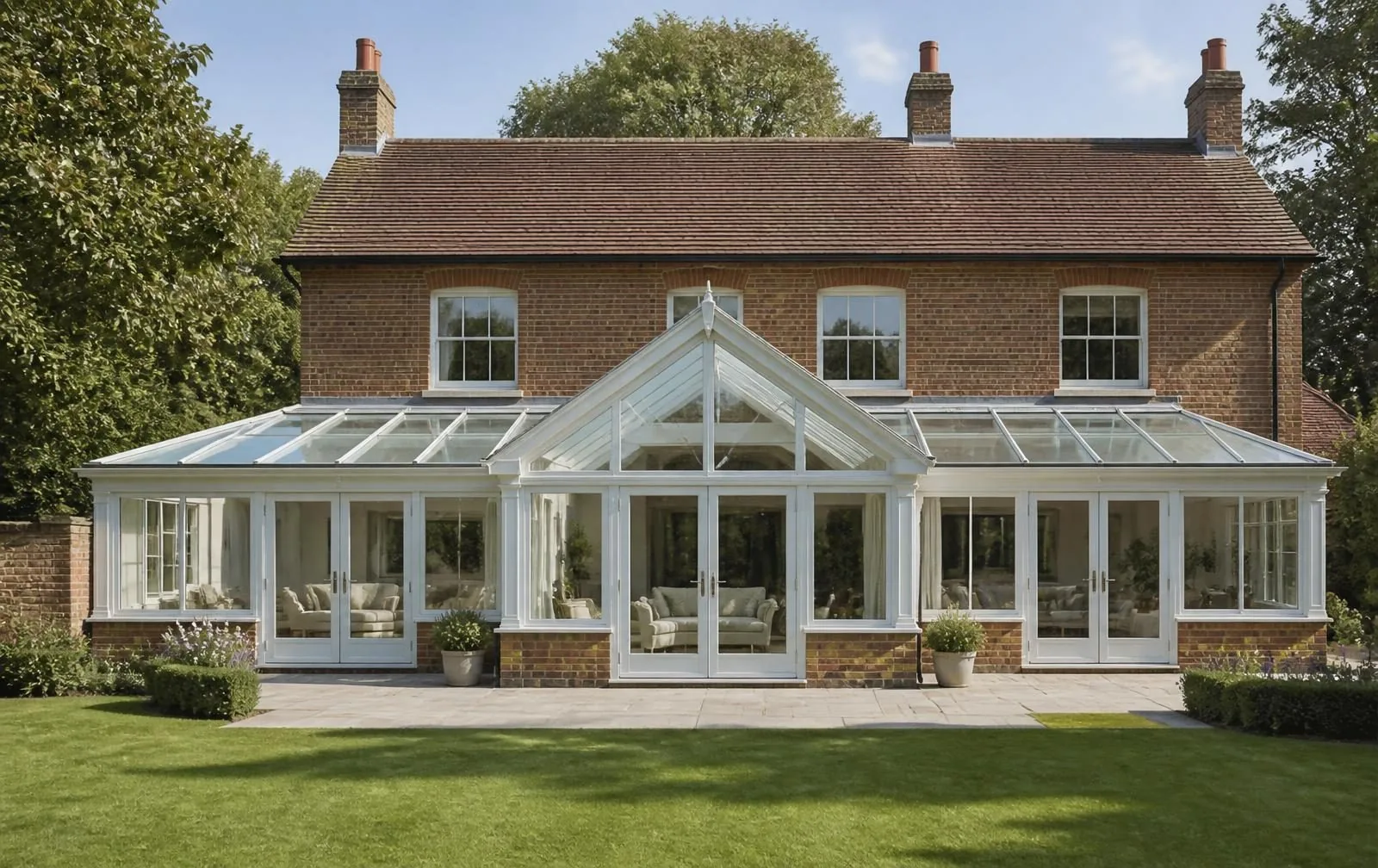
Where two roof slopes meet, or where a conservatory roof meets the main house wall, the drainage is usually carried by a box gutter or valley gutter rather than a simple eaves gutter. These carry water from a much larger catchment area — often two full roof slopes draining into a single channel — and are consequently the single most common source of conservatory leaks, particularly on hip-ended or Victorian-style roofs with multiple facets.
Because a box gutter sits at a junction rather than an open edge, debris collects there more readily and is harder to see from ground level, which means it is often blocked well before anyone notices. A telltale early sign is a damp patch on the internal wall directly below the junction, which appears before any visible overflow, because water finds its way through a small gap in the lining long before it rises high enough to spill visibly.
Because of both the volume of water they handle and the difficulty of accessing them safely, box gutter and valley checks are one of the few conservatory maintenance tasks we would generally recommend leaving to a professional rather than attempting from a domestic ladder, particularly on a two-storey extension or anywhere the pitch or access is awkward.
| Drainage type | Typical risk | Recommended check |
|---|---|---|
| Eaves gutter | Leaf and debris build-up | Twice yearly, DIY-suitable from a stable ladder |
| Box gutter / valley | High-volume blockage, hidden leaks | Annually, professional access recommended |
| Downpipes | Blockage at ground-level gulley | Check flow after heavy rain |
Glazing bar gaskets, end caps and roof material ageing
The rubber gaskets running the length of each glazing bar, and the end caps that seal the top and bottom of each roof panel, are the parts of a conservatory roof most likely to show their age first. UV exposure gradually hardens and shrinks EPDM rubber over ten to fifteen years, and the earliest sign is usually a hairline gap opening at an end cap or a corner join, well before any obvious leak develops.
An annual visual check, walked around the outside of the structure, should focus on these junctions specifically: where each glazing bar meets the ridge, where panels meet the eaves beam, and any point where two sections of capping join. A gap that lets daylight through, or a gasket visibly pulled clear of the glass or polycarbonate edge, is worth having resealed before the next period of driving rain finds it.
The roof material itself ages very differently depending on what it is. Toughened or laminated glass roofs are remarkably stable over time — the glass does not discolour or become brittle, and the main task is keeping the seals around it sound. Polycarbonate is a different matter: UV exposure causes it to yellow, lose clarity and become progressively more brittle at its fixing points, typically over ten to fifteen years, and a polycarbonate roof reaching that age is worth assessing even if it has not yet failed outright.
This difference in ageing is one of the clearest arguments for replacing an old polycarbonate roof with a glass or, increasingly commonly, an insulated tiled roof, rather than simply patching individual panels as they fail. Once one or two panels are showing UV degradation, the rest are usually not far behind, and a piecemeal replacement rarely matches the existing panels convincingly.
Base, dwarf wall damp, and getting ventilation right
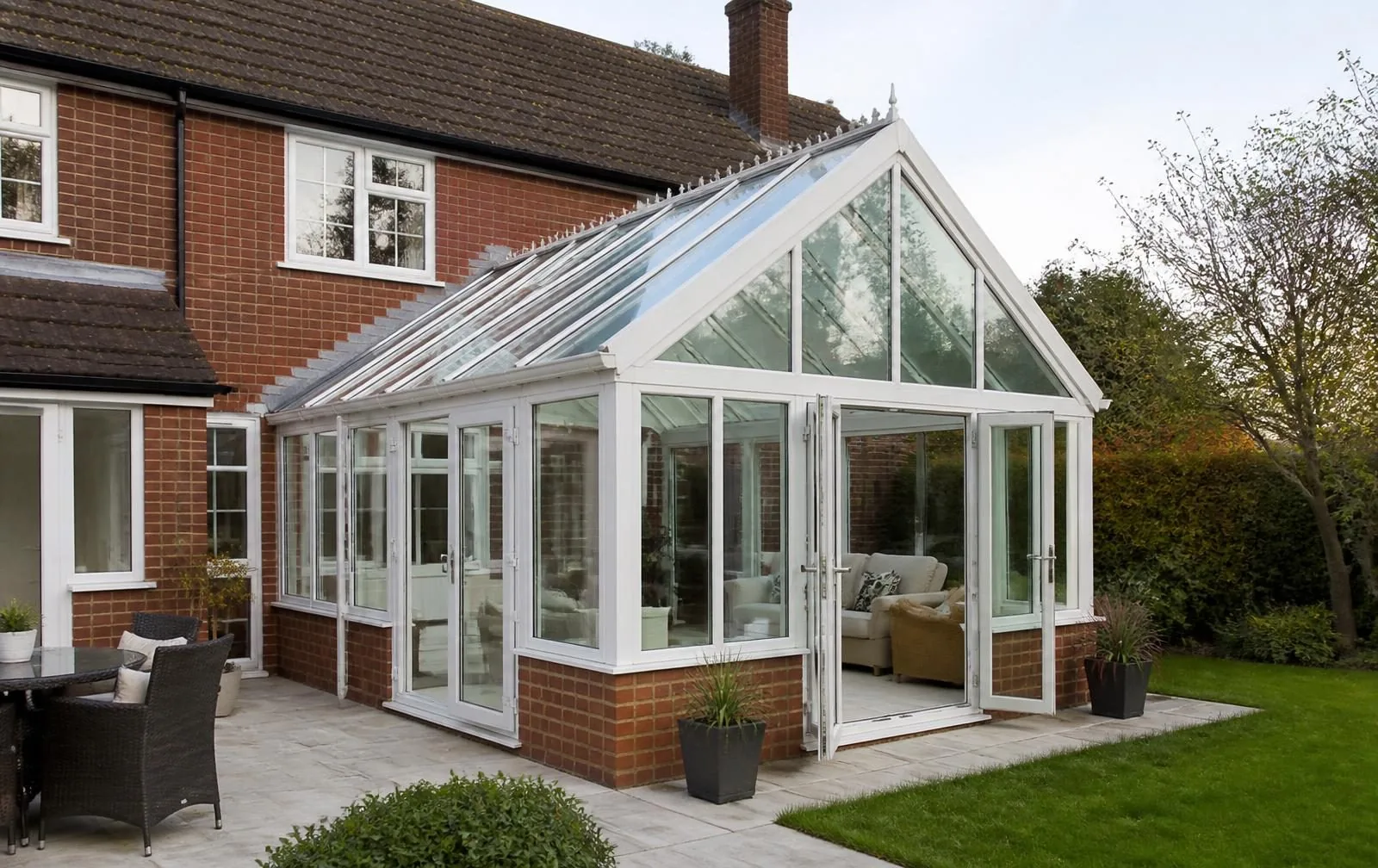
Damp appearing at the base of a conservatory, or on the dwarf wall beneath the glazed sections, has usually built up gradually rather than arrived suddenly, and the cause is nearly always one of two things. The first is external ground level creeping upward over years of path resurfacing, planting or general landscaping, until it sits above the damp-proof course and bridges it, letting moisture track straight into the wall. The second is a failed seal where the frame meets the base, which lets rainwater track along the sill rather than running off it.
The pattern of the damp usually tells you which: a horizontal tide line low down on the wall, worse after wet spells, points to a ground-level or damp-proof course issue and is a job for a builder rather than a glazing specialist. A patch concentrated beneath a specific glazing junction points to a sealant failure at that spot, which is a straightforward reseal.
Ventilation is the other quiet contributor to conservatory problems, particularly condensation forming on the underside of the roof on cold mornings. A conservatory sealed up tightly through the colder months holds moist air against the coldest surface available, which is almost always the roof, and that moisture has to go somewhere. A small amount of background ventilation — trickle vents left open, or a roof vent on its lowest setting rather than fully closed — usually resolves this without making the room feel draughty.
Blinds deserve a mention here too, since they are often blamed unfairly for condensation they merely reveal rather than cause. A closed blind traps a layer of still, cool air against the glass, which can make existing condensation more visible and slower to clear, but it is not usually the underlying cause. Ventilation and heating pattern are the more useful levers to adjust first.
Algae, green film and when a warm-roof conversion is genuinely worth it
A green or grey film developing on a conservatory roof, particularly on the shaded side of the house or beneath overhanging trees, is almost always algae or lichen taking hold on a surface that stays damp longer than it dries. On its own it is cosmetic, and a specialist roof clean once every year or two keeps it in check without any need for chemical treatment beyond a standard biocide wash.
Left for many years without any attention, though, algae growth does hold moisture against gaskets and seals for longer than they are designed to tolerate, which can shorten their working life modestly. It is not an emergency, but it is a reasonable argument for not letting a heavily shaded roof go entirely unaddressed for a decade at a time.
A genuinely bigger decision, and one that goes beyond routine maintenance, is whether to convert an ageing polycarbonate or single-glazed roof to a modern insulated, tiled warm roof. This is the right conversation to have when the underlying complaint is comfort rather than repair — a room that is unbearably hot in July and unusable in January is telling you something a maintenance routine cannot fix, however well it is carried out.
A warm-roof conversion replaces the lightweight glazed roof with an insulated structure, typically finished in lightweight tiles, and it transforms both the temperature range and the acoustic quality of the room. It is substantial building work, not a repair, and it needs the existing frame and base assessed for load capacity before it is specified, since not every conservatory structure was built to carry a heavier tiled roof without reinforcement. Where the frame and base check out, it is one of the more worthwhile investments a homeowner can make in an underused conservatory.
Common mistakes
Only clearing the eaves gutter and ignoring box gutters and valleys
Have valley and box gutters checked annually by a professional — they carry more water and block less visibly than an eaves gutter.
Sealing the conservatory completely through winter to save heat
Leave a small amount of background ventilation running. It reduces condensation on the roof far more effectively than it costs in heat.
Patching individual polycarbonate panels as they yellow and fail
Treat visible UV degradation as a sign the whole roof is ageing out, and plan a full roof replacement rather than a piecemeal repair.
Assuming any base damp is rising damp needing major remedial work
Check the pattern first — a raised external ground level bridging the damp course is common, cheaper to fix, and easy to misdiagnose as something worse.
Considering a warm-roof conversion without checking the existing frame
Have the frame and base load capacity assessed before committing — not every structure can carry a heavier tiled roof without reinforcement.
Frequently asked questions
How often should a conservatory roof and gutters be checked?+
At minimum once a year, ideally in early autumn before leaf fall accelerates and again briefly after winter storms. Box gutters and valleys, where two roof slopes meet, benefit from a mid-autumn check as well, since they collect debris from a much wider catchment than a straight eaves gutter and block more quickly.
Is a green film on the roof always algae, and is it harmful?+
Usually yes, and on its own it is cosmetic rather than structural — a sign of a shaded, slow-drying surface rather than a defect in the roof itself. Left for years, though, algae and lichen can hold moisture against gaskets and seals for longer than they are designed to tolerate, gradually shortening their life, so it is worth removing periodically rather than ignoring indefinitely.
Do polycarbonate roofs need different maintenance to glass roofs?+
Yes. Polycarbonate ages under UV exposure in a way sealed glass units do not — it can discolour, become brittle at the fixing points and lose clarity over ten to fifteen years even with good care. Glass roofs age far more slowly and the main task is keeping seals and gaskets sound rather than managing the panel material itself.
What causes damp patches on the dwarf wall or base of a conservatory?+
Most commonly it is rising or penetrating damp where the external ground level has crept up over the years, bridging the damp-proof course, or a failed seal where the frame sits on the base. Less often it is condensation running down from the roof and collecting at the base. The pattern of the damp — a tide line versus a patch beneath a specific glazing junction — usually points to which.
Should I keep the conservatory roof vents open in winter?+
A small amount of background ventilation, rather than sealing the room completely, generally reduces condensation on the inside of the roof, because it lets moist air escape rather than settling on the coldest surface it can find. Trickle vents or a roof vent left on its lowest setting is usually enough; it does not need to feel draughty to be effective.
Is a warm-roof conversion worth it for an older conservatory?+
Often, yes, if the room is currently too hot in summer and too cold in winter to use for more than a few weeks a year. A warm-roof conversion replaces a glass or polycarbonate roof with an insulated, tiled structure, which transforms comfort and usability. It is a significant piece of building work rather than a maintenance task, and we would always assess the existing frame and base before recommending it, since not every structure can carry the additional weight without reinforcement.
Related products